This C15:0 supplement trial is a small, randomized, placebo-controlled study in 30 young adults with overweight or obesity who took 200 mg of C15:0 or placebo daily for 12 weeks.[1] Its main goal was to see whether blood C15:0 would rise, not to prove a health benefit.[1]
Blood C15:0 did rise more on the capsule than on placebo. Most of the liver and blood findings that get repeated online came from secondary or after-the-fact comparisons, and the authors call them preliminary.[1] This page walks through the trial in plain English, including the company support behind it.
Key Takeaways
- Thirty adults aged 18 to 25 with overweight or obesity took part: 20 took 200 mg of C15:0 daily for 12 weeks and 10 took placebo.[1]
- The primary objective was the change in blood C15:0, not weight, liver or heart outcomes.[1]
- After adjustment, blood C15:0 rose 2.07 µg/mL more on C15:0 than on placebo, but individual changes ranged from a drop of 1.21 to a rise of 5.31 µg/mL.[1]
- Apart from a drop in the liver enzyme GGT, the trial found no other significant changes in any of its secondary outcomes.[1]
- The ALT, AST and hemoglobin findings came from an exploratory, after-the-fact split of the supplement group by blood level.[1]
- Seraphina Therapeutics supported the trial and provided the capsules and matching placebo.[1]
What Was Tested
This was a single-center, double-blind, randomized, controlled, 2-arm trial of 200 mg C15:0 or placebo daily for 12 weeks in young adults with overweight or obesity.[1] Participants were adults aged 18 to 25 with a BMI of 25 or higher, so the results apply to young adults with excess weight and not to older adults or people of normal weight.[1]
Of the 30 participants, 20 were assigned to C15:0 and 10 to placebo at a single site, UC San Diego.[1] Randomization was 2 to 1, meaning twice as many people received C15:0 as received placebo.[1] Double-blind means neither the participants nor the study team knew who was taking which capsule.
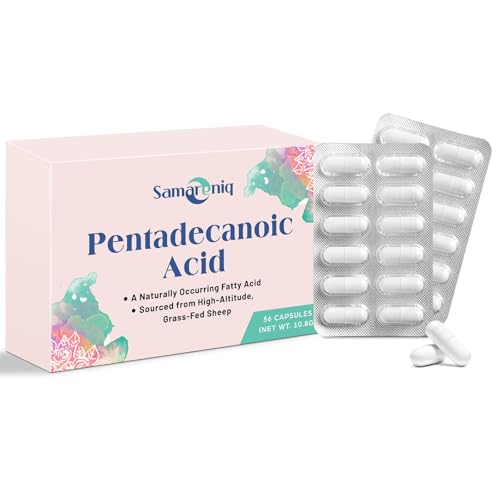
The product was pure C15:0 as a free fatty acid, compared with placebo capsules made of rice flour.[1] It was not a multi-ingredient supplement, which makes the comparison cleaner than many supplement studies.
The 200 mg dose was chosen from single-dose pharmacokinetic studies as the amount thought necessary to reach a blood level of at least 5 µg/mL.[1] Before treatment, blood C15:0 averaged 4.33 µg/mL in the placebo group and 4.23 µg/mL in the C15:0 group, so the two groups started at similar levels.[1] For how this dose compares with other products, see our C15 dosage guide.

The sample size of 30 was chosen for feasibility in a pilot study, so the trial was too small to firmly test clinical effects.[1] Everyone in the supplement group finished, and 9 of the 10 placebo participants did.[1] Average adherence, measured by returned-capsule counts, was 89.3% and did not differ between the groups.[1]
The Primary Outcome and What Happened
A primary outcome is the one question a trial is built to answer. Here, the primary objective was to investigate changes in blood C15:0 after 12 weeks of daily supplementation.[1] Weight, liver tests, blood counts and cholesterol were all secondary or exploratory markers.[1]
The supplement group’s blood C15:0 rose 1.88 µg/mL more than placebo’s (P = 0.003).[1] In the main text, the adjusted increase was 2.07 µg/mL greater than placebo, after adjusting for baseline C15:0 and change in body weight.[1] Both figures show the same thing: the capsule raised blood C15:0 on average.
The size of the rise varied a lot from person to person. Individual changes in blood C15:0 in the supplement group ranged from a drop of 1.21 to a rise of 5.31 µg/mL.[1] Taking more of the capsules went with a bigger rise (r = 0.650), but the authors say adherence alone does not explain the variable response, and that absorption or metabolism likely differ between people.[1]
Secondary Results: Mostly Null
The trial measured a range of secondary outcomes. Supplementation was associated with a significant decrease in the liver enzyme GGT, a mean difference of 11 U/L relative to placebo, adjusted for baseline GGT and change in body weight.[1] No other significant changes were seen in any of the other secondary outcomes.[1]

That is one enzyme moving out of the full list. When many outcomes are checked, an occasional significant result can appear by chance, so a single drop in GGT is a prompt for a larger study and not proof of a liver benefit. The authors say the same: because the study focused on blood C15:0 as the primary outcome, the secondary findings of possible metabolic benefits are preliminary and need a larger setting.[1]
The 5 µg/mL Split and Why It Is Exploratory
The most quoted findings come from a different kind of comparison. The authors ran an exploratory analysis that sorted the supplement group by their end-of-treatment blood C15:0 relative to the proposed optimal level of 5 µg/mL or higher.[1] This was an after-the-fact grouping, not a pre-planned comparison between randomized groups.[1]
Only half of the supplement group ended above that threshold: 10 people finished above it and 10 stayed below it.[1] The comparison then looked like this:
- ALT, a liver enzyme: the median change over 12 weeks was a drop of 29 U/L in those above the threshold, a rise of 6 U/L in those below it, and no change (0 U/L) on placebo.[1]
- AST, another liver enzyme: a median drop of 6 U/L above the threshold, a rise of 3 U/L below it, and no change on placebo.[1]
- Hemoglobin: a median rise of 0.6 g/dL above the threshold, versus a fall of 0.4 g/dL below it and 0.5 g/dL on placebo.[1]
These numbers look striking, but there are two reasons to hold them loosely. First, people were sorted by an outcome that happened during the trial, so the groups are no longer the randomized groups. Second, the people who reached the threshold also took more of their capsules, with adherence of 95.0% versus 84.3% (P = 0.008).[1] Better adherence, and not only blood level, may be behind the group differences in liver enzymes.[1]
The honest reading is that the split generates a hypothesis worth testing in a larger randomized trial. It does not show that reaching 5 µg/mL causes lower liver enzymes.[1] For the wider liver evidence, see our C15 and liver health page.
Side Effects and Safety
No significant adverse events occurred.[1] That is a reassuring signal for 30 young adults on one dose, but it is a thin basis for a safety claim. The authors list the small sample, the 12-week duration and the examination of a single dose as reasons their findings are preliminary.[1] It says little about longer use, other doses, older adults or people of normal weight.[1] Our side effects page covers what else is known.
Funding and Conflicts of Interest
The project was partially supported by the National Institutes of Health.[1] It was also supported by Seraphina Therapeutics, including the provision of the C15:0 supplements and the matching placebo.[1] Seraphina Therapeutics is a company with a pentadecanoic acid (C15:0) food ingredient and supplement on the market.[2]
The conflict of interest statement says one author reports grants to UCSD from Intercept and Genfit, and all other authors report no conflicts.[1] Seraphina’s support is listed under funding, not as a conflict.[1] In plain terms, the company that sells a C15:0 product supplied the capsules and helped support the study. Industry support does not make a result wrong, but it is a reason to want the finding repeated by an independent group.
Limitations
- Small size: 30 people, chosen for feasibility in a pilot.[1]
- Short and narrow: a 12-week trial that tested a single dose.[1]
- Young adults only: ages 18 to 25 with a BMI of 25 or higher.[1]
- Mixed health status: only a third of participants met the full diagnostic criteria for metabolic syndrome, which limits conclusions about metabolic markers.[1]
- Missing data: one placebo participant did not finish, and that value was filled in by carrying the last observation forward.[1]
- Single site: all participants were at one center.[1]
What This Means for a Reader
The trial supports a narrow statement: in young adults with overweight or obesity, 200 mg of C15:0 a day for 12 weeks raised blood C15:0 on average, with no significant adverse events, though the rise differed a lot between people.[1] It does not show that C15:0 improves liver health, blood counts or any disease. The authors themselves describe the secondary findings as preliminary.[1]
If you are weighing a supplement, treat this as an early safety and absorption study. Our deeper look at how the trial was designed covers the evidence behind the marketing, and the C15 overview puts the compound in context. This page is not medical advice; talk to a clinician before starting any supplement.
Frequently Asked Questions
Did the 2024 trial show that C15:0 helps the liver?
Not directly. The trial’s primary objective was blood C15:0.[1] Among its secondary outcomes, only GGT dropped significantly versus placebo.[1] The ALT and AST changes come from an exploratory split of the supplement group by blood level, which was not a pre-planned randomized comparison.[1]
How many people were in the trial and how long did it last?
Thirty young adults aged 18 to 25 took part, 20 on C15:0 and 10 on placebo, for 12 weeks.[1]
What dose of C15:0 was used?
The dose was 200 mg daily, chosen from single-dose pharmacokinetic studies as the amount thought necessary to reach a blood level of at least 5 µg/mL.[1]
Was the trial funded by the supplement company?
It was partially supported by the National Institutes of Health and also supported by Seraphina Therapeutics, which provided the C15:0 capsules and matching placebo.[1]
Does the trial prove C15:0 is safe long term?
No. No significant adverse events occurred, but the authors list the small sample, the 12-week duration and the single dose as reasons the findings are preliminary.[1]
References
- Pentadecanoic Acid Supplementation in Young Adults with Overweight and Obesity: A Randomized Controlled Trial. The Journal of nutrition, 2024
- Broader and safer clinically-relevant activities of pentadecanoic acid compared to omega-3: Evaluation of an emerging essential fatty acid across twelve primary human cell-based disease systems. PloS one, 2022
These statements have not been evaluated by the Food and Drug Administration. This information is not intended to diagnose, treat, cure, or prevent any disease. Content is for informational purposes only and is not medical advice; consult a qualified healthcare provider before starting any supplement. As an Amazon Associate we earn from qualifying purchases.