Fatty15’s marketing frequently references ‘clinical trial’ data, which can imply more than what the underlying study actually establishes. The core published human trial is real, peer-reviewed, and worth reading closely — but understanding its design tells you a lot about what it can and can’t support as a claim.
This breaks down the trial’s actual structure: who was studied, what was measured, what the results were, and where the limits of that evidence sit.
The Trial’s Basic Design
The relevant study is a single-center, double-blind, randomized, placebo-controlled, two-arm trial published in The Journal of Nutrition, registered at ClinicalTrials.gov [1]. Thirty young adults with overweight or obesity (mean age about 20, mean BMI about 33) were randomized, with 20 receiving 200 mg of C15:0 daily and 10 receiving a placebo, for 12 weeks.
That’s a real randomized controlled trial — the gold-standard design for testing causation — but the sample size (30 total participants) is small even by early-phase supplement trial standards, and it was conducted at a single site, which limits how confidently the results generalize to other populations.
What the Trial Actually Measured
The trial’s primary objective was to see whether daily C15:0 supplementation raised circulating C15:0 levels, essentially a pharmacokinetic and safety question, not a disease-outcome question. Secondary measurements tracked safety, tolerability, and a handful of physiological markers like liver enzymes and hemoglobin.
It found that circulating C15:0 rose significantly more in the treatment group than placebo, and that no significant adverse events occurred over the 12 weeks. Among participants who reached a higher circulating C15:0 threshold (above 5 µg/mL) after treatment, there were larger reductions in liver enzymes ALT and AST and a modest rise in hemoglobin compared to those who didn’t reach that threshold [1].
What This Trial Does Not Establish
This design cannot tell you whether C15:0 prevents disease, extends lifespan, or produces the broad anti-aging benefits implied in some marketing copy — it wasn’t statistically powered to detect those outcomes, and it didn’t measure them over a long enough window even if it had been. The liver-enzyme and hemoglobin findings are described by the authors as signals warranting further study, not proven clinical benefits; they came from a post-hoc subgroup split (participants above vs. below a threshold), which is a weaker form of evidence than a pre-specified primary endpoint.
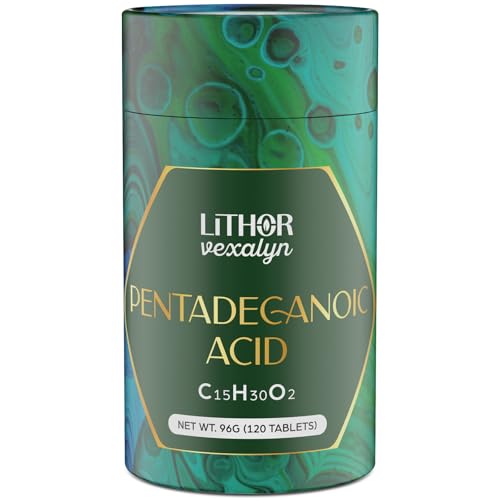
It also can’t establish long-term safety. Twelve weeks in 20 treated participants is enough to rule out obvious, common short-term adverse effects, but not rare ones, and not anything that might emerge over years of daily use.
How This Fits the Broader Evidence Base
This trial sits alongside a larger body of preclinical and cell-based research — the original dolphin-derived discovery work [2], comparative cell-system studies against omega-3 [3], and observational cohort associations — that together make C15:0 a genuinely interesting research subject. But the human clinical evidence specifically is still at an early, small-sample stage. A single 30-person trial establishing safety and pharmacokinetics is a reasonable first step in a research program; it is not, on its own, proof of the health claims built on top of it.
References
- Pentadecanoic Acid Supplementation in Young Adults with Overweight and Obesity: A Randomized Controlled Trial. The Journal of Nutrition, 2024
- Efficacy of dietary odd-chain saturated fatty acid pentadecanoic acid parallels broad associated health benefits in humans: could it be essential?. Scientific Reports, 2020
- Broader and safer clinically-relevant activities of pentadecanoic acid compared to omega-3. PLOS ONE, 2022
These statements have not been evaluated by the Food and Drug Administration. This information is not intended to diagnose, treat, cure, or prevent any disease. Content is for informational purposes only and is not medical advice; consult a qualified healthcare provider before starting any supplement. As an Amazon Associate we earn from qualifying purchases.
