Fatty15 markets pentadecanoic acid (C15:0) as a ‘third essential fatty acid,’ alongside omega-3 and omega-6. That’s a strong scientific claim with a specific technical meaning, and it’s worth examining critically rather than accepting or dismissing on the strength of the marketing alone.
This article lays out what ‘essential fatty acid’ actually requires as a classification, what evidence supports C15:0 meeting that bar, and where the claim currently falls short of formal recognition.
What ‘Essential Fatty Acid’ Technically Means
In nutritional science, an essential fatty acid is one the body cannot synthesize in adequate amounts on its own, that must come from the diet, and for which a specific deficiency syndrome with defined physiological consequences has been established and is reversed by supplementation. Omega-3 (alpha-linolenic acid) and omega-6 (linoleic acid) fatty acids meet this bar through decades of research defining deficiency states, mechanisms, and reversal.
This is a formal classification maintained by regulatory and nutrition science bodies, not a marketing category — which is why the claim that C15:0 belongs in that category is a meaningful scientific assertion, not just a branding choice.
The Case For: What’s Genuinely Supportive
The strongest argument in favor is threefold. First, the body does not synthesize C15:0 in sufficient quantities on its own, so circulating levels depend largely on what is eaten — the ‘must come from diet’ criterion [1] [2]. That is not the same as making none: odd-chain fatty acids are also produced internally when gut bacteria ferment dietary fibre into propionate, which the body then elongates, which is why plasma C15:0 partly tracks fibre intake rather than dairy intake alone [3] [4]. The essentiality argument rests on that supply being insufficient, not on it being absent — a distinction worth holding onto, because it means diet has more than one lever. Second, large pooled cohort analyses link higher circulating C15:0 to lower disease incidence: in a meta-analysis of 16 prospective cohorts across 12 countries, covering 63,682 participants and 15,180 incident cases, the hazard ratio for type 2 diabetes across the 10th-to-90th percentile range of C15:0 was 0.80 (95% CI 0.73–0.87) [5]; a narrative review of the odd-chain fatty acid and cardiovascular literature reads the association data similarly favourably [6]. Third, mechanistic and cell-based work has identified plausible biological pathways — PPAR receptor activity, membrane stabilization — through which a deficiency could produce those associations [7].
Two randomized controlled trials have now been published, and neither settles the question. At UC San Diego, 30 young adults with overweight or obesity took 200 mg/day of C15:0 or placebo for 12 weeks; supplementation raised circulating C15:0 and was well tolerated, and participants who finished above 5 µg/mL showed changes in clinical indices the authors described as warranting further study [8]. In the larger TANGO trial, 88 Chinese women with fatty liver disease were randomised to a fibre-rich Mediterranean-style diet with C15:0, the same diet without it, or their habitual diet; liver fat fell by 33%, 30% and 10% respectively — nearly all of the benefit tracked the diet rather than the supplement, although the C15:0 arm did show a further reduction in LDL cholesterol [9]. That the body takes up and responds to supplemental C15:0 is a necessary, but not sufficient, piece of the essentiality case.
The Case Against: Where the Claim Falls Short
The formal essential fatty acid classification requires demonstrating that a defined deficiency syndrome exists and that supplementation reverses it in controlled, replicated human trials — not just that low levels correlate with worse outcomes. Correlation in observational cohorts doesn’t establish that low C15:0 causes disease; people who eat less full-fat dairy (the main dietary source) differ in many other ways from those who eat more, and those differences, not C15:0 itself, could explain the associations.
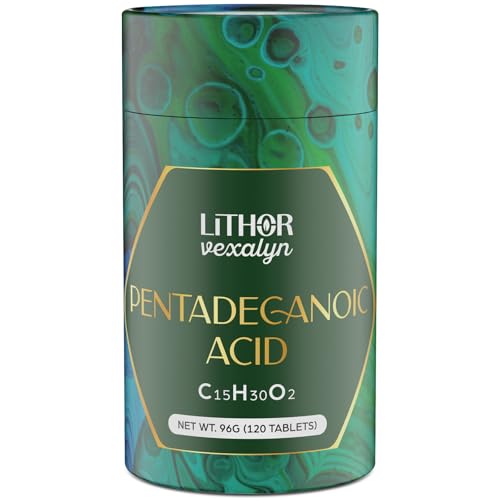
No regulatory body — not the FDA, not EFSA, not a mainstream nutrition science consensus body — has adopted the essential fatty acid classification for C15:0. The researchers making this argument most prominently, including in the foundational and follow-up papers, are affiliated with the company that developed and sells the C15:0 supplement built on this hypothesis [1] [10] — a conflict of interest that doesn’t invalidate the science, but does mean the central claim was not, at the outset, adjudicated by anyone without a stake in it. That has begun to change, and the independent results cut both ways. Against a cardiovascular benefit: a University of Minnesota group analysed two NIH-funded cohorts — 3,196 participants in CARDIA, with replication in 3,889 participants from ARIC — and found the observational associations between plasma C15:0 and cardiovascular measures to be modest, unsupported by the cardiac function data, and unsupported by a two-sample Mendelian randomization analysis testing causality; their conclusion was that the collective evidence “is not consistent with a causal cardiovascular benefit of C15:0” [11]. In favour of essentiality: a team at Institut Agro / INRAE Rennes, unaffiliated with the supplement’s developers, has published both a review devoted to C15:0’s contested essentiality [2] and the kind of deficiency-and-rescue experiment the classification actually calls for — essential-fatty-acid-deficient rats given C15:0 at weaning grew faster than deficient controls, comparably to those given linoleic acid, and produced a previously undescribed family of odd-chain n-8 PUFAs [12]. The honest position is not that independent work is absent, but that it is recent, partly animal, and pointing in more than one direction.
Where This Leaves the Debate
C15:0 is a genuinely interesting research subject with real, peer-reviewed evidence behind several of its proposed mechanisms and a favorable short-term safety profile in the two human trials published so far. Calling it a confirmed ‘third essential fatty acid’ overstates where the science currently stands — that’s a hypothesis still under active investigation, advanced most prominently by a research group with a commercial stake in the outcome, and the independent evidence that has since arrived is genuinely mixed: negative on causal cardiovascular benefit in human cohorts [11], suggestive on essentiality in an animal deficiency model [12]. A more accurate framing: C15:0 is a promising essentiality candidate awaiting larger and longer human trials before the claim can be considered settled either way.
References
- Efficacy of dietary odd-chain saturated fatty acid pentadecanoic acid parallels broad associated health benefits in humans: could it be essential?. Scientific Reports, 2020
- New insights on pentadecanoic acid with special focus on its controversial essentiality: a mini-review. Biochimie, 2024
- Odd-chain fatty acids as a biomarker for dietary fiber intake: a novel pathway for endogenous production from propionate. The American Journal of Clinical Nutrition, 2017
- Pentadecanoic and heptadecanoic acids: multifaceted odd-chain fatty acids. Advances in Nutrition, 2016
- Fatty acid biomarkers of dairy fat consumption and incidence of type 2 diabetes: a pooled analysis of prospective cohort studies. PLoS Medicine, 2018
- Pentadecanoic acid (C15:0) and cardiovascular disease: a narrative review. World Journal of Cardiology, 2025
- Broader and safer clinically-relevant activities of pentadecanoic acid compared to omega-3. PLOS ONE, 2022
- Pentadecanoic Acid Supplementation in Young Adults with Overweight and Obesity: A Randomized Controlled Trial. The Journal of Nutrition, 2024
- Effect of an Asian-adapted Mediterranean diet and pentadecanoic acid on fatty liver disease: the TANGO randomized controlled trial. The American Journal of Clinical Nutrition, 2024
- Pentadecanoic Acid (C15:0), an Essential Fatty Acid, Shares Clinically Relevant Cell-Based Activities with Leading Longevity-Enhancing Compounds. Nutrients, 2023
- Plasma pentadecanoic acid is modestly related to cardiovascular health in CARDIA and ARIC cohorts: observational associations without evidence of causality. Frontiers in Nutrition, 2026
- Dietary pentadecanoic acid supplementation at weaning in essential fatty acid-deficient rats shed light on the new family of odd-chain n-8 PUFAs. The Journal of Nutritional Biochemistry, 2025
These statements have not been evaluated by the Food and Drug Administration. This information is not intended to diagnose, treat, cure, or prevent any disease. Content is for informational purposes only and is not medical advice; consult a qualified healthcare provider before starting any supplement. As an Amazon Associate we earn from qualifying purchases.
