In 3,196 CARDIA adults, higher blood C15:0 was linked to modestly lower blood pressure and a lower 10-year risk of new hypertension, and the pattern was replicated in 3,889 White ARIC participants.[1] But C15:0 was not associated with new cardiovascular disease in either cohort, and a genetic test found no evidence that C15:0 causes the blood pressure effect.[1]
The authors conclude that C15:0 looks more like a marker of a healthier lifestyle than something that drives blood pressure.[1] This page explains how the study worked, what each result means in plain English and why it matters for anyone weighing a C15:0 supplement.
Key Takeaways
- The main analysis used 3,196 CARDIA participants (mean age 45, 57% female, 45% Black), with replication in 3,889 White ARIC participants.[1]
- Per standard deviation higher plasma C15:0, systolic blood pressure was 1.47 mm Hg lower in CARDIA, and the 10-year risk of incident hypertension had a hazard ratio of 0.86.[1]
- C15:0 levels were not associated with incident cardiovascular disease in either cohort.[1]
- Mendelian randomization provided no evidence for a causal effect of C15:0 on blood pressure, resting heart rate or hypertension.[1]
- The authors say the evidence is more consistent with C15:0 as a biomarker of healthier lifestyle and metabolic status than a biologically active driver.[1]
- The study is observational plus genetic. It did not test a supplement, so it cannot say what a C15:0 capsule does.[1]
The Two Cohorts
CARDIA is the Coronary Artery Risk Development in Young Adults study. Researchers measured plasma phospholipid C15:0 by gas chromatography in 3,196 CARDIA participants (mean age 45 years, 57% female, 45% Black).[1] Findings that were significant were then tested again in a replication group of 3,889 White participants of the Atherosclerosis Risk in Communities study, or ARIC (mean age 54 years, 52% female).[1]
Replication matters because a result seen twice, in two groups of people, is less likely to be a fluke. The catch is that the replication group included only White participants, so it does not cover Black adults.[1]
The authors followed people for a median of 10 years, using Cox regression with adjustment for likely confounders to estimate the risk of new hypertension or cardiovascular disease.[1] Hypertension was defined as systolic pressure of 140 mm Hg or higher, diastolic pressure of 90 mm Hg or higher, or the use of blood pressure medication.[1] The cardiovascular disease endpoint combined coronary heart disease, stroke and heart failure.[1]
What Was Measured
Instead of asking people what they ate, the study measured C15:0 in blood as an objective marker of intake, mainly of dairy fat from milk, yogurt, cheese and butter.[1] Plasma phospholipid C15:0 is reasonably reproducible over time, with an intraclass correlation of about 0.7, and reflects medium-term intake over several weeks rather than a single meal.[1]
There is a known weakness. C15:0 is under 0.5% of blood phospholipid fatty acids, so measurement error is more likely than for abundant fatty acids.[1] For more on what blood tests can and cannot tell you, see our guide to C15 blood level testing.

The Associations, With the Numbers as Reported
Per standard deviation higher plasma C15:0, CARDIA participants had lower systolic pressure (1.47 mm Hg lower, 95% CI 0.96 to 1.99 lower), lower diastolic pressure (1.13 mm Hg lower, 95% CI 0.74 to 1.51 lower) and a hazard ratio of 0.86 (95% CI 0.78 to 0.95) for 10-year incident hypertension.[1] Over the follow-up there were 535 new hypertension cases in CARDIA and 684 in ARIC.[1]
In ARIC the blood pressure link was larger: each standard deviation higher C15:0 went with 2.69 mm Hg lower systolic pressure.[1] Across the two cohorts, greater C15:0 was associated with approximately 14% lower risk of incident hypertension.[1]
CARDIA also showed associations with pulse pressure (0.35 mm Hg lower) and resting heart rate (0.71 beats per minute lower) per standard deviation, both with p = 0.03.[1] These effect sizes are very small.
The disease endpoints were less supportive. C15:0 levels were not associated with incident cardiovascular disease in either cohort.[1] There were relatively few events, 140 in CARDIA and 316 in ARIC, which limits the power to detect a real difference.[1] For heart structure and function measured by echocardiography, 8 of 10 associations did not reach p of 0.05 or lower, and none held after adjustment for multiple comparisons.[1]
Why the Lifestyle Pattern Matters
People with higher blood C15:0 were more likely to be female, White, physically active and non-smokers, and to have somewhat higher education.[1] They also had healthier metabolic markers before any adjustment, including lower fasting glucose, smaller waist circumference, and less diabetes and blood pressure medication use.[1]
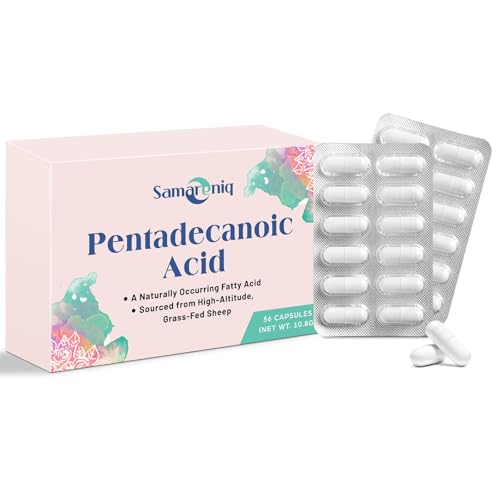
That is the classic setup for confounding. If healthier people eat more dairy fat and also have lower blood pressure, a link between the two can appear even if dairy fat itself does nothing. Adjustment helps, but it cannot remove every difference between groups.
Mendelian Randomization in Plain English
Mendelian randomization is a way to test cause using genes. Some gene variants nudge a blood level up or down for life. Because genes are assigned at conception, they are not shaped by diet, exercise or smoking, so they work a little like a natural randomized experiment. If a gene variant that raises C15:0 also lowered blood pressure, that would point toward a causal effect.
Here, genetic variants for blood C15:0 came from a genome-wide study of 8,273 European individuals.[1] The nine variants together explained about 2.5% of the variation in blood C15:0, with an F-statistic of 23, which the authors judge strong enough that weak-instrument bias is unlikely.[1]
The result was null. Two-sample Mendelian randomization analyses provided no evidence for a causal effect of C15:0 on systolic pressure, diastolic pressure, resting heart rate or hypertension.[1] Checks for hidden problems agreed: MR-Egger intercepts showed no directional pleiotropy (all p above 0.05), and the MR-Egger, weighted median and MR-PRESSO sensitivity methods gave the same null results.[1]
What “No Evidence of Causality” Means
It does not mean C15:0 has been proven useless. It means that when the genetic test looked for a causal effect, it did not find one it could detect. The hypertension analysis used a sample of about 1.3 million people and had over 80% power to detect an odds ratio near 1.015 per standard deviation of genetically predicted C15:0, so any hidden effect is likely very small.[1]

The authors are careful about the limits: the analyses were powered to detect moderate to strong causal effects, but small effects cannot be excluded.[1] They attribute the gap between the observational associations and the null genetic results to residual confounding in the observational models.[1] Their overall conclusion is that the evidence is more consistent with C15:0 as a biomarker of healthier lifestyle and metabolic status rather than a biologically active determinant of blood pressure or hypertension risk.[1]
They also write that the collective evidence is not consistent with a causal cardiovascular benefit of C15:0, and they note that it is being marketed as a heart-healthy supplement.[1]
Limitations
- Measurement error: C15:0 is under 0.5% of phospholipid fatty acids.[1]
- Ancestry: the ARIC replication sample included no Black participants, and the genetic data came from people of European ancestry.[1]
- Few cardiovascular events: 140 in CARDIA and 316 in ARIC over a median of 10 years.[1]
- Power of the genetic test: it could detect moderate to strong effects, not small ones.[1]
- Observational design: a link in cohorts cannot show that C15:0 itself changed anyone’s blood pressure.[1]
On funding, the authors declared no commercial or financial relationships that could be construed as a conflict of interest.[1] No funding statement appears in the version of the paper available to us.
How This Fits With the Supplement Trial
This study asks whether naturally higher blood C15:0 goes with healthier hearts. It did not test a capsule. The only randomized supplement trial we cover, in 30 young adults, had blood C15:0 as its primary objective rather than heart outcomes.[2] Our explainer on the supplement trial walks through what it did and did not show.
Put together, the picture is that higher C15:0 in cohorts travels with a healthier profile, genetic tests do not support a direct effect on blood pressure, and no trial has yet tested heart outcomes. For the wider evidence base, see C15 and cardiovascular health and natural food sources of C15. This page is not medical advice.
Frequently Asked Questions
Does this study show C15:0 lowers blood pressure?
No. Higher plasma C15:0 was associated with lower blood pressure in CARDIA and ARIC, but Mendelian randomization found no evidence that C15:0 causally affects blood pressure, heart rate or hypertension.[1]
Did higher C15:0 go with fewer heart attacks and strokes?
Not in this study. Plasma C15:0 was not associated with incident cardiovascular disease in either the CARDIA or the ARIC cohort.[1]
How many people were studied?
The main analysis used 3,196 CARDIA participants, with replication in 3,889 White ARIC participants.[1]
What is Mendelian randomization?
It is a method that uses gene variants linked to a blood level to test whether that level causes an outcome. Here the variants for C15:0 came from a genome-wide study of 8,273 European individuals and showed no causal effect on blood pressure.[1]
Could a C15:0 supplement still help?
This study cannot answer that, because it did not test a supplement. The authors say the collective evidence is not consistent with a causal cardiovascular benefit of C15:0.[1]
References
- Plasma pentadecanoic acid is modestly related to cardiovascular health in CARDIA and ARIC cohorts: observational associations without evidence of causality. Frontiers in Nutrition, 2026
- Pentadecanoic Acid Supplementation in Young Adults with Overweight and Obesity: A Randomized Controlled Trial. The Journal of nutrition, 2024
These statements have not been evaluated by the Food and Drug Administration. This information is not intended to diagnose, treat, cure, or prevent any disease. Content is for informational purposes only and is not medical advice; consult a qualified healthcare provider before starting any supplement. As an Amazon Associate we earn from qualifying purchases.