Pentadecanoic acid, the fifteen-carbon saturated fatty acid known as C15, is not something most people consciously seek out at the grocery store. It arrives quietly in full-fat dairy products, certain oily fish, and the fat of grass-fed ruminants: foods that have been part of human diets for thousands of years. Only recently have researchers begun studying C15 in detail, proposing that it may play a meaningful role in cellular health rather than simply being a passive dietary constituent.
Researchers at Epitracker, led by Dr. Stephanie Venn-Watson, have advanced the hypothesis that C15 may function as an essential fatty acid, the first proposed essential saturated fat, based on its proposed ability to integrate into cell membranes, act as a partial agonist of PPAR-alpha and PPAR-delta receptors, and potentially reduce markers of cellular aging such as ferroptosis and senescence. This classification has not been formally adopted by regulatory bodies or mainstream nutrition science, and the research base is still developing. What is clear is that C15 is a real, measurable component of specific whole foods, and understanding where it concentrates can help people make more informed dietary choices.
Key Takeaways
- Full-fat dairy (butter, ghee, whole milk, cream, and hard cheeses) is the most accessible dietary source of C15 for most people in Western countries.
- Ruminant fat from grass-fed cattle, sheep, and bison contains meaningful C15 because rumen bacteria produce odd-chain fatty acids through fermentation.
- Oily cold-water fish such as sardines, mackerel, and herring provide C15 via the marine food chain, offering an option for those who limit dairy.
- Blood C15 roughly tracks dairy fat intake and is used as a biomarker in nutrition research, but it is an imperfect one: in one small crossover trial inulin fiber raised it, while two other small human studies found fiber did not raise odd-chain fatty acids [2][16].
- The hypothesis that C15 is an essential fatty acid is proposed by Epitracker researchers and is not yet adopted by regulatory bodies; the evidence base is promising but still emerging.
What Makes C15 Unusual Among Saturated Fats
Most dietary saturated fatty acids have an even number of carbon atoms: think palmitic acid (C16:0) or stearic acid (C18:0). C15 is an odd-chain fatty acid, meaning its carbon backbone contains fifteen carbons rather than sixteen or eighteen. Odd-chain saturated fatty acids like C15 and heptadecanoic acid (C17:0) are present in much smaller quantities in the food supply and were historically considered metabolic curiosities with little physiological importance.
More recent research has prompted a reassessment. Dairy is a main dietary source, but the body also makes odd-chain fats: gut-derived propionate from fiber can be built into them, and a review notes C15 and C17:0 can be made in the body [2][1][26]. This means that food choices matter more for C15 status than for common saturated fats, and that populations who consume little or no dairy or ruminant meat may have meaningfully lower circulating levels.
Proposed mechanisms for C15’s biological activity include its incorporation into cell membranes where it may help stabilize membrane structure, its partial agonism of PPAR-alpha and PPAR-delta nuclear receptors involved in fatty acid metabolism and inflammation modulation, and a suggested role in reducing ferroptotic cell death and cellular senescence. These mechanisms are plausible but remain under active investigation, and no health claims have been approved by the FDA or other regulatory agencies.
Full-Fat Dairy: The Most Accessible Dietary Source
Full-fat dairy products are the most widely available and consistently studied dietary sources of C15 for people in Western countries. Butter, ghee, whole milk, cream, and aged hard cheeses all contain measurable amounts of this odd-chain fatty acid. The concentration in dairy fat is not large in absolute terms: C15 makes up on the order of 1 percent of total fatty acids in bovine milk fat (in the Holstein study described below, groups averaged 1.03% and 1.39%) [4]but across populations that consume dairy regularly, it becomes the dominant dietary contributor to circulating C15 levels.
Research note: In healthy men, cutting dairy and reducing fermented foods lowered blood pentadecanoic acid along with lactose, glucose and insulin, supporting dairy as a main dietary source [25].
Grass-fed and pasture-raised dairy cattle tend to produce milk with somewhat higher odd-chain fatty acid concentrations than grain-fed counterparts. This difference is attributed to rumen microbial fermentation: bacteria in the rumen of cattle produce odd-chain fatty acids as metabolic byproducts, and these are absorbed and incorporated into the animal’s milk and body fat. A grass-based diet appears to support rumen conditions that favor this production, though the magnitude of the difference varies and depends on multiple factors including breed, season, and farming practices.
Among dairy products, butter and ghee are particularly concentrated sources because they are nearly pure fat, while fluid whole milk delivers C15 in a lower concentration per gram but is often consumed in larger volumes. Hard aged cheeses such as Parmesan, aged cheddar, and Gouda deliver meaningful amounts alongside a lower moisture content. Choosing full-fat over reduced-fat dairy matters here: much of C15 resides in the fat fraction, so low-fat or skim dairy products contain substantially less.
Cow milk is not the only option. In a comparison of 282 individual milk samples from sheep, goat, cow, buffalo, donkey and humans, odd- and branched-chain fatty acids were higher in ruminant than in non-ruminant milks, and sheep and buffalo milks had the greatest concentrations of C15:0 [13]. Those figures are proportions of milk fatty acids, not amounts per serving, so they do not show how much C15 a glass of milk or a piece of cheese supplies.
Ruminant Meat and Animal Fats
Beyond dairy, the fat of ruminant animals (cattle, sheep, goats, bison, and deer) is the next most significant dietary source of C15. As with milk fat, the odd-chain fatty acids in ruminant body fat originate from microbial fermentation in the rumen. Beef tallow, lamb fat, and suet all contain C15, generally at concentrations somewhat similar to or slightly lower than those found in dairy fat.
Grass-finished beef tends to show higher odd-chain fatty acid concentrations than conventionally grain-finished beef, mirroring the pattern seen in dairy. Fatty cuts and organ meats that include significant adipose tissue will deliver more C15 per serving than lean cuts. Bone marrow, which is almost entirely fat, is also a meaningful source in traditional diets that include it.
Non-ruminant meats such as pork and chicken contain lower levels of C15 because pigs and poultry lack the ruminant digestive system that generates odd-chain fatty acids through fermentation. Their fatty acid profiles more closely reflect their diet rather than producing C15 through internal microbial processes.
Fish and Marine Sources
Certain fish and marine animals provide a secondary dietary route to C15. Oily cold-water fish (including mackerel, sardines, and herring) contain odd-chain fatty acids including C15 and C17:0, likely acquired through the marine food chain from phytoplankton and zooplankton that synthesize these compounds. The concentrations are generally lower than those found in full-fat dairy, but they offer an accessible pathway for people who do not consume dairy.
Fish also deliver C15 alongside well-established long-chain omega-3 fatty acids like EPA and DHA, making oily fish a nutritionally dense choice from multiple perspectives. Canned sardines and mackerel in particular are cost-effective options. Farmed fish may have different fatty acid profiles than wild-caught depending on what feed is used, which can affect odd-chain fatty acid content.
Seafood from marine mammals and certain shellfish can also contain odd-chain fatty acids, reflecting the broader marine biochemical synthesis pathways. These are not common foods for most people, but they represent how widely distributed C15 is across animal-based food systems.
Relative C15 Content by Food
Standard food-composition databases such as USDA FoodData Central do not list C15 consistently, so the table below is qualitative. It ranks foods by how much of their fat is expected to be C15-rich, not by milligrams per serving.
| Food | Relative C15 content | Notes |
|---|---|---|
| Butter and ghee | High | Nearly pure dairy fat |
| Heavy cream | High | Lipid profile similar to butter |
| Aged hard cheese | Moderate to high | Varies by fat content and aging |
| Whole milk and full-fat yogurt | Moderate | Lower per cup because of water content |
| Lamb and mutton (fatty cuts) | Moderate | Higher in the fattier portions |
| Beef (fatty cuts) | Low to moderate | Varies with the animal and its feed |
| Sardines and mackerel | Low | Detectable but a minor contribution |
| Reduced-fat and skim dairy | Much lower than full-fat | Most C15 sits in the fat that is removed |
| Plant foods and plant milks | Negligible | Not a meaningful source |
Why C15 Content Varies Between Cows and Cuts
Food tables tend to give one number for butter or whole milk, but those figures are averages. Two recent animal studies show how wide the spread around them can be, in both dairy and beef.
In a 2026 BMC Genomics study of Chinese Holstein cows, animals with low milk C15 averaged 1.03% of milk fatty acids and animals with high milk C15 averaged 1.39%, a gap of roughly 35% between cows of the same breed. Rumen propionate was higher in the high group, and 16S sequencing found that Prevotella bryantii and a Lachnospiraceae species were more abundant in high-C15 cows while a Fibrobacter species was less abundant. Propionylcarnitine, a metabolite linked to propionate, correlated positively with milk C15. When the authors treated bovine mammary epithelial cells with 100 micromolar propionylcarnitine for 24 hours, C15 content rose, C17:0 fell, and 536 genes changed expression, including the lipid-metabolism genes HSD17B4, GPAM and CD36 [4]. This is a mechanism study in cows and isolated cells, so it explains why milk C15 differs between animals rather than showing anything about human outcomes.
Other work points the same way. A study of 157 Holstein cows fed the same ration found that parity and stage of lactation changed the proportions of odd- and branched-chain fatty acids in milk fat, with lower C15 in the earliest lactation group (21 days in milk or fewer) [5]. A two-year study of 28 Norwegian dairy farms found that organic and conventional milk differed in fatty acid composition, but its abstract does not report C15 separately and concludes that grassland management itself had minor effects [6]. Together these are a reason to treat the grass-fed advantage for C15 as modest and unquantified, and a reason the exact C15 in any one carton of milk cannot be read off a label.
Beef shows a similar pattern. In a 2026 Journal of Animal Science study, steers were fed one of two corn-based finishing diets (five per group), differing only in whether 3.5% of diet dry matter was tallow replacing high-moisture corn. The tallow contained 0.5 g of C15:0 per 100 g of fatty acid methyl esters and the corn less than 0.1 g. Beef from tallow-fed steers had significantly more C17:1 (P = 0.03), and only a trend toward more C15:0 (P = 0.06) and C17:0 (P = 0.07), while the even-chain fatty acids measured did not differ (P of 0.21 or higher). Marbling lipidomics showed more definite changes, including a higher share of C17:0 among phosphatidylcholine acyl chains (P below 0.01) [7]. The authors state that beef can provide odd-chain fatty acids at levels comparable to over-the-counter supplements. The abstract does not quantify that for a specific serving, so it is a plausible claim rather than a demonstrated one.
The practical point is that C15 in animal foods is a variable, not a constant. It depends on the animal, its feed, its stage of lactation and, for beef, the fat content of the cut. Shoppers cannot see which of those applied to a given product, which is one more reason a food-versus-supplement comparison carries more uncertainty on the food side than tidy tables suggest.
How Dietary Patterns Shape C15 Status
Circulating levels of C15 in the blood are used by researchers as a biomarker of dairy fat intake in epidemiological studies, although it is not specific to dairy: in a crossover study of 16 healthy individuals, inulin and propionate supplementation raised plasma pentadecanoic acid by about 17% (inulin) [2], indicating that gut-derived propionate contributes to its endogenous synthesis [2].
People following strictly plant-based diets will obtain little to no C15 from their food, since plant foods do not meaningfully contain this fatty acid. Whether this translates to clinically relevant differences in health outcomes is an open research question. The researchers proposing C15 as potentially essential cite declining C15 intake across populations that reduced full-fat dairy consumption as part of low-fat dietary guidance from the 1970s onward, hypothesizing a link to rising rates of chronic disease, though this remains correlational and the subject of ongoing investigation.
For those interested in supporting their dietary C15 intake through food rather than supplements, the practical approach is straightforward: include full-fat dairy products, consume fatty cuts of grass-fed or pastured ruminant meats when available, and eat oily fish regularly. These foods have established nutritional value independent of C15, which makes prioritizing them a reasonable dietary strategy regardless of where the C15 research ultimately lands.

Who May Struggle to Get C15 From Food
Because meaningful C15 comes almost entirely from ruminant fat, some groups are more likely to have low dietary intake:
- Vegans and vegetarians: plant foods supply almost none, so intake from food is typically very low.
- People who choose low-fat or fat-free dairy: most of the C15 is removed with the fat.
- People with dairy allergy or lactose intolerance: those who avoid dairy and do not eat other ruminant products have limited exposure.
- Older adults on restricted diets: smaller portions, or advice to limit animal fat, can lower intake over time.
- Children managed for dairy allergy: the same logic applies if no other ruminant products are eaten.
No dietary guideline sets a recommended intake for C15, and whether any particular intake is necessary for health remains an open research question. Fermented dairy such as kefir and aged cheese may have somewhat different fatty acid profiles from fresh dairy, but the C15-specific differences have not been well characterized.
How Well Does Blood C15 Track Dairy Intake?
Much of the research linking C15 to health outcomes rests on blood levels, so it matters how closely those levels follow what people eat. The answer is a rough signal, not a precise one:
Blood C15 tracks how much dairy you eat only loosely
A blood C15 number says something about dairy habits, but far too little to tell how much dairy one person eats.
Correlations within each study population; the match is closer in body fat, which turns over slowly, than in blood. Source: Brevik et al., European Journal of Clinical Nutrition 2005; Pranger et al., Nutrition Reviews 2018; Li et al., Metabolites 2021; Pimpin et al., PLoS ONE 2016.
Data table
| Item | Value |
|---|---|
| Body fat vs dairy fat, men with weighed food records | 0.52 |
| Serum vs dairy fat, same men | 0.43 |
| Blood vs dairy fat, pooled studies | 0.33 |
| Blood vs total dairy, pooled studies | 0.20 |
| Blood vs total dairy, 246 Dutch adults | 0.17 |
| Serum vs butter, multi-ethnic US adults | 0.13 |
Chart: c15hub.com: Blood C15 tracks how much dairy you eat only loosely
Embed this chart
Free to reuse on your site. Copy the code below; please keep the credit link.
- In 110 healthy Norwegian men who kept 14-day weighed food records, C15 in adipose tissue correlated 0.52 with total dairy fat intake and C15 in serum 0.43 [8].
- In 110 children aged 3 to 10, plasma phospholipid C15 correlated with how often they ate total dairy (r = 0.29), higher-fat dairy (r = 0.39) and cheese (r = 0.36) [9].
- In the Food4Me study, blood-spot C15 was fairly stable over six months (intraclass correlation 0.62, within-person coefficient of variation 16.6%) and moved with changes in total dairy, high-fat dairy, cheese and butter intake [10].
- In a crossover trial of 124 healthy adults, three daily servings of dairy for four weeks raised plasma C15 to 0.26% of identified fatty acids, against 0.22% after an energy-matched control phase, with a small rise in LDL cholesterol (+0.08 mmol/L) [14].
- In 869 Dutch patients with a history of heart attack, plasma phospholipid C15 correlated with dairy and dairy fat intake (Spearman r = 0.19) but not with fiber intake (r = 0.05), whereas C17:0 correlated with both [15]. Fiber can raise C15 in a controlled trial, but in this free-living cohort C15 tracked dairy and not fiber.
A blood C15 value is therefore a rough marker of dairy-fat eating, not a food diary, and the inulin and propionate findings above show the body contributes as well. It also means a good share of the observational C15 literature is partly measuring a dairy-eating pattern.
Some studies show even weaker links. A meta-analysis found plasma or serum C15 correlated 0.33 with dairy fat intake and 0.20 with total dairy, and in a 12-week trial of 62 adults C15 was not associated with known dairy fat intake once liver fat was accounted for [17][23].
Those observational findings are mixed. In the 659 adults without diabetes in the IRAS cohort, higher serum C15 was associated with lower incident diabetes over 5 years (odds ratio 0.73, P = 0.02) and with better measured insulin sensitivity [11]. A meta-analysis of 13 prospective studies found that the top versus bottom third of circulating C15 was not associated with overall cardiovascular disease risk (relative risk 0.94, 95% CI 0.77 to 1.15) or with coronary heart disease or stroke, but was associated with lower heart failure risk (relative risk 0.72, 95% CI 0.55 to 0.95) [12]. C15 is associated with some outcomes and not others, and an association does not show that eating or supplementing more of it causes a benefit.
In CARDIA and ARIC, plasma C15 was not associated with incident cardiovascular disease, and the authors concluded the evidence is not consistent with a causal cardiovascular benefit [24].
C15 Supplements vs. Food Sources
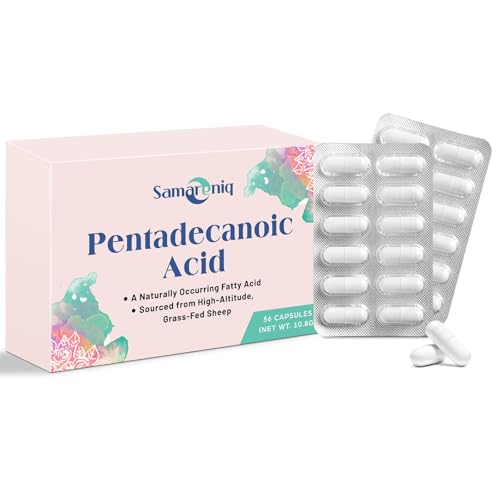
Commercially available C15 supplements, typically delivered as fatty15 in a stabilized ester form, have been tested in one small 12-week trial of 30 young adults at 200 mg a day, supported by the supplement maker, with no significant adverse events reported [22]. These supplements aim to deliver a concentrated, purified dose that would be difficult to match through food alone without consuming large amounts of fat-rich dairy or meat.
Whether supplements offer advantages over dietary sources, or vice versa, is not yet settled. Food sources deliver C15 alongside a full matrix of other fats, proteins, vitamins, and minerals that may have synergistic or contextual effects. Supplements provide precision of dose and avoid the caloric load of consuming large amounts of dairy fat. For most people without specific medical concerns, whole food sources are a logical first approach, with supplements potentially relevant for those who want to ensure consistent intake or who do not consume animal products.
The FDA has not evaluated C15 supplements or foods for any disease treatment or prevention claims. Statements about C15 supporting cellular health or representing an essential nutrient reflect the working hypothesis of Epitracker researchers and have not been confirmed through the rigorous regulatory review process required for approved health claims.
🛒 Where to Buy Pentadecanoic Acid (C15)

- Fatty15 (official site) 20% off with code SFKKDBQQ
capsules, 100 mg C15 per capsule; 1 capsule/day starter, 2 capsules/day maintenance: Category creator, from the original Epitracker research team (Venn-Watson et al.); uses a patented, sustainably-sourced pure C15 ingredient; most expensive per-capsule but reference product for all comparisons - Double Wood Supplements Pentadecanoic Acid C15
capsules, 200 mg C15 per serving (2 capsules): Generic C15 supplement; significantly lower price than Fatty15; no independent clinical trials on this specific product; good option for budget-conscious buyers who want to trial the fatty acid - Sports Research Pentadecanoic Acid C15
softgels, 100 mg C15 per softgel: Established supplement brand with strong Amazon presence; softgel form may aid fat-soluble absorption; competitively priced mid-tier option - BulkSupplements Pentadecanoic Acid Powder (C15)
powder, 100 to 300 mg per measured serving: Most economical option for higher-dose protocols or stackers; requires a milligram-accurate scale; no excipients or additives; not recommended for beginners unfamiliar with powder dosing
As an Amazon Associate we earn from qualifying purchases. C15 products vary widely in how much pentadecanoic acid they actually contain, so check that the Supplement Facts panel lists C15 in milligrams as its own line item rather than bundling it into a fatty acid blend, and compare the per-serving dose with the 200 mg a day used in the one small published human trial [22].

A Note on the Evidence
The research on C15 as a potentially essential fatty acid is early and predominantly conducted or funded by Epitracker researchers; independent replication at scale is still ongoing, and no health claims have been approved by the FDA or established by mainstream nutrition guidelines. People with cardiovascular conditions, dairy allergies or intolerances, or those on specific therapeutic diets should consult a qualified healthcare provider before making significant changes to their fat intake or adding C15 supplements.
The Catch: Amounts Are Small
Published estimates of C15 in foods vary several-fold: one review puts 200 ml of semi-skimmed milk at roughly 20 mg, while test foods in a crossover study held about 0.3 g in 100 g of cheese [20][21]. To reach a research-relevant intake through diet alone, you’d need to eat a lot of whole-fat dairy, which brings other considerations. This gap between dietary and supplemental amounts is the core reason products like Fatty15 exist.
Frequently Asked Questions
Which food has the highest concentration of C15?
Butter and ghee tend to have the highest concentration of C15 per gram of food among commonly consumed items because they are nearly pure dairy fat. Aged hard cheeses and heavy cream are also rich sources. The actual amount per serving depends on portion size, so regular consumption of full-fat dairy across the day is the most practical way to increase intake through food.
Does grass-fed dairy really contain more C15 than conventional dairy?
Evidence suggests grass-fed and pasture-raised cattle produce milk with somewhat higher odd-chain fatty acid concentrations, including C15, compared to grain-fed cattle. This is attributed to differences in rumen microbial fermentation. However, both grass-fed and conventional full-fat dairy contain C15; the difference is one of degree rather than presence or absence.
Can people on plant-based diets get C15 from food?
Plant foods do not contain meaningful amounts of C15. People following strictly vegan diets will have very low dietary C15 intake. Whether this has health consequences is an open research question. Those on plant-based diets who are interested in C15 would need to consider supplements, as there is no well-established plant food source of this fatty acid.
Is C15 the same as the fat in regular butter I buy at the store?
C15 is one of many fatty acids present in butter, not the only or even dominant one. Butter’s fat profile is dominated by even-chain saturated fats like palmitic and stearic acid, along with butyric acid and oleic acid. C15 makes up a small but measurable fraction (about the same share of total fatty acids as in the milk fat it is made from, on the order of 1 percent) which is why butter is described as a source rather than a concentrated supplement.
How much C15 is in a typical serving of sardines?
C15 concentrations in fish vary by species, fat content, and whether the fish is wild-caught or farmed. Oily fish like sardines and mackerel contain C15 as part of a complex fatty acid profile, but in smaller absolute amounts per serving than full-fat dairy. Exact figures depend on the specific product and have not been as thoroughly characterized as dairy fat concentrations in published research.
Is taking a C15 supplement safer or better than eating dairy?
C15 at 200 mg per day in one small, industry-supported 12-week trial had no significant adverse events [22], and they offer a precise, calorie-controlled dose. Whether supplements are superior, inferior, or equivalent to food sources for any particular outcome is not yet established. Whole dairy foods deliver C15 alongside other nutrients in a food matrix that may have its own benefits. The right approach depends on individual diet, health context, and goals: a conversation best had with a qualified healthcare provider.
Does my blood C15 level show how much dairy I eat?
Roughly. Studies found correlations from weak to moderate between C15 and reported dairy intake (about 0.4 to 0.5 in weighed food records, but 0.13 to 0.2 in some free-living samples) [8][17][18][19], so it is a rough marker rather than an exact measure, and the body also contributes through gut-derived propionate.
Can eating more fiber raise C15?
Possibly. In a randomized crossover study of 16 healthy adults, 30 g a day of inulin for 7 days raised plasma pentadecanoic acid by about 17%, apparently through gut-derived propionate, while cellulose had no effect.
Does skim milk contain C15?
Very little. C15 is carried in the milk fat, and most of that fat is removed in skim and other reduced-fat dairy.
Is there a reliable number for how much C15 is in a serving of butter or milk?
Published figures vary, and C15 in milk differs between cows and with lactation stage and feeding system, so this page gives a relative ranking rather than a per-serving amount.
References
- Pentadecanoic and Heptadecanoic Acids: Multifaceted Odd-Chain Fatty Acids. Advances in Nutrition, 2016
- Odd-chain fatty acids as a biomarker for dietary fiber intake: a novel pathway for endogenous production from propionate. The American Journal of Clinical Nutrition, 2017
- New insights on pentadecanoic acid with special focus on its controversial essentiality: A mini-review. Biochimie, 2024
- Investigating the potential role of propionylcarnitine in milk pentadecanoic acid synthesis in Chinese holstein dairy cows using multi-omics analysis. BMC Genomics, 2026
- Odd- and branched-chain fatty acids in milk fat from Holstein dairy cows are influenced by physiological factors. Animal, 2022
- Effect of short-term versus long-term grassland management and seasonal variation in organic and conventional dairy farming on the composition of bulk tank milk. Journal of Dairy Science, 2013
- Tallow in the finishing diet of beef steers increases the proportion of odd-chain fatty acids in beef and remodels the intramuscular fat lipidome. Journal of Animal Science, 2026
- Evaluation of the odd fatty acids 15:0 and 17:0 in serum and adipose tissue as markers of intake of milk and dairy fat. European Journal of Clinical Nutrition, 2005
- Plasma phospholipid pentadecanoic acid, EPA, and DHA, and the frequency of dairy and fish product intake in young children. Food & Nutrition Research, 2016
- Within-person reproducibility and sensitivity to dietary change of C15:0 and C17:0 levels in dried blood spots: Data from the European Food4Me Study. Molecular Nutrition & Food Research, 2017
- Serum pentadecanoic acid (15:0), a short-term marker of dairy food intake, is inversely associated with incident type 2 diabetes and its underlying disorders. American Journal of Clinical Nutrition, 2014
- Biomarkers of dairy fat intake and risk of cardiovascular disease: a systematic review and meta analysis of prospective studies. Critical Reviews in Food Science and Nutrition, 2018
- Comparison of Milk Odd- and Branched-Chain Fatty Acids among Human, Dairy Species and Artificial Substitutes. Foods, 2022
- Recommended dairy product intake modulates circulating fatty acid profile in healthy adults: a multi-centre cross-over study. The British Journal of Nutrition, 2015
- Associations of dairy and fiber intake with circulating odd-chain fatty acids in post-myocardial infarction patients. Nutrition & Metabolism, 2019
- Wu Y et al. Odd Chain Fatty Acids Are Not Robust Biomarkers for Dietary Intake of Fiber. Molecular nutrition & food research (2021). PMID 34605164
- Ilse G. Pranger et al. Fatty acids as biomarkers of total dairy and dairy fat intakes: a systematic review and meta-analysis. Nutrition Reviews (2018). PMID 30307550
- Laura Pimpin et al. Is Butter Back? A Systematic Review and Meta-Analysis of Butter Consumption and Risk of Cardiovascular Disease, Diabetes, and Total Mortality. PLoS ONE (2016). PMID 27355649
- Li KJ et al. Evaluating the Robustness of Biomarkers of Dairy Food Intake in a Free-Living Population Using Single- and Multi-Marker Approaches. Metabolites (2021). PMID 34204298
- Sellem L et al. Can individual fatty acids be used as functional biomarkers of dairy fat consumption in relation to cardiometabolic health? A narrative review. The British journal of nutrition (2022). PMID 35086579
- Trimigno A et al. GC-MS Based Metabolomics and NMR Spectroscopy Investigation of Food Intake Biomarkers for Milk and Cheese in Serum of Healthy Humans. Metabolites (2018). PMID 29570652
- Robinson MK et al. Pentadecanoic Acid Supplementation in Young Adults with Overweight and Obesity: A Randomized Controlled Trial. The Journal of nutrition (2024). PMID 39069269
- Bethancourt HJ et al. Assessing the validity of plasma phospholipid fatty acids as biomarkers of dairy fat intake using data from a randomized controlled intervention trial. The American journal of clinical nutrition (2022). PMID 35134818
- Brian T. Steffen et al. Plasma pentadecanoic acid is modestly related to cardiovascular health in CARDIA and ARIC cohorts: observational associations without evidence of causality. Frontiers in Nutrition (2026). PMID 41743064
- Kim J et al. Microbiota and Metabolite Modifications after Dietary Exclusion of Dairy Products and Reduced Consumption of Fermented Food in Young and Older Men. Nutrients (2021). PMID 34205926
- Karolin Weitkunat et al. Importance of propionate for the repression of hepatic lipogenesis and improvement of insulin sensitivity in high‐fat diet‐induced obesity. Molecular Nutrition & Food Research (2016). PMID 27467905
These statements have not been evaluated by the Food and Drug Administration. This information is not intended to diagnose, treat, cure, or prevent any disease. Content is for informational purposes only and is not medical advice; consult a qualified healthcare provider before starting any supplement. As an Amazon Associate we earn from qualifying purchases.