Pentadecanoic acid (C15) is an odd-chain saturated fatty acid found mainly in full-fat dairy products and ruminant fats, with smaller amounts in freshwater fish and some made in the body [1][12]. It has attracted growing scientific attention because blood levels of C15 are used as a biomarker of dairy fat intake, an imperfect one, and have been associated with cardiometabolic markers in observational research [1]. Epitracker researchers have proposed that C15 supports cellular health by integrating into cell membranes, acting as a partial PPAR-alpha and PPAR-delta agonist, and potentially reducing ferroptosis and cellular senescence: a hypothesis that is intriguing but has not yet been formally adopted by regulatory bodies or mainstream nutrition science.
If C15 is something you want more of, you face a real practical question: eat more full-fat dairy, or take an isolated C15 supplement? Both routes deliver the fatty acid, but they carry very different caloric loads, nutrient co-passengers, and evidence profiles. This article lays out the honest trade-offs so you can weigh them against your own diet and health goals. Nothing here constitutes medical advice, and the FDA has not evaluated C15 for the treatment or prevention of any disease.
Key Takeaways
- C15 (pentadecanoic acid) is found almost exclusively in full-fat dairy and ruminant fats; blood levels are used as a biomarker of dairy fat intake, though an imperfect one, and have been studied as cardiometabolic biomarkers [1].
- Full-fat dairy delivers C15 within a nutritional matrix that includes polar lipids, protein, calcium, and fat-soluble vitamins, but adds meaningful calories: roughly 150 kcal per cup of whole milk.
- Isolated C15 supplements provide a defined dose (typically 100 to 300 mg) with negligible calories, making them practical for dairy-free, lactose-intolerant, or calorie-restricted individuals.
- Most evidence linking C15 to health outcomes is observational and reflects habitual dairy fat intake; clinical trials on isolated C15 supplements remain early-stage.
- The classification of C15 as an ‘essential’ fatty acid is a hypothesis by Epitracker researchers not yet adopted by regulatory bodies; the FDA has not evaluated C15 supplements for any disease.
What C15 Is and Why It Shows Up in Dairy
Pentadecanoic acid is a 15-carbon saturated fatty acid produced in the rumen of cows, sheep, and goats through microbial fermentation of plant material. Because humans make odd-chain fatty acids only in limited amounts themselves (gut-derived propionate from fiber is one route), dairy fat is one contributor to circulating C15, though the link is modest: pooled data show a correlation of 0.33 with dairy fat intake and 0.20 with total dairy[1][13]. Whole milk, butter, cream, and aged cheese are the richest practical sources; skimmed or reduced-fat versions contain proportionally less because the fatty acid travels with the lipid fraction.
Full-fat dairy is a nutritionally complex food. Beyond C15, it supplies calcium, phosphorus, protein, fat-soluble vitamins, and a range of polar lipids including sphingomyelin and phosphatidylcholine, which have been studied for their own cardiometabolic effects [2]. The matrix in which C15 arrives (whole milk, aged cheese, or butter) influences how dairy fat is digested and absorbed, and researchers have argued that considering dairy foods as whole matrices rather than collections of isolated nutrients may be important for understanding their health effects [3].
The Caloric Reality of Getting C15 From Whole Dairy
A cup (240 ml) of whole milk provides roughly 150 calories, about 8 g of total fat; at roughly 1% C15 that is on the order of 80 mg of C15 [11]. Butter is almost pure milk fat, so matching the 200 mg used in supplement trials would take about 20 g of milk fat, roughly two tablespoons of butter and close to 200 calories. Hard cheeses fall somewhere between the two. For someone with a high caloric budget or who is actively trying to increase overall energy intake, fitting full-fat dairy into a balanced diet is straightforward [4].
A glass of milk carries a tenth of the trial dose; cheese can carry more
Full-fat dairy can supply C15 in the same range as a capsule, along with the rest of the dairy fat.
Milk figure is a UK estimate; cheese figure was measured in the test foods of an 11-person crossover study. Source: Sellem et al., British Journal of Nutrition 2022; Trimigno et al., Metabolites 2018; Robinson et al., The Journal of Nutrition 2024.
Data table
| Item | Value |
|---|---|
| One 200 ml glass of semi-skimmed milk | 20 mg |
| 100 g cheese, test food in an 11-person study (0.3 g) | 300 mg |
| Trial capsule dose per day | 200 mg |
Chart: c15hub.com: A glass of milk carries a tenth of the trial dose; cheese can carry more
Embed this chart
Free to reuse on your site. Copy the code below; please keep the credit link.
Research note: A high-dairy diet raised cholesteryl-ester 15:0 more than a high-meat diet (β 0.27) or high-grain diet (β 0.15) in a crossover trial [19].
For people managing weight, following a low-fat dietary prescription, or dealing with lactose intolerance, the caloric and digestive load of sufficient full-fat dairy to meaningfully raise C15 intake can be a genuine barrier. This is the practical gap that isolated C15 supplements aim to fill. The trade-off is real: dairy’s caloric density is not a flaw unique to C15, it is a property of fat itself (9 kcal per gram). Anyone targeting a specific dose of C15 purely for its proposed cellular effects, rather than for general nutrition, faces a cost-benefit calculation that supplements may tip in their favor.
What the Research Says About Full-Fat Dairy and Cardiometabolic Health
A growing body of observational and clinical evidence suggests that full-fat dairy consumption is not clearly associated with increased cardiovascular risk and may be associated with neutral or favorable outcomes for several cardiometabolic markers [5]. This has challenged older dietary guidance that broadly categorized saturated fat as harmful, though the field continues to debate how much of the benefit is attributable to specific fatty acids like C15 versus the overall food matrix.
Not every trial is reassuring. In 111 adults with type 2 diabetes eating high-fat dairy daily for 24 weeks, C15 rose, but the rise was tied to higher total cholesterol, VLDL-C and triglycerides rather than to better HbA1c [17].
Odd-chain fatty acids including C15 and C17:0 have received particular attention as potential mediators of dairy fat’s cardiometabolic associations, since they occur mainly in ruminant fat and are therefore used as biomarkers of intake, although they are not clean markers (see the section on dairy and blood C15 below) [1]. Reviews of dietary lipid structure-activity relationships suggest that the physical form of fat, emulsified in milk versus free in butter versus encapsulated in a supplement capsule, may influence absorption kinetics and downstream metabolic effects [3], though the clinical relevance of these differences for C15 specifically is not yet established.
It is worth noting that the cardiometabolic associations observed with full-fat dairy in the literature reflect the whole food, not C15 in isolation. Polar lipids in dairy such as sphingomyelin and phosphatidylcholine are themselves proposed to influence lipoprotein metabolism and gut health [2], and it is not possible from the current evidence base to attribute observed effects specifically to C15 rather than to dairy’s broader lipid or nutrient profile [6].
In CARDIA and ARIC, plasma C15 was not associated with incident cardiovascular disease, and the authors concluded the evidence is not consistent with a causal cardiovascular benefit [18].
Does Eating More Dairy Raise Blood C15?
Sometimes, and usually modestly. Effects varied between controlled trials, and one trial in adolescent girls found extra dairy did not change serum 15:0 or 17:0 [14][15]. In a randomized crossover trial of 27 adults (8 women, 19 men), C15 and C17:0 in plasma phospholipids were positively correlated with dairy intake and increased after a six-week high-dairy diet (more than 4 servings a day) compared with an adequate-dairy diet of 2 to 3 servings [7]. In a 12-month trial in adolescents, red blood cell C15 rose only in the group assigned at least 4 dairy servings a day (+0.37 µg/mL), and only at 12 months; there was no difference at baseline or at 6 months [8]. These fatty acids can move slowly, so a short trial or a single retest may show little.
Servings are also a blunt measure, because C15 travels with the fat. A 12-week controlled trial of 62 people assigned diets providing 0.3, 8.7 or 28.5 g of dairy fat per day found that, after adjusting for liver fat, plasma phospholipid C15 and C17:0 were not associated with dairy fat intake, and were predicted to rise with dairy fat only in people with elevated liver fat; trans-palmitoleic acid combined with iso-C17:0 tracked intake best [9]. The same dairy diet may therefore move blood C15 by different amounts in different people.
The 2025 crossover trial also looked at blood pressure. Palmitic acid and total saturated fatty acids were positively associated with systolic and diastolic pressure, while C17:0 was inversely associated with diastolic pressure; the abstract does not report a blood pressure association for C15 [7]. These are correlations within a 27-person trial, not a test of whether raising C15 changes blood pressure, and dairy also supplies palmitic acid and other saturated fat alongside C15.
Isolated C15 Supplements: What They Offer and What They Leave Out
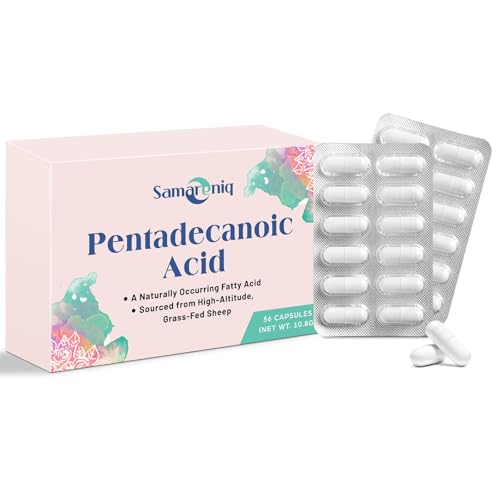
Commercially available C15 supplements typically deliver 100 to 300 mg of pentadecanoic acid per capsule, derived either from synthetic production or from naturally occurring sources. The one published human trial used 200 mg/day for 12 weeks in 30 young adults, was supported by the supplement maker, and reported no significant adverse events; that is too little to call tolerability a strength [10]. In one 12-week randomized, double-blind trial, 30 young adults with overweight or obesity took 200 mg/day of C15 or placebo; circulating C15 rose 1.88 µg/mL more than with placebo, and no significant adverse events occurred [10]. For someone who cannot or chooses not to eat significant amounts of full-fat dairy, a supplement offers a way to raise C15 intake with negligible caloric cost: a capsule in this dose range contributes fewer than 5 calories.
The limitation is that a supplement delivers C15 as an isolated molecule, absent the matrix of polar lipids, protein, calcium, and other bioactives present in whole dairy. Whether the cellular effects hypothesized for C15 (membrane integration, PPAR agonism, reduced ferroptosis) manifest equally when the fatty acid is consumed in isolation versus within a whole-food lipid matrix is not established in published clinical trials. The honest answer is that isolated supplement research on C15 remains early-stage, and the classification of C15 as a newly essential fatty acid is a hypothesis advanced by Epitracker researchers that has not been formally adopted by regulatory bodies.
Who Might Favor Each Approach
Full-fat dairy makes practical sense for people who tolerate dairy well, have flexible caloric budgets, and want to benefit from the full nutritional matrix the food provides, including protein, calcium, polar lipids, and fat-soluble vitamins alongside C15 [4]. It is also the form with the longest observational track record; most of what is known about C15 and health outcomes has been studied using blood levels that reflect habitual dairy fat intake rather than supplement use [1].
A C15 supplement may be worth considering for people who are lactose intolerant, follow a dairy-free diet for ethical or environmental reasons, are on a calorie-controlled plan where adding 150 to 300 calories of full-fat dairy is impractical, or who specifically want to target a defined dose of C15 without dietary adjustment. It may also suit people who already eat moderate amounts of full-fat dairy but want additional C15 without further increasing caloric intake. In either case, a supplement should be viewed as a complement to, not a replacement for, a nutritionally complete diet.
Practical Considerations: Dose, Form, and Diet Quality
The one published human trial used 200 mg per day; 100 to 300 mg is the range sold in products [10]. Reaching the lower end of this range through diet alone requires roughly two to three servings of full-fat dairy daily; reaching the higher end requires more, with a corresponding caloric contribution. For context, published estimates of C15 per serving vary several-fold: one review puts 200 ml of semi-skimmed milk at roughly 20 mg, while test foods in a crossover study held about 0.3 g in 100 g of cheese [1][16], so meaningful dietary intake requires consistent daily consumption [1].

Diet quality in the broader sense matters regardless of which route you choose. The cardiometabolic associations observed with full-fat dairy have generally been studied in the context of whole dietary patterns, not as isolated interventions [5]. Adding full-fat dairy or a C15 supplement to an otherwise poor diet is unlikely to produce meaningful benefit, and no supplement replaces the fundamentals of varied whole-food eating, physical activity, and adequate sleep. The structure-activity relationship of dietary lipids, how fat form and food matrix influence outcomes, remains an active area of research that makes simple single-nutrient recommendations premature [3].
🛒 Where to Buy Pentadecanoic Acid (C15)
- Fatty15 (official site) 20% off with code SFKKDBQQ
capsules, 100 mg C15 per capsule; 1 capsule/day starter, 2 capsules/day maintenance: Category creator, from the original Epitracker research team (Venn-Watson et al.); uses a patented, sustainably-sourced pure C15 ingredient; most expensive per-capsule but reference product for all comparisons - Double Wood Supplements Pentadecanoic Acid C15
capsules, 200 mg C15 per serving (2 capsules): Generic C15 supplement; significantly lower price than Fatty15; no independent clinical trials on this specific product; good option for budget-conscious buyers who want to trial the fatty acid - Sports Research Pentadecanoic Acid C15
softgels, 100 mg C15 per softgel: Established supplement brand with strong Amazon presence; softgel form may aid fat-soluble absorption; competitively priced mid-tier option - BulkSupplements Pentadecanoic Acid Powder (C15)
powder, 100 to 300 mg per measured serving: Most economical option for higher-dose protocols or stackers; requires a milligram-accurate scale; no excipients or additives; not recommended for beginners unfamiliar with powder dosing
As an Amazon Associate we earn from qualifying purchases. C15 products vary widely in how much pentadecanoic acid they actually contain, so check that the Supplement Facts panel lists C15 in milligrams as its own line item rather than bundling it into a fatty acid blend, and compare the per-serving dose with the 200 mg a day used in the one small published human trial [10].

A Note on the Evidence
The evidence linking C15 to cellular health benefits is largely observational or based on early-stage laboratory and clinical research; no regulatory body has approved C15 for treating or preventing any condition. People with cardiovascular disease, dyslipidemia, dairy allergies, lactose intolerance, or those who are pregnant should consult a qualified healthcare provider before significantly changing dairy fat intake or starting a C15 supplement.

Frequently Asked Questions
How much C15 is typically in a serving of whole milk or butter?
Estimates vary by animal breed and feed, but C15 makes up on the order of 1% of the fatty acids in cow’s milk fat; one study of Holstein cows compared groups averaging 1.03% and 1.39% [11]. Because it is a share of the fat, a cup of whole milk carries far more C15 than a cup of skim. Butter, being concentrated dairy fat, contains more per gram of fat but is rarely consumed in large enough quantities to dominate dietary C15 intake compared to regular milk or cheese consumption [4].

Does eating full-fat dairy increase cardiovascular risk?
Current evidence does not clearly support the view that full-fat dairy intake increases cardiovascular risk, and some reviews suggest neutral or potentially favorable associations with certain cardiometabolic markers [5]. However, individual responses vary, and people with specific lipid or cardiovascular conditions should discuss dairy fat intake with a healthcare provider rather than relying on population-level observational data.
Can I get the same benefits from a C15 supplement as from whole dairy?
This is not established. Whole dairy delivers C15 alongside polar lipids, protein, and other bioactives whose combined effects may differ from an isolated fatty acid [2]. Most research linking C15 levels to health outcomes has been conducted using dietary biomarkers of full-fat dairy intake, not supplement interventions, so equivalence cannot be assumed [1].
Are C15 supplements safe?
In the one published human trial (200 mg/day, 12 weeks, 30 young adults, supplement-maker supported) no significant adverse events were reported; long-term safety is unstudied [10]. However, the evidence base is still early-stage, and the FDA has not evaluated C15 supplements for safety or efficacy in treating or preventing any disease. Anyone with pre-existing conditions or on medications should consult a healthcare provider before starting a new supplement.
Do reduced-fat or skim dairy products contain meaningful C15?
C15 travels with the fat fraction, so reduced-fat and skim dairy products contain substantially less than their full-fat counterparts. Switching to lower-fat dairy to reduce calories would proportionally lower C15 intake, which is the core trade-off this article addresses [1].
Does the food matrix affect how dairy fat is absorbed and used?
Research on dietary lipid structure-activity relationships suggests that the physical form of fat (emulsified in liquid milk, crystallized in cheese, or free in butter) can influence digestion and absorption kinetics [3]. Whether these matrix effects meaningfully alter the specific cellular activities proposed for C15 has not been established in clinical trials, making this an open question rather than a settled one.
References
- Sellem L et al. Can individual fatty acids be used as functional biomarkers of dairy fat consumption in relation to cardiometabolic health? A narrative review. The British journal of nutrition (2022). PMID 35086579
- Bruno RS et al. Cardiometabolic health benefits of dairy-milk polar lipids. Nutrition reviews (2021). PMID 34879146
- Vors C et al. Dietary lipids and cardiometabolic health: a new vision of structure-activity relationship. Current opinion in clinical nutrition and metabolic care (2020). PMID 32889824
- Turck D et al. Cow's milk and goat's milk. World review of nutrition and dietetics (2013). PMID 24029787
- Hirahatake KM et al. Potential Cardiometabolic Health Benefits of Full-Fat Dairy: The Evidence Base. Advances in nutrition (Bethesda, Md.) (2020). PMID 31904812
- Lordan R et al. Dairy Fats and Cardiovascular Disease: Do We Really Need to be Concerned?. Foods (Basel, Switzerland) (2018). PMID 29494487
- Impact of dairy intake on circulating fatty acids and associations with blood pressure: A randomized crossover trial. Nutrition, metabolism, and cardiovascular diseases (2025). PMID 40436701
- Evaluation of plasma and erythrocyte fatty acids C15:0, t-C16:1n-7 and C17:0 as biomarkers of dairy fat consumption in adolescents. Prostaglandins, leukotrienes, and essential fatty acids (2019). PMID 31421524
- Bethancourt HJ et al. Assessing the validity of plasma phospholipid fatty acids as biomarkers of dairy fat intake using data from a randomized controlled intervention trial. The American journal of clinical nutrition (2022). PMID 35134818
- Robinson MK et al. Pentadecanoic Acid Supplementation in Young Adults with Overweight and Obesity: A Randomized Controlled Trial. The Journal of nutrition (2024). PMID 39069269
- Zhang H et al. Investigating the potential role of propionylcarnitine in milk pentadecanoic acid synthesis in Chinese holstein dairy cows using multi-omics analysis. BMC Genomics (2026). PMID 41888651
- Pfeuffer M et al. Pentadecanoic and Heptadecanoic Acids: Multifaceted Odd-Chain Fatty Acids. Advances in nutrition (Bethesda, Md.) (2016). PMID 27422507
- Ilse G. Pranger et al. Fatty acids as biomarkers of total dairy and dairy fat intakes: a systematic review and meta-analysis. Nutrition Reviews (2018). PMID 30307550
- Chouinard-Watkins R et al. Dairy product consumption is associated with a lowering of linoleic acid within serum TAG in adolescent females with overweight or obesity: a secondary analysis. The British journal of nutrition (2022). PMID 34027846
- Mohammad M. H. Abdullah et al. Recommended dairy product intake modulates circulating fatty acid profile in healthy adults: a multi-centre cross-over study. British Journal Of Nutrition (2015). PMID 25609231
- Trimigno A et al. GC-MS Based Metabolomics and NMR Spectroscopy Investigation of Food Intake Biomarkers for Milk and Cheese in Serum of Healthy Humans. Metabolites (2018). PMID 29570652
- Mitri J et al. Plasma Free Fatty Acids and Metabolic Effect in Type 2 Diabetes, an Ancillary Study from a Randomized Clinical Trial. Nutrients (2021). PMID 33807135
- Brian T. Steffen et al. Plasma pentadecanoic acid is modestly related to cardiovascular health in CARDIA and ARIC cohorts: observational associations without evidence of causality. Frontiers in Nutrition (2026). PMID 41743064
- Vissers LET et al. Consumption of a diet high in dairy leads to higher 15:0 in cholesteryl esters of healthy people when compared to diets high in meat and grain. Nutrition, metabolism, and cardiovascular diseases : NMCD (2020). PMID 32139254
These statements have not been evaluated by the Food and Drug Administration. This information is not intended to diagnose, treat, cure, or prevent any disease. Content is for informational purposes only and is not medical advice; consult a qualified healthcare provider before starting any supplement. As an Amazon Associate we earn from qualifying purchases.