Seraphina Therapeutics, the company behind the human supplement Fatty15, expanded into pet health with Longevity15, a pentadecanoic acid (C15:0) product marketed for dogs. The pitch mirrors the human product: C15:0 is framed as a newly identified essential fatty acid that supports cell membrane stability and healthy aging, this time for a four-legged audience.
Before assuming the human evidence simply carries over, it’s worth separating what has actually been studied from what is being extrapolated. This article looks at the human and animal research that exists, is honest about what’s missing — namely, a published, peer-reviewed clinical trial in dogs — and explains what pet owners are realistically buying into.
What Longevity15 Is Actually Selling
Longevity15 is a pentadecanoic acid supplement dosed for dog body weight, sold by Pets Best Life in partnership with Seraphina Therapeutics. The underlying ingredient is the same purified C15:0 used in the human Fatty15 capsules. The marketing case draws directly on the human research base: C15:0’s association with lower rates of metabolic and inflammatory disease markers in circulating-blood studies, and its proposed role in stabilizing cell membranes against a form of cell death called ferroptosis [1].
That lineage is worth naming plainly. The company is not citing a dog-specific clinical trial because, as of this writing, no peer-reviewed veterinary trial of C15:0 supplementation has been published. The product’s scientific basis is entirely extrapolated from human and preclinical rodent data.
What the Underlying Human and Animal Research Actually Shows
The strongest piece of direct clinical evidence for C15:0 is a small randomized, double-blind, placebo-controlled trial in 30 young adults with overweight or obesity, who took 200 mg of C15:0 or a placebo daily for 12 weeks. Circulating C15:0 rose significantly more in the treatment group, and no significant adverse events were reported [2]. Participants who reached higher circulating C15:0 levels post-treatment also saw larger reductions in liver enzymes and a rise in hemoglobin — a signal worth further study, not a proven clinical outcome, given the tiny sample size.
On the animal side, the most relevant published work is a rat study examining C15:0 supplementation in essential-fatty-acid-deficient animals at weaning, which found effects on the profile of a newly described class of odd-chain PUFAs [3]. That’s a rodent nutritional-deficiency model, not a companion-animal supplementation trial, and rats and dogs differ meaningfully in fat metabolism.
Cell-based work has also compared C15:0’s anti-inflammatory activity favorably to EPA, a well-studied omega-3, across a panel of human cell systems [4]. Cell assays are useful for generating hypotheses about mechanism; they are not evidence that a dog eating a capsule will show the same effects in vivo.
What’s Missing for Pet Owners Specifically
No published trial has measured whether oral C15:0 supplementation changes circulating C15:0 levels in dogs, what an appropriate weight-based dose is, or whether any of the metabolic or membrane-stability signals seen in human cells and rodent models translate to observable health outcomes in companion animals. Canine fat metabolism, gut absorption, and typical diet composition (many commercial dog foods already contain dairy- or ruminant-fat-derived odd-chain fatty acids) differ from the human case Fatty15 was originally built around.
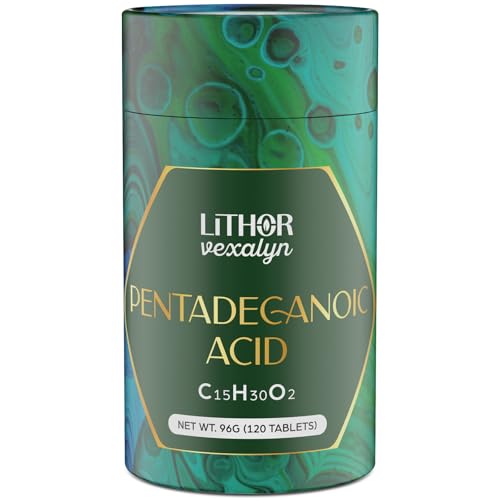
None of this means the ingredient is unsafe for dogs — C15:0 is a naturally occurring dietary fatty acid, not a synthetic novel compound, and the human safety data reported so far is reassuring at low doses [2]. But ‘naturally occurring and well-tolerated in a small human trial’ is a different claim than ‘proven to help your dog age better,’ and pet owners are currently being asked to trust the extrapolation rather than a direct study.
Should You Try It for Your Dog?
If you’re considering a C15:0 supplement for a pet, the honest framing is that you’re paying for a hypothesis extended from human and rodent data, not a veterinary-trial-backed product. That’s not unusual in the pet supplement space — most companion-animal nutraceuticals launch on adjacent human evidence before dedicated animal trials catch up — but it’s worth knowing going in, and worth asking your veterinarian before adding any new supplement to a dog’s diet, particularly for animals with existing liver, kidney, or metabolic conditions.
References
- Efficacy of dietary odd-chain saturated fatty acid pentadecanoic acid parallels broad associated health benefits in humans: could it be essential?. Scientific Reports, 2020
- Pentadecanoic Acid Supplementation in Young Adults with Overweight and Obesity: A Randomized Controlled Trial. The Journal of Nutrition, 2024
- Dietary pentadecanoic acid supplementation at weaning in essential fatty acid-deficient rats. The Journal of Nutritional Biochemistry, 2025
- Broader and safer clinically-relevant activities of pentadecanoic acid compared to omega-3. PLOS ONE, 2022
These statements have not been evaluated by the Food and Drug Administration. This information is not intended to diagnose, treat, cure, or prevent any disease. Content is for informational purposes only and is not medical advice; consult a qualified healthcare provider before starting any supplement. As an Amazon Associate we earn from qualifying purchases.
