Fatty15 is a daily supplement built around a single ingredient: pure pentadecanoic acid (C15:0), a saturated odd-chain fatty acid found naturally in small amounts in full-fat dairy and ruminant fat. The company behind it, Epitracker, argues that C15:0 is an ‘essential’ fatty acid that modern low-fat diets have stripped from our plates, and that supplementing it may support cell membrane stability, metabolic signaling, and healthy aging. Bold claims for a single fatty acid — but unlike many supplements, there is at least a growing body of peer-reviewed research to examine.
This review covers what C15:0 actually is, the proposed mechanisms, what the published evidence says, where the evidence is still thin, and whether the price tag is reasonable given what we currently know. No cures are claimed here and nothing in this article constitutes medical advice. The FDA has not evaluated C15:0 supplements for the treatment or prevention of any disease.
Key Takeaways
- C15:0 is a real fatty acid found in full-fat dairy with genuinely interesting preliminary research behind it — but large, independent human trials are still lacking.
- The proposed mechanisms (membrane stabilization, PPAR-alpha/delta partial agonism, ferroptosis resistance) are biologically plausible but not yet clinically established in humans at supplemental doses.
- At 100–300 mg/day, Fatty15 appears well-tolerated with no serious adverse events in published research; long-term safety data is limited.
- The ‘essential fatty acid’ classification for C15:0 is a hypothesis from Epitracker researchers, not a formal regulatory or mainstream scientific consensus.
- For dairy consumers, food sources may provide meaningful C15:0 at far lower cost; the supplement case is strongest for those who have substantially eliminated dairy from their diet.
What Is C15:0 and Where Does It Come From?
Pentadecanoic acid is a 15-carbon saturated fatty acid. Unlike the more familiar even-chain saturated fats (like palmitic acid at C16:0), odd-chain saturated fatty acids have a distinct metabolic fate in the body. C15:0 is found primarily in the fat of ruminant animals — beef, lamb, and especially dairy products like whole milk, butter, and cheese.[1] Your body does not synthesize meaningful amounts on its own, so dietary intake is the main source.[2]
As Western diets shifted toward low-fat dairy and leaner proteins over the past few decades, average C15:0 intake declined. Epitracker researchers have hypothesized that this decline may have unintended consequences for cellular health, framing C15:0 as conditionally or newly essential — a classification that has not been formally adopted by the FDA, EFSA, or mainstream nutrition bodies. The ‘essential’ label remains a hypothesis advanced by the supplement’s developers, not a settled scientific consensus.
Proposed Mechanisms: How C15:0 Is Supposed to Work
Epitracker researchers propose several biological mechanisms for C15:0. First, because odd-chain fatty acids have different packing geometry than even-chain fats, C15:0 is thought to integrate into cell membranes in a way that increases their stability and reduces fragility. Cells with more fragile membranes are believed to be more susceptible to a form of cell death called ferroptosis, and early research has explored whether C15:0 supplementation might reduce this vulnerability.[3]
Second, C15:0 has been studied as a partial agonist of PPAR-alpha and PPAR-delta — nuclear receptors that regulate fatty acid oxidation, inflammation, and metabolic function.[4] Partial agonism is a nuanced pharmacological concept: unlike a full agonist, a partial agonist activates a receptor to a submaximal degree, which can sometimes translate to a more favorable side-effect profile, though this has not been definitively established for C15:0 in humans.

Third, some early research has explored a potential relationship between C15:0 and cellular senescence — the state where aging cells stop dividing but remain metabolically active and can promote inflammation in surrounding tissue. These mechanisms are biologically plausible and have generated genuine scientific interest, but most supporting data comes from cell studies, animal models, or small human observational work. Large randomized controlled trials in humans are still limited.
What Does the Published Evidence Actually Show?
The research base for C15:0 is newer and narrower than the marketing around Fatty15 sometimes implies. Observational studies have found associations between higher circulating C15:0 levels (typically measured in red blood cell membranes) and more favorable metabolic and cardiovascular markers in certain populations. Associations, however, do not establish causation — people who consume more full-fat dairy also differ from low-fat dairy consumers in many other dietary and lifestyle ways.
The Epitracker team has published preclinical and some early clinical work showing that purified C15:0 (the same form in Fatty15) can raise circulating C15:0 levels and demonstrated activity at PPAR receptors and in cell-based ferroptosis models. These findings are genuinely interesting and have been peer-reviewed, but the sample sizes are small and the studies are largely conducted or co-authored by the researchers who developed and sell the supplement — a conflict of interest that is common in early-stage nutrition science but worth noting when weighing the evidence.
No large, independent, long-term randomized controlled trials of C15:0 supplementation have been published to date. The current evidence is best described as promising and hypothesis-generating rather than conclusive. Anyone buying Fatty15 is essentially an early adopter of a supplement whose full clinical picture is still being written.
Safety and Tolerability
At the studied doses of 100–300 mg per day, C15:0 supplementation appears to be well-tolerated.[5] No serious adverse events have been reported in published research at these doses. The most commonly noted effects in studies are mild and gastrointestinal in nature, consistent with introducing any new fat-soluble compound into the diet.
That said, long-term safety data beyond the timeframes of published trials is not yet available. People with known liver conditions, lipid metabolism disorders, or who are pregnant or breastfeeding should consult a physician before adding any fatty acid supplement. Because C15:0 affects PPAR pathways that also regulate lipid metabolism, individuals on medications that interact with these pathways — such as fibrates used for high triglycerides — should seek medical guidance.
Is Fatty15 Worth the Price?
Fatty15 is sold as a one-month supply on a single-purchase basis, with a subscription option that lowers the cost per month. For a single-ingredient supplement with a limited long-term human trial record, that is a premium price point. The company justifies it partly on the basis that producing pharmaceutical-grade pure C15:0 requires a proprietary process — the supplement uses a stabilized ethyl ester form of pentadecanoic acid rather than extracting it from dairy fat directly.

Whether that justifies the cost depends heavily on your personal situation. If you regularly consume full-fat dairy, your baseline C15:0 intake may already be meaningful, and the marginal benefit of supplementing is less clear. If you follow a vegan or very low-fat diet, or have reduced dairy substantially, the argument for supplementation is at least internally coherent given the proposed mechanisms. People optimizing for every marginal health variable and willing to pay for early-stage research will find more to like here than those seeking proven, large-effect interventions.
It is worth noting that the natural food alternative — consuming a moderate amount of full-fat dairy — provides C15:0 alongside a broad matrix of other nutrients (calcium, vitamin K2, protein) and costs far less. For most people who tolerate dairy, improving dietary C15:0 through food may be a reasonable first step before considering a dedicated supplement.
Who Might Have the Strongest Case for Trying It?
The people with the clearest rationale for considering Fatty15 are those who have eliminated or severely restricted full-fat dairy and ruminant fats — whether due to dietary preference, lactose intolerance, or medical advice — and who are interested in proactively supporting cellular health as they age. In this context, the supplement fills a genuine dietary gap, even if the full clinical evidence for the benefits of filling that gap is still accumulating.
It may also be of interest to individuals whose bloodwork shows markers consistent with metabolic dysfunction and who are exploring adjunctive nutritional support alongside, not instead of, medical care. Anyone in this category should discuss C15:0 with their prescribing physician, particularly given the PPAR-pathway activity and the potential for interactions with lipid-modifying medications.
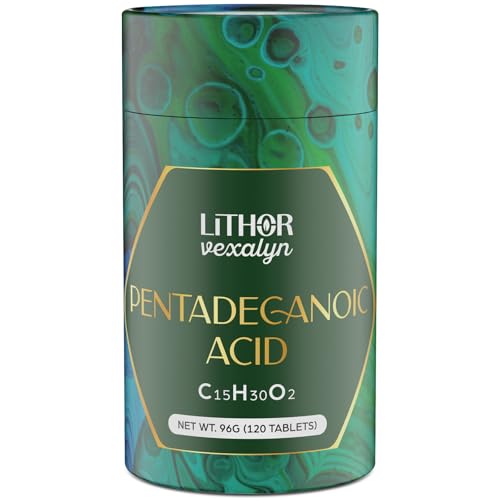
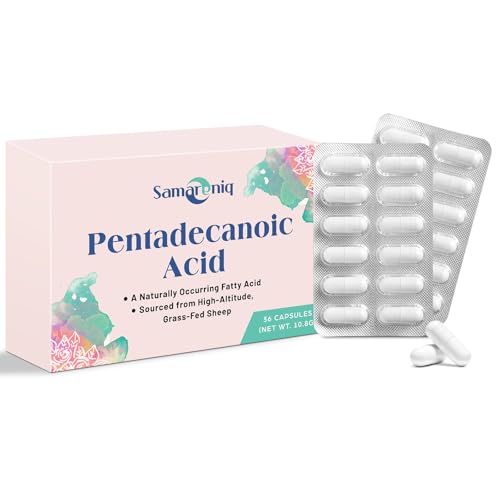
🛒 Where to Buy Pentadecanoic Acid (C15:0)

- Epitracker Fatty15 C15:0 Fatty Acid SupplementLab-tested / studied
capsules, 100 mg C15:0 per capsule; 1 capsule/day starter, 2 capsules/day maintenance — Category creator; the only C15:0 supplement backed by the original Epitracker research team (Venn-Watson et al.); uses a patented, sustainably-sourced pure C15:0 ingredient; most expensive per-capsule but reference product for all comparisons - Double Wood Supplements Pentadecanoic Acid C15:0
capsules, 200 mg C15:0 per serving (2 capsules) — One of the first genericized C15:0 supplements; significantly lower price than Fatty15; no independent clinical trials on this specific product; good option for budget-conscious buyers who want to trial the fatty acid - Sports Research Pentadecanoic Acid C15:0
softgels, 100 mg C15:0 per softgel — Established supplement brand with strong Amazon presence; third-party tested; softgel form may aid fat-soluble absorption; competitively priced mid-tier option - BulkSupplements Pentadecanoic Acid Powder (C15:0)
powder, 100–300 mg per measured serving — Most economical option for higher-dose protocols or stackers; requires a milligram-accurate scale; no excipients or additives; not recommended for beginners unfamiliar with powder dosing
As an Amazon Associate we earn from qualifying purchases. C15:0 products vary widely in how much pentadecanoic acid they actually contain, so check that the Supplement Facts panel lists C15:0 in milligrams as its own line item rather than bundling it into a fatty acid blend, and that the per-serving dose falls in the 100–300 mg range used in published research.
A Note on the Evidence
The evidence for C15:0 supplementation is early-stage, with most human data coming from small studies conducted by researchers with a financial stake in the product; individuals who are pregnant, breastfeeding, have liver or lipid metabolism conditions, or take medications affecting PPAR pathways or lipid levels should consult a physician before using Fatty15 or any C15:0 supplement.
Frequently Asked Questions
What is C15:0 and why haven't I heard of it before?
C15:0 (pentadecanoic acid) is a 15-carbon saturated fatty acid naturally present in full-fat dairy and ruminant fat. It received little scientific attention for decades because research focus was on even-chain fatty acids. Epitracker researchers began publishing on its potential health significance around 2020, which is when public awareness started to grow.

Is Fatty15 the same as eating more butter or cheese?
Not exactly. Full-fat dairy contains C15:0 alongside many other fatty acids, cholesterol, and nutrients. Fatty15 delivers purified C15:0 as an ethyl ester, which the company argues allows for a consistent, controlled dose without the accompanying saturated fat load. Whether that distinction matters clinically for most people has not been directly compared in trials.

Has the FDA approved Fatty15 or C15:0 as essential?
No. The FDA has not evaluated C15:0 supplements for the treatment or prevention of any disease. The claim that C15:0 is a newly essential fatty acid is a scientific hypothesis put forward by Epitracker researchers and has not been formally adopted by regulatory bodies or mainstream nutrition science.
Are there any known side effects or drug interactions?
Published research at 100–300 mg/day reports no serious adverse events, with minor gastrointestinal effects occasionally noted. Because C15:0 has activity at PPAR-alpha and PPAR-delta receptors, there is a theoretical interaction risk with fibrate medications (used for high triglycerides) and other lipid-modifying drugs. Consult your physician if you are on any such medications.
How long does it take to see results with Fatty15?
Published studies measuring circulating C15:0 levels have generally used supplementation periods of several weeks to a few months to detect changes in red blood cell fatty acid composition. There is no established timeline for any subjective benefit, and the research does not yet support predicting what specific effects an individual will notice or when.
Is the research on C15:0 independent?
Much of the published C15:0 research has been conducted or co-authored by the Epitracker team, who also developed and sell Fatty15. The studies have been peer-reviewed and published in legitimate journals, but the conflict of interest is worth factoring into how much weight you give the findings. Independent replication by unaffiliated research groups would substantially strengthen the evidence base.
References
- Pfeuffer M, Jaudszus A. Pentadecanoic and Heptadecanoic Acids: Multifaceted Odd-Chain Fatty Acids. Advances in nutrition (Bethesda, Md.). 2016;7(4):730-4. PMID 27422507
- Ciesielski V, Legrand P, Blat S, et al. New insights on pentadecanoic acid with special focus on its controversial essentiality: A mini-review. Biochimie. 2024;227(Pt B):123-129. PMID 39395658
- Venn-Watson S. The Cellular Stability Hypothesis: Evidence of Ferroptosis and Accelerated Aging-Associated Diseases as Newly Identified Nutritional Pentadecanoic Acid (C15:0) Deficiency Syndrome. Metabolites. 2024;14(7). PMID 39057678
- Venn-Watson S, Lumpkin R, Dennis EA. Efficacy of dietary odd-chain saturated fatty acid pentadecanoic acid parallels broad associated health benefits in humans: could it be essential? Scientific reports. 2020;10(1):8161. PMID 32424181
- Robinson MK, Lee E, Ugalde-Nicalo PA, et al. Pentadecanoic Acid Supplementation in Young Adults with Overweight and Obesity: A Randomized Controlled Trial. The Journal of nutrition. 2024;154(9):2763-2771. PMID 39069269
These statements have not been evaluated by the Food and Drug Administration. This information is not intended to diagnose, treat, cure, or prevent any disease. Content is for informational purposes only and is not medical advice; consult a qualified healthcare provider before starting any supplement. As an Amazon Associate we earn from qualifying purchases.
