Fatty15 vs NMN & NAD+ Boosters: Which Longevity Supplement Is Right for You?
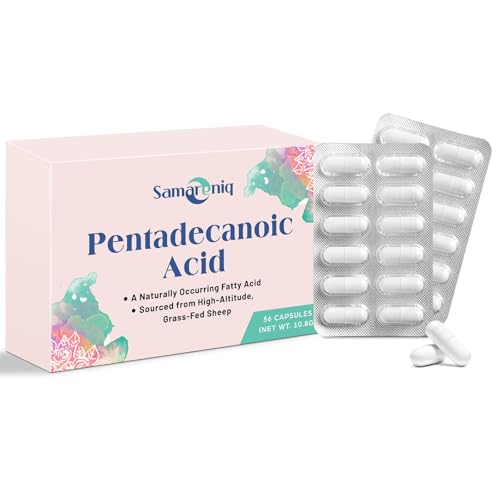
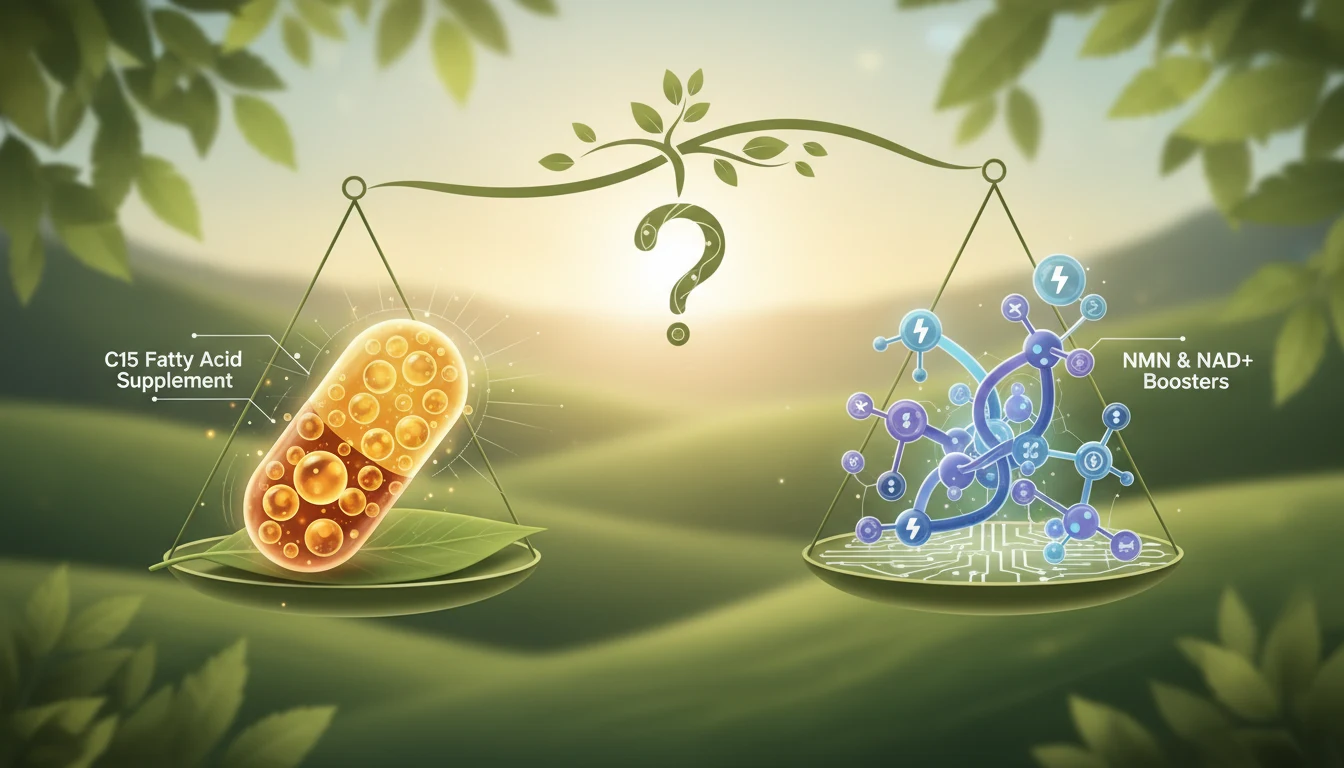
Fatty15 and NMN/NAD+ boosters (like Tru Niagen and other nicotinamide riboside or NMN products) are two of the most talked-about “healthy aging” supplements, and shoppers often try to decide between them. They are frequently compared, but they are not the same thing and do not do the same job. Fatty15 delivers C15, a fatty acid that supports cell membranes; NMN and NAD+ boosters aim to raise NAD+, a coenzyme central to cellular energy. This guide compares them as products so you can pick the right one, or decide whether they complement each other.
The Quick Answer
They target different biology. Fatty15 (C15) is marketed as acting on the structure of your cells, strengthening membranes and supporting metabolic and liver health, but the evidence so far is mostly lab work, observational links and two small trials [11][3][2]. NMN/NAD+ boosters work on cellular energy, aiming to raise NAD+ levels that decline with age. Neither replaces the other. If you had to choose one, base it on your goal and budget, not on the assumption that they overlap.
Research note: The same NMN trial found no significant difference in insulin resistance (HOMA-IR) versus placebo at day 60 [6].
What Each One Actually Does
Fatty15 (C15)
Fatty15’s single ingredient, pentadecanoic acid (C15), is incorporated into cell membranes, where lab and animal research from the company-linked group suggests it may improve membrane stability and reduce a form of oxidative damage, which has not been shown in people [12][13][2][1][2]. In the TANGO trial, adding C15 to a Mediterranean-style diet lowered LDL cholesterol further, but most of the liver and weight benefit came from the diet itself [3].[3] It is a once-daily fatty acid that Fatty15 says can be taken with or without food.
NMN and NAD+ boosters
NMN (nicotinamide mononucleotide) and NR (nicotinamide riboside, the ingredient in Tru Niagen) are precursors the body uses to make NAD+[4], a coenzyme involved in energy metabolism and DNA repair that is commonly described as declining with age. These supplements aim to raise NAD+ levels; the trials cited here reported outcomes such as muscle insulin sensitivity and blood NAD.[5][6]
Fatty15 vs NMN/NAD+: Side-by-Side
| Fatty15 (C15) | NMN / NAD+ Boosters | |
|---|---|---|
| Primary target | Cell-membrane & metabolic health | Cellular energy (NAD+) |
| Key ingredient | Pentadecanoic acid | NMN or nicotinamide riboside |
| Best-known claim | A potentially essential fatty acid | Restores age-related NAD+ decline |
| Evidence stage | Promising, mostly early; two small randomized trials | Active human research, still debated |
| Take with food? | Not required (with or without food, per the brand) | Usually flexible |
Do They Overlap? (Why “vs” Is Slightly Misleading)
Because both are marketed for healthy aging, people assume you must choose. In reality they act on different systems, so some people take both, membrane support from C15 plus NAD+ support from NMN/NR. There is no known conflict between them. The “vs” question is really about where you want to spend first, given cost.
Which Should You Choose?
- Choose Fatty15 (C15) if your interest is metabolic, liver, and cell-membrane health, and you like the single-ingredient approach [14].
- Choose an NMN/NAD+ booster if your focus is cellular energy and the NAD+-decline hypothesis of aging.
- Consider both if budget allows and you want to cover both structure (membranes) and energy (NAD+).
Whichever direction you lean on the C15 side, you don’t have to buy the branded product to get the molecule, other brands sell pentadecanoic acid supplements, though sources and formulations can differ. See our Fatty15 alternatives guide, and our full Fatty15 review for whether the branded version is worth the premium.
What Human Trials of NR and NMN Actually Found
The NAD+ side of this comparison has more human trials than C15 does, so it helps to see what they measured. A 2018 Nature Communications trial was a randomized, double-blind crossover study of nicotinamide riboside (NR) in healthy middle-aged and older adults, with two 6-week periods. It found that NR was well tolerated and raised NAD+ metabolism, and the authors suggested that future trials should assess effects on blood pressure and arterial stiffness. A 2021 Science trial gave nicotinamide mononucleotide (NMN) to postmenopausal women with prediabetes who were overweight or obese for 10 weeks and found improved muscle insulin sensitivity measured with a hyperinsulinemic-euglycemic clamp, along with changes in muscle insulin signaling. A 2023 GeroScience trial randomized 80 healthy middle-aged adults to placebo or 300, 600 or 900 mg of NMN for 60 days, reported higher blood NAD concentrations and no safety issues, and found a longer six-minute walking distance in the NMN groups.
NMN raises blood NAD in trials, but results on how people function are mixed
Blood NAD went up
In 80 healthy middle-aged adults on 300, 600 or 900 mg of NMN daily, blood NAD rose at day 30 and day 60 versus placebo.
No clear change
In the same 80 adults, insulin resistance (HOMA-IR) did not differ from placebo at day 60.
Main walking test not beaten
In 60 older adults on 250 mg a day for 12 weeks, the stepping test did not differ from placebo at 4 or 12 weeks. A shorter 4-m walking time was a secondary result.
10 trials, 489 people
A systematic review of NAD+ and NADH supplements found only this many randomized trials, across very different conditions.
C15:0 trial: 30 young adults
200 mg a day for 12 weeks. Also small and short.
Raising a blood marker is not the same as improving how people function, and that applies to NMN and C15 alike.
Randomized placebo-controlled trials in adults; populations and doses differ between studies. Source: GeroScience 2023; GeroScience 2024; American Journal of Physiology Endocrinology and Metabolism 2024; The Journal of Nutrition 2024.
Chart: c15hub.com: NMN raises blood NAD in trials, but results on how people function are mixed
Embed this chart
Free to reuse on your site. Copy the code below; please keep the credit link.
Not every result was positive. A 2024 GeroScience pilot of NR in older adults with mild cognitive impairment raised blood NAD+, but cognition stayed stable. A 2023 Scientific Reports trial in 36 healthy middle-aged adults found that 250 mg a day of NMN for 12 weeks raised a NAD-related metabolite, but arterial stiffness did not differ significantly from placebo. These are small studies, mostly a few weeks long, and they often have measurement endpoints rather than clinical ones.
What the Systematic Review Concludes
A 2026 PRISMA-guided systematic review in Ageing Research Reviews summed up the field. It reviewed human intervention studies and rodent studies [15]. In humans, oral NR and NMN consistently engaged their biochemical target, raising NAD-related metabolites, and were generally well tolerated over weeks to months. Effects on functional, metabolic, vascular and other healthspan outcomes were heterogeneous, often null, or specific to one endpoint. The authors concluded that clinical effectiveness for anti-aging or wellness outcomes remains inconclusive and called for larger trials with longer follow-up. A 2023 review in The Journals of Gerontology (Series A) reached a similar view: the supplements are safe and tolerable and raise NAD+ in several tissues, but the evidence that this improves physiological function is unclear.
That is a useful yardstick. The most developed NAD+ precursor field, with dozens of trials, is still in the “raises the biomarker, unclear on outcomes” stage. C15 is earlier in that same journey.
Where C15’s Human Evidence Stands by Comparison
Two randomized trials of C15 supplementation are in the literature. A 2024 Journal of Nutrition trial (Robinson et al.) gave 200 mg a day or placebo to 30 young adults with overweight or obesity for 12 weeks. The primary result was that circulating C15 rose and no significant adverse events occurred. The TANGO trial (Chooi et al., American Journal of Clinical Nutrition, 2024) gave C15 on top of a Mediterranean-style diet to women with fatty liver disease in an 88-person, three-arm trial and reported further LDL cholesterol reduction compared with diet alone. In both cases, like the NR and NMN literature, the data are small and short. The difference is count: the NAD+ field has dozens of human studies, while C15 has two randomized trials, which is exactly why this article’s table describes C15 as earlier-stage evidence.
The Robinson trial was supported by Seraphina Therapeutics, and apart from a drop in the liver enzyme GGT it found no other significant changes in any secondary outcome versus placebo. In TANGO, liver fat fell 33% with diet plus C15 and 30% with diet alone, so C15 added little to that result [11][3].
Different Pathways, Some Shared Neighborhoods
The two supplements really do act on different parts of cell biology, as the quick answer says. A 2025 review in the World Journal of Biological Chemistry summarizes C15 as a partial PPAR alpha and delta agonist that activates AMPK, suppresses mTOR and selectively inhibits HDAC6, and that also supports mitochondrial function. NAD+ precursors act by feeding the pool of a coenzyme used in energy metabolism. Still, the fields touch some of the same themes, such as nutrient sensing and mitochondrial function. The 2021 Science NMN trial, for example, measured phosphorylation of AKT and mTOR in muscle. Overlapping vocabulary does not make the supplements interchangeable, and it does not show that taking both produces a combined benefit. A PubMed search for pentadecanoic acid together with nicotinamide or NAD terms found no study that gave both, so any benefit of stacking them is unstudied.
Where the Table Above Needs a Caution
The comparison table lists C15 as something to take with food. Fatty15’s own FAQ, read in October 2026, says the capsule can be taken either with food or on an empty stomach, and says most customers take it in the morning. So whether you take it with a meal is a matter of preference, not a requirement. For NMN and NR products, check each product’s label, since directions vary by brand and dose.
Cost and Practical Comparison
As of October 2026, Fatty15’s product page lists a 90-day starter kit as a one-time purchase or on subscription, a 30-day trial kit, and a 12-month supply of 360 capsules, which the page says costs the least per capsule. Each capsule contains 100 mg of C15 and the recommended starting dose is one a day. The FAQ also describes a 30-day money-back guarantee on first orders of the trial kit, starter kit and gummies. I did not fetch current NMN or NR prices for this article, so compare those directly on the brand pages, remembering that doses in the trials above range from about 250 to 1,000 mg a day, much higher than the C15 dose. Per-capsule price is not a fair comparison across products with different active amounts.
A Reasonable Decision Rule
If you want a supplement with the most human data on NAD+ biomarkers, NR and NMN have it, while accepting that functional benefits remain unproven. If you are drawn to an odd-chain fatty acid hypothesis supported by cohort associations and two small randomized trials, C15 fits that. Either way, ask a clinician before starting if you take medication, and avoid buying on the assumption that “more pathways” means more benefit.

Frequently Asked Questions
Is Fatty15 better than NMN?
Neither is strictly “better”, they do different jobs. Fatty15 (C15) supports cell membranes and metabolic health; NMN supports NAD+ and cellular energy. Choose based on your goal, or take both since they don’t conflict.

Can I take Fatty15 and NMN together?
There’s no known interaction between C15 and NMN/NAD+ boosters, and they target different systems, so many people take both. Check with your clinician if you’re on medication.
Fatty15 vs Tru Niagen, which should I pick?
Tru Niagen delivers nicotinamide riboside to raise NAD+ (energy focus); Fatty15 delivers C15 for membrane and metabolic health. They address different aspects of aging, so the right pick depends on your priority.
Does Fatty15 raise NAD+?
Fatty15’s ingredient, C15, is not an NAD+ precursor, so it isn’t primarily an NAD+ booster. If raising NAD+ is your goal, an NMN or nicotinamide riboside supplement is the targeted choice.
Have NR or NMN been proven to slow aging in humans?
No. A 2026 systematic review of human intervention studies found [15] that oral NR and NMN reliably raise NAD-related metabolites and are generally well tolerated, but effects on healthspan-related outcomes were mixed, often null, and the authors called clinical effectiveness for anti-aging inconclusive.

Has anyone studied C15 together with NMN or NR?
Not that a PubMed search for pentadecanoic acid with nicotinamide and NAD terms turned up. The combination is unstudied, so claims about stacking benefits are speculation.
Do I need to take Fatty15 with food?
According to Fatty15’s FAQ, no. It says the capsule can be taken with food or on an empty stomach, and that most customers take it in the morning.
References
- The Cellular Stability Hypothesis: Evidence of Ferroptosis and Accelerated Aging-Associated Diseases as Newly Identified Nutritional Pentadecanoic Acid (C15:0) Deficiency Syndrome. Metabolites, 2024. PMID 39057678.
- Molecular and cellular mechanisms of pentadecanoic acid. World J Biol Chem, 2025. PMID 41378251.
- Effect of an Asian-adapted Mediterranean diet and pentadecanoic acid on fatty liver disease: the TANGO randomized controlled trial. Am J Clin Nutr, 2024. PMID 38035997.
- Chronic nicotinamide riboside supplementation is well-tolerated and elevates NAD+ in healthy middle-aged and older adults. Nat Commun, 2018. PMID 29599478.
- Nicotinamide mononucleotide increases muscle insulin sensitivity in prediabetic women. Science, 2021. PMID 33888596.
- The efficacy and safety of β-nicotinamide mononucleotide (NMN) supplementation in healthy middle-aged adults: a randomized, multicenter, double-blind, placebo-controlled, parallel-group, dose-dependent clinical trial. Geroscience, 2023. PMID 36482258.
- Orr ME et al. A randomized placebo-controlled trial of nicotinamide riboside in older adults with mild cognitive impairment. GeroScience (2024). PMID 37994989
- Katayoshi T et al. Nicotinamide adenine dinucleotide metabolism and arterial stiffness after long-term nicotinamide mononucleotide supplementation: a randomized, double-blind, placebo-controlled trial. Scientific reports (2023). PMID 36797393
- Gallagher C et al. NAD⁺ supplementation for anti-aging and wellness: A PRISMA-guided systematic review of preclinical and clinical evidence. Ageing research reviews (2026). PMID 41655607
- Freeberg KA et al. Dietary Supplementation With NAD+-Boosting Compounds in Humans: Current Knowledge and Future Directions. The journals of gerontology. Series A, Biological sciences and medical sciences (2023). PMID 37068054
- Robinson MK et al. Pentadecanoic Acid Supplementation in Young Adults with Overweight and Obesity: A Randomized Controlled Trial. The Journal of nutrition (2024). PMID 39069269
- Stephanie K Venn-Watson et al. Efficacy of dietary odd-chain saturated fatty acid pentadecanoic acid parallels broad associated health benefits in humans: could it be essential?. Scientific Reports (2020). PMID 32424181
- Venn-Watson S et al. Pentadecanoic Acid (C15:0), an Essential Fatty Acid, Shares Clinically Relevant Cell-Based Activities with Leading Longevity-Enhancing Compounds. Nutrients (2023). PMID 37960259
- Fatty15 (Seraphina Therapeutics) Fatty15 FAQs. Fatty15 (Seraphina Therapeutics) (2026). source
- Gindri IM et al. Evaluation of safety and effectiveness of NAD in different clinical conditions: a systematic review. American journal of physiology. Endocrinology and metabolism (2024). PMID 37971292
Related: Fatty15 Review · Fatty15 Alternatives · Does Fatty15 Work?
These statements have not been evaluated by the Food and Drug Administration. This information is not intended to diagnose, treat, cure, or prevent any disease. Content is for informational purposes only and is not medical advice; consult a qualified healthcare provider before starting any supplement. As an Amazon Associate we earn from qualifying purchases.