Pentadecanoic acid, known as C15:0, is a saturated odd-chain fatty acid found naturally in full-fat dairy products and ruminant fats. Researchers at Epitracker have proposed that C15:0 may function as an essential dietary fat, pointing to its ability to integrate into cell membranes, act as a partial agonist at PPAR-alpha and PPAR-delta receptors, and potentially reduce cellular processes linked to ferroptosis and senescence. These proposed mechanisms have attracted growing interest, including from women wondering whether C15:0 is relevant to hormonal balance, fertility, and safe use during pregnancy or while nursing.
The honest answer is that the research base specifically examining C15:0 in women’s reproductive health is still very limited. Most published work on C15:0 comes from epidemiological studies of dairy intake or early mechanistic research, and the hypothesis that C15:0 is ‘essential’ has not been formally adopted by regulatory agencies or mainstream nutrition bodies. This article reviews what is genuinely known, where the evidence stops, and what women should consider before supplementing—especially during pregnancy or breastfeeding.
Key Takeaways
- C15:0 is a naturally occurring odd-chain fatty acid with proposed mechanisms including cell membrane integration, partial PPAR-alpha/delta activation, and potential reduction of ferroptosis—but these remain early-stage findings.
- One observational study found associations between maternal plasma phospholipid saturated fatty acids in early pregnancy and fetal growth, but this does not establish that C15:0 supplementation is safe or beneficial during pregnancy [1].
- No clinical trials have examined C15:0 supplementation in pregnant or breastfeeding women; the data gap here is real, and caution is warranted.
- The idea that C15:0 is an ‘essential’ fatty acid is a hypothesis from Epitracker researchers and has not been adopted by regulatory agencies or mainstream nutrition science bodies.
- Women who are pregnant, breastfeeding, or managing hormonal conditions should consult a healthcare provider before adding C15:0 supplements to their routine.
What Is C15:0 and How Might It Affect the Body?
C15:0 is a 15-carbon saturated fatty acid that occurs in small amounts in the fat of ruminant animals and in full-fat dairy. Unlike most dietary saturated fats, which have an even number of carbons, C15:0 is an odd-chain fatty acid, a structural difference that gives it distinct metabolic behavior. It is metabolized via a pathway called propionate metabolism rather than acetyl-CoA synthesis, which may reduce its tendency to contribute to fat accumulation in the way even-chain saturated fats can.
Epitracker researchers have proposed that C15:0 supports cellular integrity by incorporating into red blood cell and other cell membranes, where it may reduce fragility. They also suggest it activates PPAR-alpha and PPAR-delta receptors—nuclear receptors involved in regulating fatty acid oxidation, inflammation, and energy metabolism—at partial agonist levels. Additionally, early research suggests C15:0 may inhibit ferroptosis, a form of iron-dependent cell death, and reduce markers of cellular senescence. These are proposed mechanisms, not established clinical benefits, and they have not yet been validated in large, long-term human trials.
C15:0 and Hormonal Health: Plausible Pathways, Limited Direct Evidence
Women often ask about C15:0 in the context of hormonal balance, partly because PPAR receptors play roles in metabolic regulation that can intersect with hormonal signaling. PPAR-alpha activation is associated with improved lipid metabolism and reduced systemic inflammation, both of which can influence the hormonal environment indirectly. PPAR-delta has roles in energy homeostasis and may affect insulin sensitivity. To the extent that C15:0 acts as a partial PPAR agonist, there is a theoretical rationale for investigating its influence on metabolic hormones like insulin.

However, there are currently no published human clinical trials examining C15:0 supplementation and sex hormone levels—estrogen, progesterone, testosterone, or luteinizing hormone—in women. Any claims connecting C15:0 directly to improved hormonal balance, cycle regularity, or menopause symptom relief go beyond what the current published evidence supports. Women with hormonal conditions such as polycystic ovary syndrome (PCOS) or endometriosis should not expect C15:0 to address those conditions based on available data.
C15:0 During Pregnancy: Observational Data and What It Means
One published study offers relevant data for pregnant women. A 2023 analysis from a multi-racial and multi-ethnic US birth cohort examined associations between early pregnancy maternal plasma phospholipid saturated fatty acids—including odd-chain fatty acids—and fetal growth outcomes [1]. The study found that levels of saturated fatty acids in maternal plasma phospholipids during early pregnancy were associated with fetal growth measures, suggesting that the maternal fatty acid profile during this critical developmental window may be relevant to fetal outcomes.
It is important to interpret this finding carefully. The study was observational, meaning it identified associations rather than proving that any fatty acid caused better or worse fetal growth. It examined fatty acids as measured naturally in maternal plasma, not as supplements, and it included multiple saturated fatty acids alongside C15:0. This data does not establish that supplementing with C15:0 during pregnancy improves fetal outcomes, nor does it establish safety at supplemental doses in pregnant women [1].
No clinical trials have tested C15:0 supplementation specifically in pregnant women. The studied dose range of 100–300 mg per day comes from adult non-pregnant populations. Because pregnancy involves significant physiological changes that affect nutrient metabolism, absorption, and the consequences of any intervention, the absence of pregnancy-specific safety data is a meaningful gap. Women who are pregnant should consult their obstetrician or midwife before adding C15:0 supplements to their routine.
Breastfeeding and C15:0: A Recognized Data Gap
Breast milk composition reflects the mother’s diet and fatty acid status to a meaningful degree, including odd-chain fatty acids like C15:0. This means that a nursing mother’s intake of full-fat dairy and ruminant foods naturally contributes some C15:0 to breast milk. Whether deliberately supplementing with C15:0 at doses of 100–300 mg per day would meaningfully alter breast milk C15:0 levels or affect infant outcomes has not been studied in published research.
There are no published clinical trials or safety studies evaluating C15:0 supplementation in breastfeeding women or in infants receiving breast milk from supplementing mothers. This is a genuine data gap, not a reassuring absence of negative findings. Until studies specifically evaluate safety and potential benefit in this population, caution is warranted. Breastfeeding women should discuss any fatty acid supplementation with their healthcare provider.

General Safety Profile of C15:0 Supplements
In published studies conducted in non-pregnant adults, C15:0 supplementation at doses of 100–300 mg per day has been generally well-tolerated, with no serious adverse events reported in the available literature. The supplement form most studied is a triglyceride compound called fatty15. Because C15:0 is a fat, it is best absorbed when taken with food containing other dietary fats.
The FDA has not evaluated C15:0 supplements for the treatment or prevention of any disease. The classification of C15:0 as an ‘essential’ fatty acid is a scientific hypothesis put forward by Epitracker researchers and has not been formally recognized by the FDA, the European Food Safety Authority, or mainstream nutrition science bodies as of the time of writing. Women with existing liver or metabolic conditions, or those taking medications that affect lipid metabolism, should discuss C15:0 with a clinician before use.
Dietary Sources Versus Supplementation: A Practical Consideration for Women
For women who consume dairy, the most established way to obtain C15:0 is through full-fat dairy foods such as whole milk, butter, cheese, and yogurt made from ruminant milk. Fatty fish and some ruminant meats also contain small amounts. Dietary intake from these sources comes packaged with other nutrients, fatty acids, and food matrix effects that may modulate how C15:0 is absorbed and used.
Supplementation offers a way to achieve a defined daily dose without the caloric load of high dairy intake, which may appeal to women managing weight or avoiding dairy for other reasons. However, the epidemiological evidence linking higher circulating C15:0 to health outcomes is largely derived from populations with dietary C15:0, not from supplementation studies. Whether the supplement form produces equivalent physiological effects is a question that ongoing research is beginning to address but has not yet definitively answered.
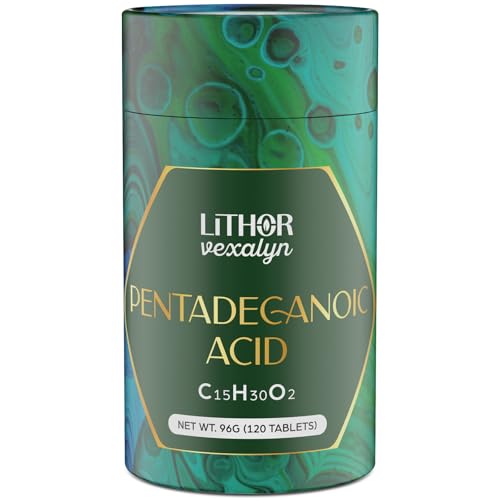
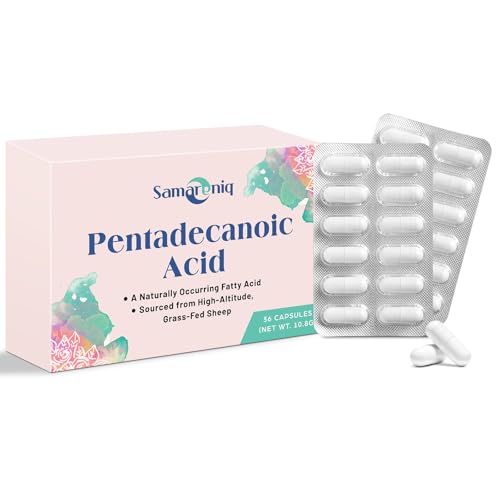
🛒 Where to Buy Pentadecanoic Acid (C15:0)
- Epitracker Fatty15 C15:0 Fatty Acid SupplementLab-tested / studied
capsules, 100 mg C15:0 per capsule; 1 capsule/day starter, 2 capsules/day maintenance — Category creator; the only C15:0 supplement backed by the original Epitracker research team (Venn-Watson et al.); uses a patented, sustainably-sourced pure C15:0 ingredient; most expensive per-capsule but reference product for all comparisons - Double Wood Supplements Pentadecanoic Acid C15:0
capsules, 200 mg C15:0 per serving (2 capsules) — One of the first genericized C15:0 supplements; significantly lower price than Fatty15; no independent clinical trials on this specific product; good option for budget-conscious buyers who want to trial the fatty acid - Sports Research Pentadecanoic Acid C15:0
softgels, 100 mg C15:0 per softgel — Established supplement brand with strong Amazon presence; third-party tested; softgel form may aid fat-soluble absorption; competitively priced mid-tier option - BulkSupplements Pentadecanoic Acid Powder (C15:0)
powder, 100–300 mg per measured serving — Most economical option for higher-dose protocols or stackers; requires a milligram-accurate scale; no excipients or additives; not recommended for beginners unfamiliar with powder dosing
As an Amazon Associate we earn from qualifying purchases. C15:0 products vary widely in how much pentadecanoic acid they actually contain, so check that the Supplement Facts panel lists C15:0 in milligrams as its own line item rather than bundling it into a fatty acid blend, and that the per-serving dose falls in the 100–300 mg range used in published research.

A Note on the Evidence
The evidence base for C15:0 in women’s health, particularly during pregnancy and breastfeeding, is very limited, and no regulatory body has approved C15:0 supplements for any health condition. Women who are pregnant, breastfeeding, trying to conceive, or managing hormonal or metabolic conditions should consult a qualified healthcare provider before starting C15:0 supplementation. This article is informational only and does not constitute medical advice.
Frequently Asked Questions
Can C15:0 help balance hormones in women?
There is no published clinical trial evidence showing that C15:0 supplementation directly improves sex hormone levels or resolves hormonal imbalances in women. The proposed PPAR-alpha and PPAR-delta agonist activity of C15:0 is theoretically relevant to metabolic regulation, but this has not been translated into demonstrated effects on estrogen, progesterone, or other reproductive hormones in human studies.

Is it safe to take C15:0 while pregnant?
No clinical trials have tested C15:0 supplementation during pregnancy, so safety at supplemental doses in pregnant women is not established. An observational study did examine associations between maternal plasma odd-chain fatty acids and fetal growth outcomes [1], but that data does not confirm supplementation safety. Pregnant women should consult their obstetrician before use.
Can I take C15:0 while breastfeeding?
There are no published studies evaluating C15:0 supplementation in breastfeeding women or its effects on breast milk composition or infant outcomes. Until that data exists, breastfeeding women should speak with a healthcare provider before supplementing.

Does C15:0 appear naturally in breast milk?
Odd-chain fatty acids including C15:0 are present in small amounts in human breast milk, reflecting maternal dietary intake. Women who consume full-fat dairy and ruminant foods will naturally have some C15:0 in their diet and breast milk, but the effect of deliberate high-dose supplementation on breast milk composition has not been published in the available literature.
What dose of C15:0 has been studied in adults?
Published research on C15:0 supplementation has generally used doses in the range of 100–300 mg per day in non-pregnant adults, with no serious adverse events reported at these doses. These studies were not conducted in pregnant or breastfeeding populations, so these tolerability findings cannot be automatically extended to those groups.
Does C15:0 act like a hormone or affect the endocrine system?
C15:0 is not a hormone, but as a proposed partial PPAR-alpha and PPAR-delta agonist it may interact with nuclear receptor signaling pathways that overlap with metabolic and inflammatory regulation. Whether this produces meaningful effects on the endocrine system in humans has not been demonstrated in clinical trials. This remains an area of early-stage research.
References
- Li LJ et al. Early Pregnancy Maternal Plasma Phospholipid Saturated Fatty Acids and Fetal Growth: Findings from a Multi-Racial/Ethnic Birth Cohort in US. Nutrients (2023). PMID 37571228
These statements have not been evaluated by the Food and Drug Administration. This information is not intended to diagnose, treat, cure, or prevent any disease. Content is for informational purposes only and is not medical advice; consult a qualified healthcare provider before starting any supplement. As an Amazon Associate we earn from qualifying purchases.
