Pentadecanoic acid, or C15, is a saturated odd-chain fatty acid found primarily in full-fat dairy products and ruminant fats. For decades, nutrition guidance grouped all saturated fats together and broadly discouraged their consumption. Emerging research, however, is revealing that chain length and carbon-number parity matter: odd-chain fatty acids like C15 occupy a distinct metabolic niche, and a growing body of epidemiological and mechanistic evidence has begun to examine their relationship with blood sugar regulation, insulin sensitivity, and type 2 diabetes risk.
This article reviews what current research actually shows about C15 and metabolic health, including where findings are promising, where they are limited, and what caveats are essential before drawing conclusions. The FDA has not evaluated C15 for the treatment or prevention of any disease. The hypothesis that it may qualify as an ‘essential’ fatty acid, advanced by Epitracker researchers, has not been formally adopted by regulatory bodies or mainstream nutrition science. Nothing here constitutes medical advice.
Key Takeaways
- Multiple large epidemiological studies find higher circulating C15 is associated with lower type 2 diabetes incidence, though causation has not been established [1][2].
- In vitro research shows C15 promotes both basal and insulin-stimulated glucose uptake in skeletal muscle cells, offering a plausible mechanistic basis, but cell culture results do not confirm effects in living humans [3].
- Not all odd-chain fatty acids share the same metabolic profile; C17:0 showed no key mediating role in preventing hepatic steatosis or insulin resistance in mouse research [4], cautioning against broad extrapolation.
- The hypothesis that C15 is an ‘essential’ fatty acid with broad metabolic benefits is proposed by Epitracker researchers and has not been formally adopted by mainstream nutrition authorities or regulatory bodies [5].
- Human randomized controlled trials on C15 supplementation and metabolic outcomes remain limited; consult a healthcare provider before supplementing, especially if you have diabetes or take glucose-lowering medications.
C15 as a Biomarker for Dairy Fat Intake
Before examining potential metabolic effects, it helps to understand why researchers study C15 in the first place. Circulating C15 levels are widely used as a biomarker of dairy fat consumption, particularly from whole milk, cheese, and butter, although some odd-chain fatty acid is also made in the body from gut-derived propionate [18][19][20]. This makes it attractive in large cohort studies, where self-reported dietary recall is imprecise, although the biomarker has validity problems of its own (covered below).
A pooled analysis of 16 prospective cohort studies (63,682 participants and 15,180 incident cases over an average of about nine years) found that higher circulating levels of C15, alongside the related odd-chain fatty acid C17:0, were associated with a lower incidence of type 2 diabetes [1]. Pooled analyses carry more statistical power than individual studies, though they remain observational and cannot establish causation on their own.
Epidemiological Evidence: Inverse Association with Type 2 Diabetes
Several independent prospective studies have reported an inverse relationship between serum C15 and type 2 diabetes incidence. One analysis found that higher serum C15 was inversely associated not only with incident type 2 diabetes but also with several of its metabolic precursors, including markers of insulin resistance and dyslipidemia [2]. Importantly, this association appeared to persist after adjustment for overall dairy intake, but blood C15 is only a weak-to-moderate marker of dairy intake, so adjusting for dairy intake does not isolate C15 from the rest of the diet [20][23][1].
Research note: In adults with diabetes eating high-fat dairy daily for 24 weeks, pentadecanoic acid rose in the high-fat dairy group, but the rise was not tied to HbA1c and was tied to higher total cholesterol, VLDL-C and triglycerides [29].
Research in Chinese adults examining individual plasma saturated fatty acids found that the associations between specific saturated fats and type 2 diabetes differed substantially by chain length and molecular structure [6]. This reinforces the idea that treating all saturated fatty acids as a homogeneous class in research or dietary policy may obscure meaningfully different biological relationships.

These associations are observational. Higher C15 levels could reflect a healthier overall dietary pattern, higher socioeconomic status, or residual confounders not fully captured in adjustment models. An inverse association in epidemiology does not confirm that C15 itself drives lower diabetes risk.
Not every cohort agrees. In EPIC-Netherlands, dietary pentadecanoic acid on its own showed no significant association with type 2 diabetes, and in men in the German EPIC-Potsdam cohort a C15-containing lipid (lysophosphatidylcholine C15:0) was linked to higher risk (HR 1.96). One meta-analysis of C15 and diabetes also showed high heterogeneity (I2 = 72.9%) [25][26][27].
How C15 Ranks Among Lipid Predictors of Type 2 Diabetes
The cohort findings above come from individual studies. A 2026 umbrella review in Frontiers in Endocrinology pooled the whole field instead: 13 meta-analyses of prospective cohort studies, 133 original articles (39 of them newly added) and 1,226,322 participants, with methodological quality rated by AMSTAR 2 and the protocol registered in PROSPERO. Among individual fatty acids, higher pentadecanoic acid was associated with lower type 2 diabetes risk (relative risk 0.82, 95 percent confidence interval 0.73 to 0.92), alongside arachidic acid (0.78) and linoleic acid (0.80). Palmitic acid (1.19), palmitoleic acid (1.33) and dihomo-gamma-linolenic acid (1.36) were associated with higher risk.[7]
Two points keep that result in proportion. First, C15 was not the strongest predictor. The largest associations belonged to composite indices built from waist size, triglycerides, glucose and HDL cholesterol: the hypertriglyceridemic waist phenotype (relative risk 3.54), lipid accumulation product (2.94), triglyceride-glucose index (2.51), atherogenic index of plasma (1.97), visceral adiposity index (1.77) and the triglyceride to HDL ratio (1.51). A protective factor at 0.82 carries far less predictive weight than risk markers at 2 to 3.5, and those composites reflect body composition and metabolic state, not a single dietary fatty acid.
Second, linoleic acid, the omega-6 fat abundant in seed oils, showed essentially the same protective association (0.80) in the same analysis. Citing the review as support for C15 while ignoring that result would be selective. And every input was a prospective observational study: pooling a million participants makes an association precise, but it does not show the association is causal.[7]
The same umbrella review graded the C15 evidence as only suggestive (class III) credibility, not strong or convincing [7].
Earlier Large Studies Found the Same Direction
The umbrella review confirmed an association already seen in other large datasets. In the EPIC-InterAct case-cohort study, 12,403 people who developed type 2 diabetes were compared with a representative subcohort of 16,154 drawn from a cohort of 340,234 European participants. Plasma phospholipid pentadecanoic acid was inversely associated with incident diabetes (hazard ratio 0.79 per standard deviation; 95 percent confidence interval 0.73 to 0.85), heptadecanoic acid more strongly (0.67), while even-chain fats such as palmitic acid were positively associated (1.26).[8] The 16-cohort pooled analysis cited earlier, with 63,682 participants and 15,180 incident cases, reported a hazard ratio of 0.80 (0.73 to 0.87) across the 10th to 90th percentile range of C15 after adjusting for adiposity and triglycerides, and noted that these biomarkers cannot tell milk, cheese and yogurt apart and that residual confounding may exist.[1] Both datasets found a stronger association for C17:0, the odd-chain sibling that is not sold as a supplement.
Fiber May Be Part of the Signal
Dairy fat is not the only alternative explanation for the association. In a randomized, double-blind crossover study of 16 healthy adults, 7 days of inulin (30 g per day) or propionate (6 g per day) raised plasma pentadecanoic acid by about 17 percent and 13 percent, while cellulose did not. The authors concluded that gut-derived propionate is used for hepatic synthesis of odd-chain fatty acids in humans, so the link between these fatty acids and lower diabetes risk may relate to dietary fiber intake and not only to dairy fat.[9] Fiber intake is itself associated with better metabolic health, so part of the blood C15 signal could belong to fiber and the habits that go with it. The study was small and short: it shows the pathway exists, not how much of the epidemiology it explains.
The fiber explanation is itself unsettled: in two small human studies, fiber supplements or a high-fiber diet did not raise circulating odd-chain fatty acids [28].
Dairy Foods and the Biomarker Question
The evidence for dairy foods themselves is more modest than the blood-biomarker hazard ratios suggest. A 2019 position paper from an expert workshop concluded that total dairy has a neutral or moderately beneficial effect on type 2 diabetes risk, that yogurt is the product most strongly associated with lower risk (with scarce randomized evidence), and that the food matrix can be a stronger determinant of health effects than saturated fat content. It also said that dairy fatty acids, including odd-chain ones, are associated with lower risk, but that more research is needed to exclude the possibility that they are simply markers of overall dairy consumption.[14] An umbrella review of 13 dose-response meta-analyses reported relative risks of 0.95 for 200 g a day of total dairy, 0.90 for milk and 0.94 for 100 g a day of yogurt.[15] A separate meta-analysis of fermented dairy found a larger yogurt association, a relative risk of 0.73 for type 2 diabetes, and its authors urged caution because of heterogeneity between studies.[16] All of this is observational, and these studies measure foods, not C15, so a yogurt-led signal does not by itself point to any one fatty acid.
The marker hypothesis has also been probed in a randomized feeding setting. In a 12-week trial of 62 participants eating diets with almost no dairy fat (0.3 g a day), low-fat dairy (8.7 g a day of dairy fat) or full-fat dairy (28.5 g a day), C15 and C17:0 were not associated with dairy fat intake after adjusting for liver fat, and were predicted to rise with intake only in people with elevated liver fat. Trans-palmitoleic acid combined with iso-C17:0 explained the most variation in dairy fat intake, 35.4 percent. The authors said this raises questions about the validity of C15 and C17:0 as dairy fat biomarkers.[17] If liver fat moves blood C15 independently of what is eaten, part of the blood C15 signal in the cohort studies could reflect liver fat and not intake; the trial did not test that link to diabetes risk.
Cell-Level Mechanisms: Glucose Uptake and Insulin Signaling
Epidemiological associations gain scientific credibility when supported by plausible biological mechanisms. A 2021 in vitro study examined C15’s direct effects on C2C12 myotubes, a standard skeletal muscle cell model, and found that pentadecanoic acid promoted both basal and insulin-stimulated glucose uptake [3]. Skeletal muscle accounts for the majority of insulin-mediated glucose disposal in the human body, so any effect there is metabolically meaningful in principle.
Insulin evidence for C15 comes from cells, mice and small human studies, not a supplement trial
More glucose uptake
In mouse muscle cells, pentadecanoic acid promoted glucose uptake through the AMPK pathway.
Milder insulin resistance
On a high-fat diet, plasma C15:0 was correlated with attenuated insulin resistance.
Lower fasting glucose
Free-fatty-acid 15:0 was inversely associated with fasting glucose. Reverse causation cannot be ruled out.
No link to HbA1c
In a dairy trial, the rise in C15:0 was not associated with changes in HbA1c.
Lab and animal signals on insulin are interesting, but a supplement trial in people has not confirmed them.
Cell and mouse results often do not carry over to people; the human findings are associations. Source: Food & Nutrition Research 2021; Molecular Nutrition & Food Research 2016; The American Journal of Clinical Nutrition 2014; Nutrients 2021.
Embed this chart
Free to reuse on your site. Copy the code below; please keep the credit link.
Researchers have proposed that C15 may exert metabolic effects partly through partial agonism at PPAR-alpha and PPAR-delta receptors, nuclear receptors involved in fatty acid oxidation, glucose homeostasis, and inflammatory regulation. A 2024 mini-review on C15 acknowledged these proposed receptor interactions while noting that direct human evidence remains limited [5].
It is essential to be clear about what in vitro evidence can and cannot show. Demonstrating that C15 promotes glucose uptake in isolated muscle cells in a laboratory dish is not equivalent to demonstrating this occurs in a living person at dietary or supplemental doses. Cell culture experiments generate testable hypotheses; they do not constitute clinical proof of efficacy.
Not All Odd-Chain Fatty Acids Behave Identically
A reasonable question is whether findings on C15 extend to structurally similar odd-chain fatty acids. C17:0 (heptadecanoic acid) co-occurs in dairy fat and has also been studied as a metabolic biomarker. However, research in mice found that C17:0 was not a key mediator in preventing diet-induced hepatic steatosis or insulin resistance, even when dietary conditions improved these outcomes [4].
This null result is a useful caution. Even within the class of odd-chain fatty acids, each compound has its own metabolic profile and receptor interactions. Findings specific to C15, such as the glucose uptake data in muscle cells [3]should not be assumed to apply to C17:0 or other structurally related fatty acids without independent testing. The reverse is equally true.
C15 and Metabolic Syndrome: Connecting the Dots Carefully
Metabolic syndrome is a cluster of conditions (elevated fasting blood glucose, excess visceral adiposity, elevated triglycerides, low HDL cholesterol, and elevated blood pressure) that together substantially increase the risk of type 2 diabetes and cardiovascular disease. The inverse associations observed between C15 and type 2 diabetes incidence [1][2] are relevant to metabolic syndrome because insulin resistance is a shared underlying mechanism across these conditions.
Epitracker researchers have advanced the hypothesis that C15 may support metabolic health through integration into cell membranes, improving membrane integrity and fluidity, and through partial PPAR receptor agonism. A 2024 review examining this hypothesis noted the proposed mechanisms while also acknowledging that the designation of C15 as a newly ‘essential’ fatty acid has not been formally adopted by major nutrition or regulatory bodies [5].

Whether C15 supplementation, as distinct from naturally occurring C15 from dairy foods, produces meaningful metabolic benefits in humans is an open question. The one randomized trial of C15 itself gave 200 mg per day for 12 weeks to 30 young adults and reported no significant adverse events; it was supported by the supplement maker [10]. Long-term safety and efficacy data from randomized controlled trials are limited.
What Randomized Trials of C15 Show So Far
Two randomized trials of C15 supplementation were published in 2024. In a double-blind trial in The Journal of Nutrition, 30 young adults with overweight or obesity received 200 mg of C15 (20 participants) or placebo (10) daily for 12 weeks. The primary outcome was circulating C15, which rose 1.88 micrograms per mL more in the treatment group, and no significant adverse events occurred. Half of the treated participants ended above 5 micrograms per mL, and in that subgroup alanine aminotransferase and aspartate aminotransferase fell more than in participants who did not reach that level. The subgroup was defined after treatment in a small trial, so it generates hypotheses rather than answers.[10]
The TANGO trial randomized 88 Chinese women with fatty liver disease for 12 weeks to an Asian-adapted Mediterranean diet with C15, the same diet without it, or their habitual diet. Insulin, glycated hemoglobin, fat mass and blood pressure fell significantly in all three groups, in parallel with weight loss. The abstract credits C15 with a further reduction in LDL cholesterol and an increase in Bifidobacterium adolescentis, and it does not report a glycemic advantage from the supplement.[11] Neither trial followed participants for diabetes onset, so the status is: association established, causal trial evidence absent. The levers with the clearest track record, weight, waist and triglycerides, are the ones that dominated the umbrella review.
The Same Pattern Appears for Heart Disease
The evidence has the same shape for cardiovascular outcomes. A Swedish cohort of 4,150 adults followed for a median of 16.6 years found a hazard ratio of 0.75 for incident cardiovascular disease per interquintile range of C15, and a meta-analysis including 18 studies found relative risks of 0.88 for C15 and 0.86 for C17:0 (highest versus lowest tertile), against 1.01 for trans-palmitoleic acid.[12] A 2026 analysis of the CARDIA and ARIC cohorts found higher plasma C15 associated with lower blood pressure and a hazard ratio of 0.86 for incident hypertension, but not with incident cardiovascular disease, and Mendelian randomization provided no evidence of a causal effect on blood pressure or hypertension. The authors concluded that the collective evidence is not consistent with a causal cardiovascular benefit of C15.[13] A reliable observational association that has not survived the tests designed to find causation is the pattern to keep in mind for diabetes too.
Limitations and the Current State of Evidence
The evidence base for C15 and metabolic health consists primarily of epidemiological associations and in vitro mechanistic studies. These are genuinely valuable as hypothesis-generating research, but they sit below the evidentiary standard needed to support clinical recommendations. Randomized controlled trials in humans measuring outcomes such as HbA1c, fasting insulin, HOMA-IR, or body weight over extended follow-up are largely absent from the published literature.

There is also a practical confounding issue in the observational data: people with higher circulating C15 tend to consume somewhat more dairy fat, although the correlation is weak to moderate (r = 0.33 in a meta-analysis) [20][24], a food matrix containing hundreds of bioactive compounds beyond C15 alone. Isolating C15’s independent contribution is methodologically difficult. Supplementation trials circumvent this confounding, but existing studies are small and short in duration [5].
Readers managing blood sugar, insulin resistance, or obesity should work with a qualified healthcare provider and should not interpret the existing C15 data as grounds to forgo or delay established, evidence-based interventions including dietary modification, physical activity, and where indicated, pharmacotherapy.
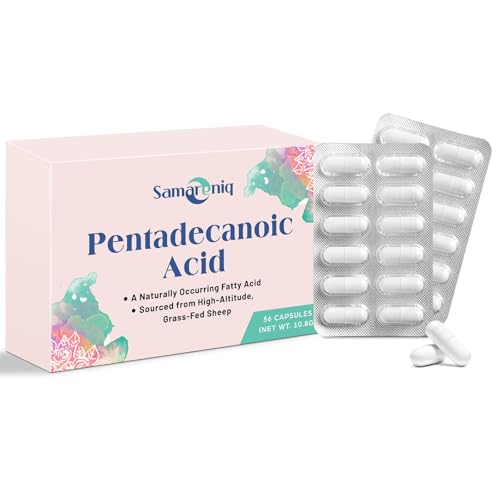
🛒 Where to Buy Pentadecanoic Acid (C15)
- Fatty15 (official site) 20% off with code SFKKDBQQ
capsules, 100 mg C15 per capsule; 1 capsule/day starter, 2 capsules/day maintenance: Category creator, from the original Epitracker research team (Venn-Watson et al.); uses a patented, sustainably-sourced pure C15 ingredient; most expensive per-capsule but reference product for all comparisons - Double Wood Supplements Pentadecanoic Acid C15
capsules, 200 mg C15 per serving (2 capsules): Generic C15 supplement; significantly lower price than Fatty15; no independent clinical trials on this specific product; good option for budget-conscious buyers who want to trial the fatty acid - Sports Research Pentadecanoic Acid C15
softgels, 100 mg C15 per softgel: Established supplement brand with strong Amazon presence; softgel form may aid fat-soluble absorption; competitively priced mid-tier option - BulkSupplements Pentadecanoic Acid Powder (C15)
powder, 100 to 300 mg per measured serving: Most economical option for higher-dose protocols or stackers; requires a milligram-accurate scale; no excipients or additives; not recommended for beginners unfamiliar with powder dosing
As an Amazon Associate we earn from qualifying purchases. C15 products vary widely in how much pentadecanoic acid they actually contain, so check that the Supplement Facts panel lists C15 in milligrams as its own line item rather than bundling it into a fatty acid blend, and that the per-serving dose falls in the 100 to 300 mg range used in published research.

A Note on the Evidence
Current evidence for C15 and metabolic health rests primarily on observational epidemiology and cell culture studies; large, long-term randomized controlled trials in humans on supplementation outcomes are lacking, and the FDA has not approved or evaluated C15 for any metabolic condition. Individuals with diabetes, insulin resistance, obesity, or related conditions should consult a qualified healthcare provider before modifying their diet or starting any supplement regimen.
Frequently Asked Questions
What is pentadecanoic acid and where does it come from?
Pentadecanoic acid (C15) is a 15-carbon saturated odd-chain fatty acid found primarily in full-fat dairy products and ruminant meats. Blood levels are widely used as a marker of dairy fat intake in nutrition research, although some odd-chain fatty acid is also made in the body [18][21][22][1], although a randomized feeding trial found that liver fat can distort that relationship [17].

Does C15 lower blood sugar?
No published clinical trial has demonstrated that C15 supplementation lowers blood glucose in humans. An in vitro study found it promoted glucose uptake in muscle cells [3], and epidemiological data show an inverse association with type 2 diabetes incidence [2], but neither finding constitutes clinical evidence that C15 controls blood sugar in people.

Is C15 better for metabolic health than other saturated fats?
Observational data suggest odd-chain saturated fatty acids like C15 are associated with different metabolic outcomes than even-chain counterparts [6], but a direct head-to-head comparison of specific saturated fatty acids in controlled human trials is lacking. Concluding superiority from current evidence would be premature.
Can C15 help with insulin resistance?
A 2021 cell study found C15 promoted insulin-stimulated glucose uptake in skeletal muscle cells, suggesting a mechanism potentially relevant to insulin sensitivity [3]. Translating this to clinical insulin resistance in humans requires randomized controlled trials, which have not yet been published at the scale needed to draw firm conclusions.
Is C15 safe to supplement?
In the one small randomized trial (200 mg per day for 12 weeks in 30 young adults, supported by the supplement maker), no significant adverse events were reported [10]. However, the FDA has not evaluated C15 supplements for safety or efficacy in treating any condition, and long-term safety data are limited [5]. Individuals with diabetes, metabolic disorders, or those taking prescription medications should consult a physician before adding any new supplement.
Does research on C17:0 apply to C15?
Not directly. Although both are odd-chain fatty acids that co-occur in dairy fat, a mouse study found C17:0 was not a key mediator in preventing diet-induced liver fat accumulation or insulin resistance [4]. This underscores that each odd-chain fatty acid must be evaluated on its own evidence base rather than assuming shared metabolic effects across the class.
References
- Imamura F et al. Fatty acid biomarkers of dairy fat consumption and incidence of type 2 diabetes: A pooled analysis of prospective cohort studies. PLoS medicine (2018). PMID 30303968
- Santaren ID et al. Serum pentadecanoic acid (15:0), a short-term marker of dairy food intake, is inversely associated with incident type 2 diabetes and its underlying disorders. The American journal of clinical nutrition (2014). PMID 25411288
- Fu WC et al. Pentadecanoic acid promotes basal and insulin-stimulated glucose uptake in C2C12 myotubes. Food & nutrition research (2021). PMID 33613155
- Bishop CA et al. Heptadecanoic Acid Is Not a Key Mediator in the Prevention of Diet-Induced Hepatic Steatosis and Insulin Resistance in Mice. Nutrients (2023). PMID 37432205
- Ciesielski V et al. New insights on pentadecanoic acid with special focus on its controversial essentiality: A mini-review. Biochimie (2024). PMID 39395658
- Luo C et al. The associations between individual plasma SFAs, serine palmitoyl-transferase long-chain base subunit 3 gene rs680379 polymorphism, and type 2 diabetes among Chinese adults. The American journal of clinical nutrition (2021). PMID 33964854
- Chen X et al. Lipid biomarkers for the prediction of type 2 diabetes risk, an umbrella review and updated meta-analyses of prospective observational studies. Frontiers in endocrinology (2026). PMID 42181198
- Forouhi NG et al. Differences in the prospective association between individual plasma phospholipid saturated fatty acids and incident type 2 diabetes: the EPIC-InterAct case-cohort study. The lancet. Diabetes & endocrinology (2014). PMID 25107467
- Weitkunat K et al. Odd-chain fatty acids as a biomarker for dietary fiber intake: a novel pathway for endogenous production from propionate. The American journal of clinical nutrition (2017). PMID 28424190
- Robinson MK et al. Pentadecanoic Acid Supplementation in Young Adults with Overweight and Obesity: A Randomized Controlled Trial. The Journal of nutrition (2024). PMID 39069269
- Chooi YC et al. Effect of an Asian-adapted Mediterranean diet and pentadecanoic acid on fatty liver disease: the TANGO randomized controlled trial. The American journal of clinical nutrition (2024). PMID 38035997
- Trieu K et al. Biomarkers of dairy fat intake, incident cardiovascular disease, and all-cause mortality: A cohort study, systematic review, and meta-analysis. PLoS medicine (2021). PMID 34547017
- Steffen BT et al. Plasma pentadecanoic acid is modestly related to cardiovascular health in CARDIA and ARIC cohorts: observational associations without evidence of causality. Frontiers in nutrition (2026). PMID 41743064
- Guo J et al. The Impact of Dairy Products in the Development of Type 2 Diabetes: Where Does the Evidence Stand in 2019? Advances in nutrition (2019). PMID 31124561
- Giosuè A et al. Consumption of different animal-based foods and risk of type 2 diabetes: An umbrella review of meta-analyses of prospective studies. Diabetes research and clinical practice (2022). PMID 36067917
- Companys J et al. Fermented Dairy Products, Probiotic Supplementation, and Cardiometabolic Diseases: A Systematic Review and Meta-analysis. Advances in nutrition (2020). PMID 32277831
- Bethancourt HJ et al. Assessing the validity of plasma phospholipid fatty acids as biomarkers of dairy fat intake using data from a randomized controlled intervention trial. The American journal of clinical nutrition (2022). PMID 35134818
- Pfeuffer M et al. Pentadecanoic and Heptadecanoic Acids: Multifaceted Odd-Chain Fatty Acids. Advances in nutrition (Bethesda, Md.) (2016). PMID 27422507
- Karolin Weitkunat et al. Importance of propionate for the repression of hepatic lipogenesis and improvement of insulin sensitivity in high‐fat diet‐induced obesity. Molecular Nutrition & Food Research (2016). PMID 27467905
- Ilse G. Pranger et al. Fatty acids as biomarkers of total dairy and dairy fat intakes: a systematic review and meta-analysis. Nutrition Reviews (2018). PMID 30307550
- Stallings VA et al. Diagnosing malabsorption with systemic lipid profiling: pharmacokinetics of pentadecanoic acid and triheptadecanoic acid following oral administration in healthy subjects and subjects with cystic fibrosis. International journal of clinical pharmacology and therapeutics (2013). PMID 23357842
- Wendel U Abnormality of odd-numbered long-chain fatty acids in erythrocyte membrane lipids from patients with disorders of propionate metabolism. Pediatric research (1989). PMID 2919129
- Viviana Albani et al. Exploring the association of dairy product intake with the fatty acids C15:0 and C17:0 measured from dried blood spots in a multipopulation cohort: Findings from the Food4Me study. Molecular Nutrition & Food Research (2015). PMID 26678873
- Li KJ et al. Evaluating the Robustness of Biomarkers of Dairy Food Intake in a Free-Living Population Using Single- and Multi-Marker Approaches. Metabolites (2021). PMID 34204298
- Liu S et al. Intake of dietary saturated fatty acids and risk of type 2 diabetes in the European Prospective Investigation into Cancer and Nutrition-Netherlands cohort: associations by types, sources of fatty acids and substitution by macronutrients. European journal of nutrition (2019). PMID 29524001
- Marcela Prada et al. Association of the odd-chain fatty acid content in lipid groups with type 2 diabetes risk: A targeted analysis of lipidomics data in the EPIC-Potsdam cohort. Clinical Nutrition (2021). PMID 34364238
- Huang L et al. Circulating Saturated Fatty Acids and Incident Type 2 Diabetes: A Systematic Review and Meta-Analysis. Nutrients (2019). PMID 31052447
- Wu Y et al. Odd Chain Fatty Acids Are Not Robust Biomarkers for Dietary Intake of Fiber. Molecular nutrition & food research (2021). PMID 34605164
- Mitri J et al. Plasma Free Fatty Acids and Metabolic Effect in Type 2 Diabetes, an Ancillary Study from a Randomized Clinical Trial. Nutrients (2021). PMID 33807135
These statements have not been evaluated by the Food and Drug Administration. This information is not intended to diagnose, treat, cure, or prevent any disease. Content is for informational purposes only and is not medical advice; consult a qualified healthcare provider before starting any supplement. As an Amazon Associate we earn from qualifying purchases.