Pentadecanoic acid (C15:0) is a saturated odd-chain fatty acid found naturally in full-fat dairy and ruminant fats. Researchers at Epitracker have proposed that C15:0 may support cellular health by integrating into cell membranes, acting as a partial agonist at PPAR-alpha and PPAR-delta receptors, and potentially reducing cellular senescence and ferroptosis. As interest in C15:0 supplements grows, one of the most practical questions a person can ask is whether this fatty acid interacts with prescription or over-the-counter medications.
The honest answer is that peer-reviewed studies directly examining C15:0 drug interactions in humans do not yet exist. Published research on C15:0 supplementation is early-stage and has focused primarily on safety, tolerability, and proposed biological mechanisms rather than pharmacokinetic or pharmacodynamic interactions with drugs. This article reviews what can be reasonably inferred from related fatty acid research, identifies the theoretical areas of concern, and explains why a conversation with a healthcare provider is essential before combining any supplement with prescription medications. This is informational only and does not constitute medical advice.
Key Takeaways
- No peer-reviewed studies have directly examined C15:0 drug interactions in humans — all interaction concerns at this stage are theoretical, based on proposed mechanisms.
- The most theoretically relevant overlap exists with anticoagulants, fibrates, statins, and diabetes medications, given C15:0’s proposed PPAR-alpha and PPAR-delta activity.
- Omega-3 research provides the most analogous fatty acid-drug interaction data available, but C15:0 is structurally and mechanistically distinct from omega-3s and those findings cannot be directly applied [1].
- Gut microbiome disruption — such as from antibiotic use — may influence how dietary fatty acids behave in the body [2], making supplementation timing worth discussing with a physician.
- Disclosing all supplements to your doctor and pharmacist remains the most reliable way to catch potential interactions before they affect your health or medication management.
Why Drug Interactions Matter Even for 'Natural' Supplements
A common assumption is that because C15:0 occurs naturally in food, it is inherently free of interaction risks. That logic does not hold for bioactive compounds. Any substance that influences cellular receptors, metabolic enzymes, or inflammatory signaling has the potential to alter how the body processes certain medications or how those medications achieve their effects.
C15:0 is proposed to act as a partial PPAR-alpha and PPAR-delta agonist — receptor targets that overlap with multiple drug classes — and to influence fatty acid metabolism more broadly. These proposed mechanisms create theoretical points of contact with medications used for lipid management, metabolic conditions, and blood clotting, even in the absence of direct clinical interaction data.
Anticoagulant and Antiplatelet Medications
The most extensively documented drug interaction concern for dietary fatty acids involves anticoagulants and antiplatelet agents such as warfarin, clopidogrel, aspirin, and direct oral anticoagulants. This concern originates from omega-3 fatty acid research. At pharmacological doses, omega-3s influence inflammatory signaling and platelet aggregation in ways that can add to the anticoagulant effects of these drugs [1]. Research on the mechanisms behind this relationship has clarified how polyunsaturated fatty acids alter eicosanoid production and inflammatory cascades relevant to clotting [3] [4].
C15:0 is structurally distinct from omega-3s — it is a saturated, odd-chain fatty acid rather than a polyunsaturated one — and no published study has examined whether C15:0 affects platelet function or coagulation. The theoretical concern is modest but not zero, given that fatty acid metabolism intersects with inflammatory signaling broadly. Anyone taking a blood-thinning medication should inform their prescribing physician before adding C15:0 and should not assume that being saturated makes it automatically neutral in this context.

Lipid-Lowering Medications and PPAR Pathway Overlap
Fibrate medications, including fenofibrate and gemfibrozil, lower triglycerides and raise HDL cholesterol by activating PPAR-alpha receptors in the liver. Because C15:0 has been proposed to act as a partial PPAR-alpha agonist, combining it with a fibrate could theoretically produce overlapping stimulation of the same receptor pathway. Whether this would be additive, redundant, or clinically meaningful is unknown — no interaction studies exist.
Statins work through a different mechanism, inhibiting HMG-CoA reductase to reduce cholesterol synthesis, but they also affect the lipid profile that a clinical team monitors to judge whether a statin prescription is doing its job. Any supplement that materially shifts lipid metabolism could alter that picture without an interaction in the strict pharmacological sense. People on statins or fibrates should disclose C15:0 use to their physician and continue scheduled lipid monitoring.
Diabetes Medications and Metabolic Signaling
PPAR-delta activation is associated in experimental models with improved insulin sensitivity and fatty acid oxidation. C15:0 has been proposed to partially activate PPAR-delta. Medications used to manage type 2 diabetes — metformin, GLP-1 receptor agonists, SGLT-2 inhibitors, insulin, and thiazolidinediones — are calibrated to achieve specific blood glucose targets. A supplement that influences metabolic receptor signaling could shift glucose regulation in ways that affect how well those medications perform at their prescribed doses.
Thiazolidinediones such as pioglitazone are full PPAR-gamma agonists. While C15:0 is proposed to target PPAR-alpha and PPAR-delta rather than PPAR-gamma, these receptors belong to the same nuclear receptor superfamily. The theoretical overlap is noted, not documented. People managing diabetes with any medication should not start C15:0 without discussing it with their physician first and should monitor blood glucose more closely if they proceed.
Gut Microbiome, Antibiotics, and Fatty Acid Context
Short-chain fatty acids produced by gut bacteria play important roles in gut barrier function, immune signaling, and metabolic regulation [2]. The gut microbiome also shapes how dietary fats are metabolized and what signals they generate. Certain beneficial bacterial populations, such as Akkermansia muciniphila, have been shown to interact with the intestinal epithelium in ways that influence diet-related metabolic outcomes [5].
C15:0 is not a short-chain fatty acid and is not produced by gut bacteria, but the broader point holds: the gut environment in which a supplement is taken influences its downstream effects. A course of broad-spectrum antibiotics can significantly disrupt microbial populations. Gut dysbiosis has been identified as a mechanistic factor in systemic health conditions [6], and supplementing with a bioactive fatty acid during a period of pronounced microbiome disruption may not produce the same effects as supplementing in a stable gut environment. This is a theoretical concern with no direct evidence, but it suggests that timing relative to antibiotic courses is worth noting to a physician.

Other Medications That Alter Fatty Acid Metabolism
Several medications directly affect how the body processes fatty acids and lipids. These include niacin at high doses, corticosteroids, certain antipsychotics, HIV antiretrovirals, and some chemotherapy agents. Adding an exogenous fatty acid supplement to a regimen that already alters lipid handling creates a degree of unpredictability that has not been studied for C15:0 specifically.
The general principle is that C15:0 is a bioactive compound with proposed receptor-level effects. Medications that share biological territory — whether through PPAR pathways, lipid metabolism, or inflammatory signaling — represent areas of theoretical concern. The absence of documented interactions does not mean interactions are absent; it means they have not yet been studied. This distinction matters when making decisions about combining supplements with medications.
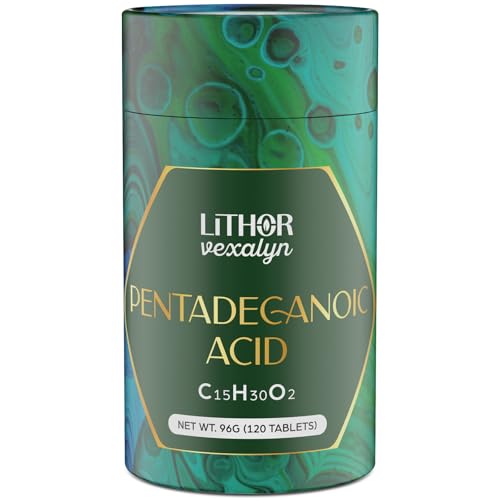
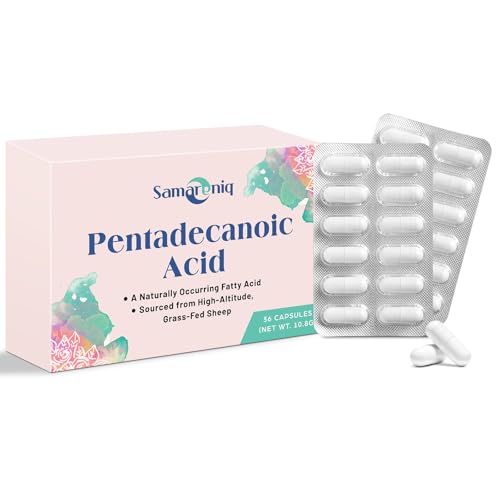
🛒 Where to Buy Pentadecanoic Acid (C15:0)
- Epitracker Fatty15 C15:0 Fatty Acid SupplementLab-tested / studied
capsules, 100 mg C15:0 per capsule; 1 capsule/day starter, 2 capsules/day maintenance — Category creator; the only C15:0 supplement backed by the original Epitracker research team (Venn-Watson et al.); uses a patented, sustainably-sourced pure C15:0 ingredient; most expensive per-capsule but reference product for all comparisons - Double Wood Supplements Pentadecanoic Acid C15:0
capsules, 200 mg C15:0 per serving (2 capsules) — One of the first genericized C15:0 supplements; significantly lower price than Fatty15; no independent clinical trials on this specific product; good option for budget-conscious buyers who want to trial the fatty acid - Sports Research Pentadecanoic Acid C15:0
softgels, 100 mg C15:0 per softgel — Established supplement brand with strong Amazon presence; third-party tested; softgel form may aid fat-soluble absorption; competitively priced mid-tier option - BulkSupplements Pentadecanoic Acid Powder (C15:0)
powder, 100–300 mg per measured serving — Most economical option for higher-dose protocols or stackers; requires a milligram-accurate scale; no excipients or additives; not recommended for beginners unfamiliar with powder dosing
As an Amazon Associate we earn from qualifying purchases. C15:0 products vary widely in how much pentadecanoic acid they actually contain, so check that the Supplement Facts panel lists C15:0 in milligrams as its own line item rather than bundling it into a fatty acid blend, and that the per-serving dose falls in the 100–300 mg range used in published research.

A Note on the Evidence
The evidence base for C15:0 supplementation remains early-stage, and no peer-reviewed clinical studies have examined its interactions with specific medications; all interaction concerns described here are theoretical. People taking prescription medications — particularly anticoagulants, fibrates, statins, diabetes drugs, or any medication that alters lipid or metabolic pathways — should consult a physician or pharmacist before adding C15:0 to their routine.
Frequently Asked Questions
Does C15:0 interact with warfarin or other blood thinners?
No clinical studies have examined this combination. The concern is theoretical and draws on the well-documented pattern of fatty acids influencing inflammatory pathways and platelet function, established in omega-3 research [3]. C15:0 is structurally different from omega-3s, so the risk profile may differ, but anyone on anticoagulant therapy should speak with their physician before adding any new supplement.
Can I take C15:0 alongside a statin?
No direct interaction data exist for C15:0 with statins. The practical concern is that C15:0 may influence lipid metabolism through PPAR pathways, potentially affecting the lipid panel your statin is calibrated against. Inform your physician and continue scheduled lipid monitoring if you choose to proceed.
Is C15:0 safe to combine with metformin or insulin?
There is no published data on this combination. C15:0’s proposed PPAR-delta activity creates theoretical overlap with insulin sensitivity pathways, which means unpredictable combined effects on blood glucose cannot be ruled out without clinical study. People managing diabetes with medication should not start C15:0 without guidance from their prescribing physician.

How does the C15:0 interaction concern differ from omega-3 supplements?
Omega-3 fatty acids are polyunsaturated and have established pharmacological effects on inflammatory signaling and platelet aggregation at high doses, with documented interaction concerns for anticoagulant medications [1]. C15:0 is a saturated odd-chain fatty acid proposed to work through PPAR receptor agonism rather than eicosanoid pathways. The concerns are different in nature and omega-3 interaction data cannot be assumed to apply directly to C15:0.

Should I stop C15:0 before a surgical procedure?
As a general precaution, most surgical and anesthesia teams ask patients to stop all non-essential supplements one to two weeks before an operation to minimize unknown bleeding or metabolic interaction risks. In the absence of C15:0-specific data, this standard guidance applies. Disclose all supplements, including C15:0, to your entire care team before any procedure.
Does antibiotic use affect how C15:0 works in the body?
Gut bacteria produce short-chain fatty acids that influence metabolic and immune signaling [2], and disruption of microbial populations — as seen with broad-spectrum antibiotics — affects these processes [5]. C15:0 is not produced by gut bacteria, but fatty acid metabolism broadly depends on a stable gut environment. Whether antibiotic-related microbiome disruption meaningfully alters C15:0 supplementation outcomes is unstudied, but it is a reasonable point to raise with your physician.
References
- Calder PC et al. Omega-3 polyunsaturated fatty acids and inflammatory processes: nutrition or pharmacology?. British journal of clinical pharmacology (2013). PMID 22765297
- Blaak EE et al. Short chain fatty acids in human gut and metabolic health. Beneficial microbes (2020). PMID 32865024
- Calder PC et al. Omega-3 fatty acids and inflammatory processes: from molecules to man. Biochemical Society transactions (2017). PMID 28900017
- Calder PC et al. Marine omega-3 fatty acids and inflammatory processes: Effects, mechanisms and clinical relevance. Biochimica et biophysica acta (2015). PMID 25149823
- Everard A et al. Cross-talk between Akkermansia muciniphila and intestinal epithelium controls diet-induced obesity. Proceedings of the National Academy of Sciences of the United States of America (2013). PMID 23671105
- Wang Q et al. The role of gut dysbiosis in Parkinson's disease: mechanistic insights and therapeutic options. Brain : a journal of neurology (2021). PMID 33856024
These statements have not been evaluated by the Food and Drug Administration. This information is not intended to diagnose, treat, cure, or prevent any disease. Content is for informational purposes only and is not medical advice; consult a qualified healthcare provider before starting any supplement. As an Amazon Associate we earn from qualifying purchases.
