Pentadecanoic acid (C15:0) is a saturated odd-chain fatty acid found naturally in full-fat dairy products and ruminant fats. Researchers at Epitracker have proposed it may support cellular health through several mechanisms: integrating into cell membranes to improve their stability, acting as a partial agonist of PPAR-alpha and PPAR-delta receptors involved in metabolic regulation, and potentially reducing markers of cellular senescence and ferroptosis. Human and animal research on C15:0 supplementation remains early-stage, and the FDA has not evaluated C15:0 for the treatment or prevention of any disease. The hypothesis that C15:0 is an essential fatty acid has not been formally adopted by mainstream nutrition or regulatory bodies.
As supplement manufacturers have begun offering C15:0 in standalone form, two primary delivery formats have emerged: capsules and powder. Choosing between them is not purely a matter of preference—factors like fatty acid stability, bioavailability, dosing precision, and daily habit fit all play a role. This article walks through the practical differences between the two forms to help you make an informed decision. Nothing here constitutes medical advice.
Key Takeaways
- Capsules offer better built-in oxidation protection, exact per-dose accuracy, and greater portability than loose powder for C15:0.
- Powder form offers dosing flexibility and may cost less per serving, but requires a milligram-accurate scale and careful storage to preserve potency.
- Absorption of C15:0 from either format depends more on taking it with food containing dietary fat than on whether the form is a capsule or powder.
- C15:0 supplementation at 100–300 mg per day has been generally well-tolerated in published research; no form has shown safety advantages over the other at these doses.
- The hypothesis that C15:0 is an essential fatty acid is advanced by Epitracker researchers and has not been formally adopted by regulatory or mainstream nutrition bodies—keep expectations calibrated.
What C15:0 Supplements Actually Contain
Most commercial C15:0 supplements derive their active ingredient from either fractionated, purified odd-chain fatty acids isolated from dairy fat or from a synthetic fatty acid identical in structure to the naturally occurring compound. The purity and source matter because C15:0 in whole dairy fat exists alongside other saturated and unsaturated fatty acids, while a standalone supplement aims to deliver a concentrated, measured dose of pentadecanoic acid specifically.
Both capsule and powder forms typically contain the same active ingredient. The differences lie in the excipients used, the protective shell or carrier matrix, and how the fatty acid is stabilized against oxidation during storage. Fatty acids—including C15:0—can oxidize when exposed to air, light, or heat, which can degrade potency and create unwanted byproducts. Understanding how each format handles this challenge is central to evaluating which is better for a given user.
Capsule Form: Stability, Precision, and Convenience
Capsules—whether hard-shell gelatin or vegetarian alternatives—offer a meaningful protective advantage for a fatty acid like C15:0. The sealed shell limits oxygen and light exposure during everyday handling, slowing oxidation between the time you open the bottle and the time you swallow the dose. This is not a trivial benefit: lipid oxidation can reduce the effective concentration of a fatty acid supplement and introduce potentially irritating oxidation products.
From a dosing standpoint, capsules are inherently precise. Each capsule is filled to a specific weight during manufacturing, so you receive a consistent amount per serving without measuring. At the studied dosing range of 100–300 mg per day used in published C15:0 research, capsule increments fit naturally. If your target is 200 mg daily, two 100 mg capsules deliver that reliably every time.
Portability and compliance are strong arguments for capsules. They travel well, require no mixing equipment, and produce no taste or texture interaction with food or drink. For people who prefer to keep their supplement routine simple and unobtrusive, a capsule taken with water at a meal is about as frictionless as it gets.
Powder Form: Flexibility, Mixing, and Potential Trade-offs
C15:0 powder offers flexibility that capsules cannot easily match. Users who prefer to add their fatty acid supplement to a smoothie, shake, or food can do so with a powder, and some people find powders easier to adjust incrementally if they want to start at a lower dose and titrate upward. Bulk powders may also offer a lower cost per milligram in some product lines, though this varies by brand and sourcing.
The significant trade-off is exposure. Once a powder container is opened, the surface area of the contents is vastly greater than that of an encapsulated product, and every time you open the container to scoop a dose, you introduce air and potential moisture. Fatty acid powders without robust antioxidant carriers or nitrogen-flush packaging can degrade meaningfully over a few months of daily use. When evaluating a C15:0 powder, it is worth checking whether the manufacturer has incorporated any oxidation protection—such as co-encapsulation with an antioxidant, airtight resealable packaging, or a carrier matrix—or whether the product is simply the raw fatty acid in bulk.
Taste is a minor but real consideration. C15:0 is a fatty acid, and like many lipid-based supplements, it can carry a subtle waxy or dairy-adjacent taste that is more noticeable in powder form mixed into a beverage than it is in a sealed capsule. This is unlikely to be a problem for most users, but it is worth knowing before committing to a large powder container.
Absorption: Does the Delivery Form Change How Much You Absorb?
For dietary fatty acids, the primary site of absorption is the small intestine, where bile acids emulsify lipids into micelles for uptake by enterocytes. Whether C15:0 arrives in the gut as a freshly opened capsule or as a powder stirred into a shake, the downstream digestive process is similar: the fatty acid is hydrolyzed from any carrier, emulsified, and absorbed. In this respect, the form itself—capsule shell versus powder—is unlikely to produce a fundamentally different bioavailability outcome if the active ingredient is identical and the dose is the same.
That said, one practical absorption consideration does favor taking either form with food, particularly food containing some fat. Bile acid secretion is stimulated by dietary fat in the small intestine, and adequate bile is necessary for efficient lipid absorption. Most supplement protocols and the research context for C15:0 have used administration with meals. Taking a C15:0 supplement—in any form—on a completely empty stomach without fat co-ingestion may reduce absorption efficiency, though no direct comparative absorption trials for C15:0 formulations have been published.

For users who are concerned about maximizing absorption per dose, neither capsule nor powder holds a clear, evidence-backed edge over the other in the absence of published pharmacokinetic comparison data. What matters more is consistent daily use, appropriate dose timing with food, and the stability of the product you are using.
Dose Accuracy and How Each Format Handles the 100–300 mg Range
The dose range used in published human research on C15:0 supplementation is approximately 100–300 mg per day. This is a relatively narrow and low-mass range. For capsules, this range is straightforward: 100 mg, 200 mg, or 300 mg capsules are all manufacturable and measurable with high accuracy at the filling stage.
For powders, accurate measurement at the 100–300 mg scale requires a milligram-accurate scale. Household measuring spoons are calibrated for grams or milliliters of food-grade volumes; at under 0.3 grams of powder, spoon measurement introduces substantial relative error. A scoop provided by the manufacturer calibrated for a specific weight is more reliable, but still depends on the powder’s density being consistent across the container. Users who intend to take C15:0 powder should be prepared to use a small digital scale rather than estimating by volume.
Storage, Shelf Life, and Practical Considerations
Both capsule and powder C15:0 products should be stored away from heat, light, and humidity. Capsule products generally fare better under typical household storage conditions because the sealed shell limits oxidative exposure at the ingredient level. Powder products benefit from refrigeration after opening—especially in warm or humid climates—and from packaging that allows a good reseal between uses.
Shelf life claims on supplement labels are based on testing under defined conditions. For any C15:0 product, checking the expiration date and purchasing from a supplier with reasonable turnover is more important than the format choice alone. If you buy a bulk powder and take many months to use it, you may be consuming a product that has degraded more than a fresh capsule product purchased more recently.
Neither form has been associated with serious adverse events in published research at the doses studied. C15:0 supplementation at 100–300 mg per day has been generally well-tolerated in the available literature.[1] As with any supplement, individual responses vary, and people with specific health conditions, those who are pregnant or breastfeeding, or those taking medications should consult a healthcare provider before starting.
🛒 Where to Buy Pentadecanoic Acid (C15:0)

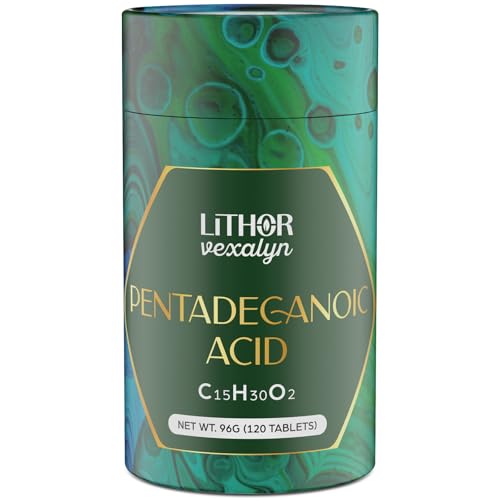
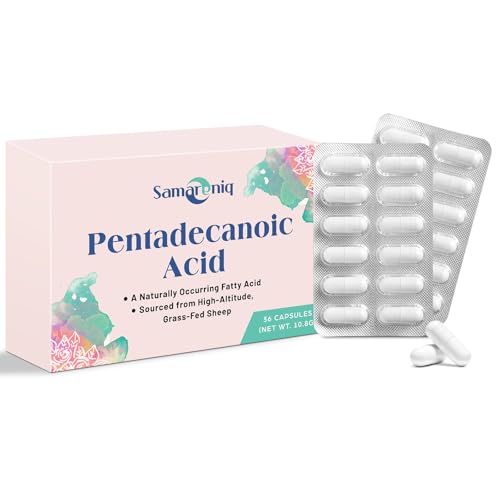
- Epitracker Fatty15 C15:0 Fatty Acid SupplementLab-tested / studied
capsules, 100 mg C15:0 per capsule; 1 capsule/day starter, 2 capsules/day maintenance — Category creator; the only C15:0 supplement backed by the original Epitracker research team (Venn-Watson et al.); uses a patented, sustainably-sourced pure C15:0 ingredient; most expensive per-capsule but reference product for all comparisons - Double Wood Supplements Pentadecanoic Acid C15:0
capsules, 200 mg C15:0 per serving (2 capsules) — One of the first genericized C15:0 supplements; significantly lower price than Fatty15; no independent clinical trials on this specific product; good option for budget-conscious buyers who want to trial the fatty acid - Sports Research Pentadecanoic Acid C15:0
softgels, 100 mg C15:0 per softgel — Established supplement brand with strong Amazon presence; third-party tested; softgel form may aid fat-soluble absorption; competitively priced mid-tier option - BulkSupplements Pentadecanoic Acid Powder (C15:0)
powder, 100–300 mg per measured serving — Most economical option for higher-dose protocols or stackers; requires a milligram-accurate scale; no excipients or additives; not recommended for beginners unfamiliar with powder dosing
As an Amazon Associate we earn from qualifying purchases. C15:0 products vary widely in how much pentadecanoic acid they actually contain, so check that the Supplement Facts panel lists C15:0 in milligrams as its own line item rather than bundling it into a fatty acid blend, and that the per-serving dose falls in the 100–300 mg range used in published research.
A Note on the Evidence
The research on C15:0 supplementation is early-stage, much of it conducted or initiated by Epitracker-affiliated researchers, and no regulatory body has approved C15:0 for the treatment or prevention of any health condition. If you have cardiovascular disease, metabolic conditions, are pregnant or breastfeeding, or take prescription medications, consult a healthcare provider before adding C15:0 to your routine.
Frequently Asked Questions
Is C15:0 better absorbed from capsules or powder?
No published pharmacokinetic studies directly compare the two formats for C15:0. Because fatty acid absorption primarily depends on bile-mediated emulsification in the small intestine, taking either form with a fat-containing meal is likely more important than the delivery format itself. Both forms, if properly manufactured and stored, should deliver comparable amounts of active ingredient per dose.
Can I open a C15:0 capsule and use the contents as a powder?
Technically yes, but it undermines one of the capsule’s main advantages—oxidation protection. Exposing the powder contents to air by opening capsules daily accelerates degradation. If you prefer to mix C15:0 into food or drink, a dedicated powder product with appropriate packaging is a better long-term choice.

How do I measure C15:0 powder accurately at 100–200 mg doses?
You need a digital scale accurate to at least 0.01 grams (10 mg resolution). Standard kitchen measuring spoons are not precise enough at this mass. Some powder products include a calibrated micro-scoop, but verifying that scoop’s accuracy with a scale at least once is good practice.
Does the source of C15:0—dairy-derived versus synthetic—matter for either format?
Most commercially available C15:0 supplements use a form of pentadecanoic acid that is chemically identical regardless of whether it was isolated from dairy fat or synthesized. The key quality factors are purity (percent C15:0 versus other fatty acids), absence of oxidation products, and consistent manufacturing. These apply equally to capsule and powder presentations.
Are there any side effects specific to one form over the other?
No evidence suggests that capsule versus powder delivery causes different side effects. At the doses studied (100–300 mg per day), C15:0 has been generally well-tolerated with no serious adverse events reported in published research. Gastrointestinal sensitivity to any fatty acid supplement—in either form—is possible for some individuals, particularly if taken on an empty stomach.
Should I refrigerate my C15:0 supplement?
Capsule products stored in a cool, dark location (such as a cupboard away from the stove) are typically stable at room temperature for their labeled shelf life. Powder products benefit more from refrigeration after opening, particularly in warm or humid environments, to slow oxidation of the exposed fatty acid. Always check the manufacturer’s storage guidance on the label.
References
- Robinson MK, Lee E, Ugalde-Nicalo PA, et al. Pentadecanoic Acid Supplementation in Young Adults with Overweight and Obesity: A Randomized Controlled Trial. The Journal of nutrition. 2024;154(9):2763-2771. PMID 39069269
These statements have not been evaluated by the Food and Drug Administration. This information is not intended to diagnose, treat, cure, or prevent any disease. Content is for informational purposes only and is not medical advice; consult a qualified healthcare provider before starting any supplement. As an Amazon Associate we earn from qualifying purchases.
