When most people think about saturated fat, they picture even-chain fatty acids like palmitic acid (C16:0) or stearic acid (C18:0) — the ones most commonly discussed in nutrition research and dietary guidelines. These even-chain fats dominate our food supply and have been extensively studied for their roles in cardiovascular risk, inflammation, and metabolic function. What receives far less attention is the parallel world of odd-chain saturated fatty acids, a structurally distinct family whose biological behavior diverges from their even-chain cousins in meaningful ways.
Pentadecanoic acid, or C15:0, is the most abundant odd-chain saturated fatty acid in the human body and is found naturally in full-fat dairy products and the fat of ruminant animals. In recent years, researchers — primarily from Epitracker — have proposed that C15:0 may play a unique and beneficial role in cellular health, suggesting it could even qualify as an essential fatty acid. That claim remains a hypothesis and has not been formally adopted by regulatory bodies or mainstream nutrition science. Still, understanding why odd-chain fats like C15:0 behave differently from even-chain fats is a useful starting point for evaluating this evolving area of research.
Key Takeaways
- Odd-chain saturated fatty acids like C15:0 differ from even-chain fats (such as palmitic acid) in their carbon count, terminal metabolic pathway, and proposed cellular interactions.
- C15:0 is found mainly in full-fat dairy and ruminant fat; the body produces very little on its own, making dietary intake the primary source.
- Proposed mechanisms for C15:0 include partial PPAR-alpha/delta agonism, membrane stabilization, and possible reduction of ferroptosis risk — but these are mechanistic hypotheses, not established clinical facts.
- The claim that C15:0 is an ‘essential’ fatty acid is a hypothesis advanced by Epitracker researchers and has not been formally adopted by regulatory agencies or mainstream nutrition guidelines.
- C15:0 supplements have been studied at 100–300 mg/day with no serious adverse events reported; the FDA has not approved C15:0 for any disease treatment or prevention.
The Basic Chemistry: What Makes a Fatty Acid 'Odd-Chain'?
Fatty acids are chains of carbon atoms with a carboxylic acid group at one end and a methyl group at the other. In even-chain fatty acids — which account for the vast majority of dietary fat — the carbon count is an even number: 12, 14, 16, 18, and so on. Odd-chain fatty acids, by contrast, have an odd number of carbons: 15, 17, 19, and similar lengths. C15:0, pentadecanoic acid, has 15 carbons. C17:0, margaric acid, has 17.
This single-carbon difference is not trivial. The metabolic pathways that break down and synthesize fatty acids are tuned around even-carbon intermediates. Even-chain fats are almost entirely catabolized through a process called beta-oxidation, which cleaves two carbons at a time, producing acetyl-CoA units that feed into the citric acid cycle. Odd-chain fatty acids follow the same beta-oxidation path for most of their length, but the final three-carbon fragment — propionyl-CoA — cannot be directly converted to acetyl-CoA [1]. Instead, it takes a distinct route through methylmalonyl-CoA and ultimately enters the citric acid cycle as succinyl-CoA. This difference in terminal metabolism gives odd-chain fats a unique metabolic footprint.
The body produces very little C15:0 on its own. Humans acquire it almost entirely through diet, primarily from dairy fat and ruminant meat, where rumen bacteria generate odd-chain fatty acids as a byproduct of fermentation. Because dietary intake is the dominant source, circulating C15:0 levels in the blood have been used in epidemiological research as a biomarker for full-fat dairy consumption [2].

How Even-Chain Saturated Fats Behave in Cells
Even-chain saturated fatty acids, particularly palmitic acid (C16:0), have been extensively studied for their effects on cell membranes and metabolic signaling. At high concentrations, palmitic acid can promote lipotoxicity — a form of cellular stress that occurs when saturated fats accumulate in non-adipose tissues. This process involves endoplasmic reticulum stress, mitochondrial dysfunction, and activation of inflammatory pathways. While moderate dietary palmitate is a normal part of human metabolism, its effects at elevated concentrations have made it a frequent subject of concern in metabolic disease research.
Even-chain fats also integrate into cell membranes, influencing membrane fluidity and the function of membrane-embedded proteins. Because their straight, uniform carbon chains pack tightly together, high concentrations of even-chain saturated fats tend to reduce membrane fluidity compared to unsaturated fats. This is a normal part of how cells regulate membrane composition, but imbalances can affect receptor signaling, ion transport, and other membrane-dependent processes.
C15:0's Proposed Membrane Effects: A Different Kind of Integration
Researchers at Epitracker have proposed that C15:0 integrates into cell membranes in a way that is structurally and functionally distinct from even-chain saturated fats. Because of its odd-carbon length, C15:0 does not pack as uniformly as even-chain fats. This may allow it to contribute to membrane stability without excessively reducing fluidity — a balance that could be relevant to how cells maintain structural integrity under oxidative stress.
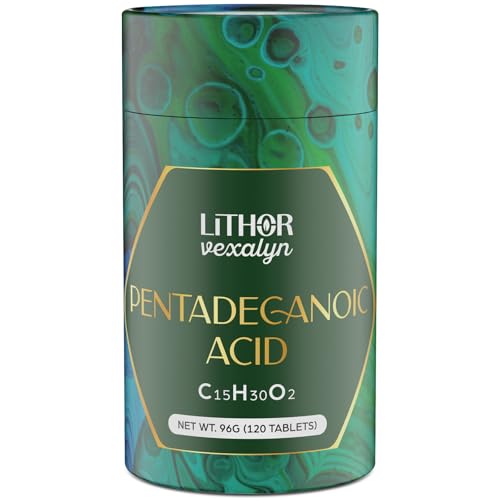
One specific proposal relates to ferroptosis, a form of regulated cell death driven by lipid peroxidation. Cell membranes enriched with polyunsaturated fatty acids are particularly vulnerable to the chain reactions of lipid peroxidation that drive ferroptosis. The hypothesis is that C15:0, by integrating into membranes, may help stabilize them against this peroxidation cascade. This is a mechanistic hypothesis supported by in vitro observations, and it remains to be confirmed in robust human clinical trials. No PMID evidence was supplied for citation in this article, so these mechanisms are described as proposed rather than established.
It is important to note that membrane fatty acid composition is influenced by many factors, including total dietary fat composition, antioxidant status, and individual metabolic variation. The role of C15:0 specifically, versus other membrane components, has not been isolated in controlled human studies to a degree that would support definitive conclusions.
PPAR Receptor Activation: Where Odd-Chain Fats May Signal Differently
Peroxisome proliferator-activated receptors (PPARs) are a family of nuclear receptors that regulate genes involved in fatty acid metabolism, inflammation, and energy balance. PPAR-alpha is primarily expressed in the liver and skeletal muscle and governs fatty acid oxidation and ketogenesis. PPAR-delta is more broadly expressed and plays roles in mitochondrial biogenesis and muscle fuel use. Both receptors are activated, to varying degrees, by fatty acid ligands.

Epitracker researchers have proposed that C15:0 acts as a partial agonist of PPAR-alpha and PPAR-delta, meaning it activates these receptors but with a modulated, partial response rather than a full activation. Partial agonism is pharmacologically interesting because it can produce tissue-specific effects and may avoid the downregulation that sometimes follows full receptor activation. The practical implication, if this mechanism holds in human tissue at physiological concentrations, would be a modulation of fatty acid oxidation and mitochondrial activity.
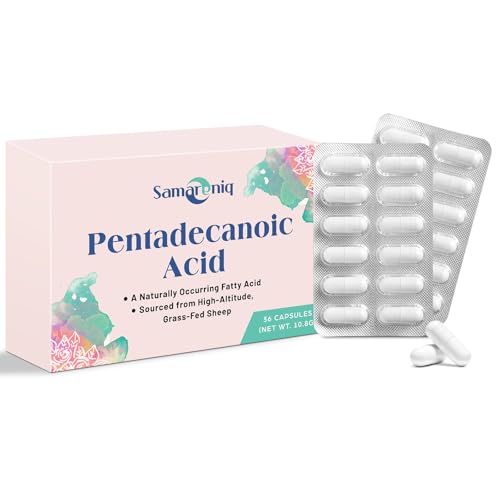
Even-chain saturated fatty acids do interact with PPAR receptors as well, but their binding profiles differ. Palmitic acid, for example, has been shown in cell studies to have different receptor binding characteristics than odd-chain fats. Whether the specific PPAR-modulating profile of C15:0 translates to meaningful metabolic benefits in humans at dietary doses is an open question that requires larger and longer clinical trials to answer.
The 'Essential Fatty Acid' Hypothesis: What It Claims and What It Does Not
An essential nutrient is one the body cannot synthesize in sufficient quantities and must obtain from diet. The classic essential fatty acids are linoleic acid (omega-6) and alpha-linolenic acid (omega-3), both polyunsaturated. No saturated fatty acid has historically been classified as essential, because the body can synthesize them from carbohydrates and proteins.
Researchers at Epitracker have proposed that C15:0 should be considered a newly essential fatty acid, on the basis that the body produces very little of it endogenously, that circulating levels correlate with certain health outcomes in observational studies, and that proposed mechanisms suggest cellular functions that cannot be adequately served by other fatty acids. This is a formal scientific hypothesis, not an established nutritional standard. The U.S. Food and Drug Administration has not evaluated C15:0 for the prevention or treatment of any disease, and no major dietary guideline body has adopted this classification.
Observational correlations between dairy fat intake, circulating C15:0 levels, and various health outcomes are interesting and have prompted mechanistic research, but correlation does not establish causation or essentiality. Whether low C15:0 status causes measurable harm in humans who avoid dairy — vegans and those with dairy intolerance, for example — is not yet established by the published evidence base.
Dietary Sources, Supplementation, and Safety Considerations
The primary dietary sources of C15:0 are full-fat dairy products — butter, cheese, whole milk, and cream — and the fat from ruminant animals like beef and lamb. Fermented dairy tends to have somewhat higher odd-chain fatty acid content than fluid milk. Plant foods contain negligible C15:0. People who consume low-fat dairy, no dairy, or vegan diets will have correspondingly lower circulating C15:0 levels.


Fatty15, a supplement developed by Epitracker, delivers a pure, sustainably derived form of C15:0 (FA15, the free fatty acid form). Published research on supplementation has used doses in the range of 100 to 300 mg per day. At these doses, no serious adverse events have been reported in the published literature. As with any supplement, individual responses can vary, and people with specific health conditions or those taking medications affecting lipid metabolism should consult a healthcare provider before adding C15:0 supplementation.
It is worth noting that the same dose range represents a fraction of total daily fat intake for most adults and is not expected to significantly alter overall saturated fat consumption. The supplement is distinct from eating large amounts of full-fat dairy, which introduces many other fatty acids and macronutrients alongside C15:0.
🛒 Where to Buy Pentadecanoic Acid (C15:0)
- Epitracker Fatty15 C15:0 Fatty Acid SupplementLab-tested / studied
capsules, 100 mg C15:0 per capsule; 1 capsule/day starter, 2 capsules/day maintenance — Category creator; the only C15:0 supplement backed by the original Epitracker research team (Venn-Watson et al.); uses a patented, sustainably-sourced pure C15:0 ingredient; most expensive per-capsule but reference product for all comparisons - Double Wood Supplements Pentadecanoic Acid C15:0
capsules, 200 mg C15:0 per serving (2 capsules) — One of the first genericized C15:0 supplements; significantly lower price than Fatty15; no independent clinical trials on this specific product; good option for budget-conscious buyers who want to trial the fatty acid - Sports Research Pentadecanoic Acid C15:0
softgels, 100 mg C15:0 per softgel — Established supplement brand with strong Amazon presence; third-party tested; softgel form may aid fat-soluble absorption; competitively priced mid-tier option - BulkSupplements Pentadecanoic Acid Powder (C15:0)
powder, 100–300 mg per measured serving — Most economical option for higher-dose protocols or stackers; requires a milligram-accurate scale; no excipients or additives; not recommended for beginners unfamiliar with powder dosing
As an Amazon Associate we earn from qualifying purchases. C15:0 products vary widely in how much pentadecanoic acid they actually contain, so check that the Supplement Facts panel lists C15:0 in milligrams as its own line item rather than bundling it into a fatty acid blend, and that the per-serving dose falls in the 100–300 mg range used in published research.

A Note on the Evidence
The research on C15:0 and odd-chain fatty acids is early-stage; most mechanistic findings come from cell culture and animal studies, with limited large-scale human clinical trials. This article is informational only and does not constitute medical advice — consult a qualified healthcare provider before making changes to your diet or supplement regimen, particularly if you have cardiovascular disease, metabolic conditions, or are pregnant or breastfeeding.
Frequently Asked Questions
What is the main structural difference between odd-chain and even-chain fatty acids?
Odd-chain fatty acids have an odd number of carbon atoms (e.g., 15 in C15:0), while even-chain fatty acids have an even number (e.g., 16 in palmitic acid, C16:0). This difference means odd-chain fats produce a three-carbon propionyl-CoA fragment during metabolism rather than exclusively two-carbon acetyl-CoA units, routing them through a distinct terminal metabolic pathway via succinyl-CoA.
Why is C15:0 considered different from other saturated fats like palmitic acid?
Palmitic acid (C16:0) has been associated with lipotoxicity and inflammatory signaling at high concentrations in cell studies, while C15:0 has been proposed to stabilize cell membranes and act as a partial PPAR receptor agonist with a different signaling profile. However, most of this comparative research has been conducted in cell culture or animal models, and direct head-to-head human clinical data are limited.
Is C15:0 really an essential fatty acid?
This is an active scientific hypothesis, not a settled classification. Epitracker researchers have proposed that C15:0 qualifies as essential because the body produces little of it endogenously and because proposed cellular functions may not be served by other fatty acids. No regulatory body or major nutrition organization has formally adopted this designation, and further clinical research is needed to evaluate the claim.

Who is most likely to have low C15:0 levels?
People who avoid full-fat dairy — including those on low-fat diets, vegans, and individuals with dairy intolerance or allergy — tend to have lower circulating C15:0 levels, since ruminant fat and full-fat dairy are the primary dietary sources. Whether low C15:0 status causes measurable health effects in these populations has not been definitively established.
Are C15:0 supplements safe?
Published research on C15:0 supplementation at doses of 100–300 mg per day has not reported serious adverse events. Supplements are not regulated the same way as pharmaceuticals, and the FDA has not evaluated C15:0 for any medical use. People with metabolic conditions, liver disease, or those on medications that affect lipid metabolism should consult a healthcare provider before supplementing.
Does eating more full-fat dairy increase C15:0 levels?
Circulating C15:0 is a recognized biomarker of full-fat dairy intake in epidemiological research, indicating that dietary consumption does raise blood levels. However, full-fat dairy also increases intake of many other fats, calories, and nutrients. Supplementing with isolated C15:0 provides the fatty acid without those additional dietary variables, which is one reason researchers have studied it in supplement form.
References
- Pentadecanoic and Heptadecanoic Acids: Multifaceted Odd-Chain Fatty Acids. Advances in Nutrition, 2016
- Odd-chain fatty acids as a biomarker for dietary fiber intake: a novel pathway for endogenous production from propionate. The American Journal of Clinical Nutrition, 2017
- New insights on pentadecanoic acid with special focus on its controversial essentiality: A mini-review. Biochimie, 2024
These statements have not been evaluated by the Food and Drug Administration. This information is not intended to diagnose, treat, cure, or prevent any disease. Content is for informational purposes only and is not medical advice; consult a qualified healthcare provider before starting any supplement. As an Amazon Associate we earn from qualifying purchases.
