Does Fatty15 Help With Fatty Liver? What the Research Suggests
Liver health is one of the more researched angles for C15:0, the fatty acid in Fatty15, so this is a fair question with some real evidence behind it. The short answer: research associates higher C15:0 levels with more favorable liver markers, and preclinical work is encouraging, but Fatty15 is not an approved treatment for fatty liver disease (NAFLD/MASLD). Here’s the nuanced picture.
Why C15:0 Is Studied for the Liver
Pentadecanoic acid is incorporated into cell membranes, including liver cells, where research suggests it supports membrane stability and reduces oxidative stress. Observational studies have linked higher circulating C15:0 to healthier liver enzyme profiles, and preclinical models have reported improvements in markers relevant to fatty liver. Mechanistically, C15:0’s proposed activity on metabolic pathways (including PPAR receptors) is relevant to how the liver handles fat.
What the Evidence Does and Doesn’t Show
- Encouraging associations: multiple datasets link higher C15:0 to better liver markers.
- Promising preclinical data: animal and cell studies suggest benefit in fatty-liver-relevant pathways.
- One randomized trial has tested it head-on: in the TANGO trial, 88 women with fatty liver disease were randomly assigned for 12 weeks to a Mediterranean-style diet with C15:0, the same diet without C15:0, or their habitual diet. Liver fat measured by MRI fell about 33% with C15:0 and about 30% without it, against about 10% in the control group[1]. The liver-fat improvement tracked the diet and the weight loss, not the C15:0. What C15:0 did add was a further reduction in LDL cholesterol and a shift in gut bacteria.
- A smaller trial saw liver-enzyme movement, in a subgroup: a 12-week trial gave 200 mg/day of C15:0 or placebo to 30 young adults with overweight or obesity. Supplementation reliably raised blood C15:0 and caused no significant adverse events. Among treated participants who reached a blood level above 5 µg/mL, roughly half of them, ALT fell 29 U/L and AST 6 U/L more than in treated participants who did not reach that level[2]. That is a comparison inside the treatment group rather than a randomized comparison against placebo, so it is a lead worth following, not proof.
- Not a proven treatment: no trial has shown that C15:0 on its own reverses or treats fatty liver, and it should not replace medical care for a diagnosed liver condition.
If You Have Fatty Liver
Fatty liver disease is managed primarily through diet, weight management, exercise, and addressing underlying metabolic issues, under medical supervision. C15:0 may be a reasonable supportive supplement to discuss with your clinician, but it is not a substitute for the proven pillars of liver care. Never use a supplement in place of medical treatment for a diagnosed condition.
Getting C15:0 Affordably
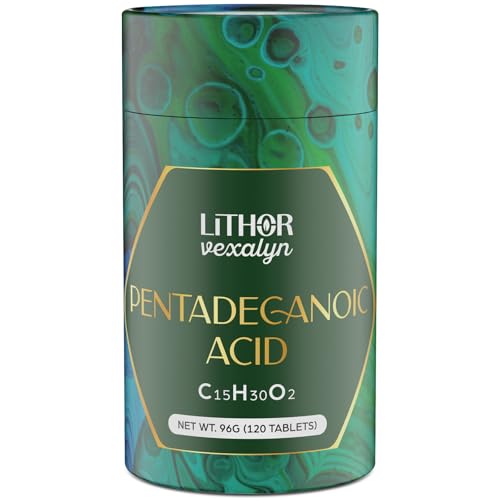
If you and your clinician decide C15:0 is worth trying, you don’t need the premium brand to get the molecule, a generic pentadecanoic acid supplement provides the same active ingredient. See our Fatty15 review for the branded-vs-generic trade-off.
Frequently Asked Questions
Does Fatty15 help with fatty liver?
Not for the liver fat itself, on the trial evidence available. The one randomized trial that added C15:0 to a diet programme in people with fatty liver found the same liver-fat reduction with or without it[1], though C15:0 did lower LDL cholesterol further. Fatty15 is not a proven treatment for fatty liver disease. Discuss it with your clinician as a possible supportive supplement, not a replacement for medical care.

Can C15:0 reverse fatty liver?
No. The strongest evidence is no longer an association or an animal study, it is a randomized controlled trial, and that trial did not find a C15:0 effect on liver fat: adding C15:0 to a 12-week Mediterranean-style diet reduced liver fat about 33%, versus about 30% for the same diet without it[1]. Reversal of fatty liver is driven by diet, weight, and exercise under medical guidance.
Is Fatty15 good for the liver?
C15:0 has some of its most interesting research in liver-relevant markers, so it’s a plausible supportive option, but “good for the liver” should be read as promising early evidence, not proven therapy.
Should I take Fatty15 for NAFLD?
Only in discussion with your clinician, and alongside (not instead of) the proven lifestyle and medical management of fatty liver disease.
References
- Chooi YC, Zhang QA, Magkos F, et al. Effect of an Asian-adapted Mediterranean diet and pentadecanoic acid on fatty liver disease: the TANGO randomized controlled trial. American Journal of Clinical Nutrition. 2024;119(3):788-799. PMID 38035997
- Robinson MK, Lee E, Ugalde-Nicalo PA, et al. Pentadecanoic Acid Supplementation in Young Adults with Overweight and Obesity: A Randomized Controlled Trial. The Journal of Nutrition. 2024;154(9):2763-2771. PMID 39069269
- Venn-Watson S, Lumpkin R, Dennis EA. Efficacy of dietary odd-chain saturated fatty acid pentadecanoic acid parallels broad associated health benefits in humans: could it be essential? Scientific Reports. 2020;10:8161. PMID 32424181
Related: Does Fatty15 Lower Cholesterol? · Does Fatty15 Work? · Fatty15 Review
These statements have not been evaluated by the Food and Drug Administration. This information is not intended to diagnose, treat, cure, or prevent any disease. Content is for informational purposes only and is not medical advice; consult a qualified healthcare provider before starting any supplement. As an Amazon Associate we earn from qualifying purchases.
