Some of the most unexpected scientific paths begin not in a human clinical trial, but in observations of another species. In the case of pentadecanoic acid—a saturated odd-chain fatty acid now marketed as Fatty15—the origin story runs through a population of aging bottlenose dolphins managed by the U.S. Navy Marine Mammal Program. Researchers noticed that some of these animals were developing health changes that looked, at the metabolic level, strikingly similar to patterns seen in aging humans.
What followed was a series of diet intervention studies that would eventually point investigators toward C15:0 as a compound worth examining in its own right. This article traces that origin story as honestly as the published evidence allows, explains what the dolphin studies actually measured, and is clear about what remains hypothesis versus established finding. Nothing here constitutes medical advice, and the FDA has not evaluated C15:0 for the treatment or prevention of any disease.
Key Takeaways
- Scientific interest in C15:0 originated in dietary experiments on aging bottlenose dolphins, where a modified fish diet was associated with alleviation of chronic anemia and favorable metabolic marker shifts [1].
- The same dietary intervention led to increased serum adiponectin and changes in sphingolipid levels in dolphins, pointing researchers toward odd-chain fatty acids as a subject of interest [2].
- A 2025 study extended the research to brain aging, identifying amyloid-beta plaques in aging dolphins and proposing cognitive health-supporting roles for C15:0 [3].
- The classification of C15:0 as a newly essential fatty acid is a hypothesis by Epitracker researchers and has not been formally adopted by regulatory bodies or mainstream nutrition science.
- Human evidence for isolated C15:0 supplementation is still developing; food sources such as full-fat dairy remain the best-characterized route to dietary C15:0.
Why Dolphins? An Unlikely Research Starting Point
Bottlenose dolphins (Tursiops truncatus) in managed care can live for decades and, like humans, develop age-related shifts in metabolic markers, blood chemistry, and inflammation. Researchers at the U.S. Navy Marine Mammal Program—including scientists who would later co-found Epitracker—began studying whether dietary modifications could slow or reverse some of these changes in aging animals.
Dolphins also offer a practical advantage as a research model: their diets can be tightly controlled. Researchers can specify exactly which fish species are fed and in what proportions, then measure downstream changes in blood chemistry with precision. That level of dietary control is difficult to achieve in free-living human subjects, making a well-monitored dolphin cohort a potentially informative, if unconventional, starting point for nutritional investigation.
The Modified Fish Diet Experiments
Two published studies examined what happened when researchers shifted bottlenose dolphins from a standard fish diet to one modified to include species with different fatty acid profiles. In a 2016 study, the modified fish diet led to an increase in serum adiponectin—a hormone associated with insulin sensitivity and anti-inflammatory signaling—along with measurable changes in sphingolipid levels [2]. Adiponectin tends to decline in obesity and metabolic disease in humans, so its elevation was considered a favorable signal by the researchers.
A more comprehensive 2020 study found that the same dietary approach shifted the dolphins’ serum metabolome broadly and was associated with alleviation of chronic anemia in the animals, with odd-chain saturated fatty acids identified as potentially playing a role in these metabolic shifts [1]. Both studies were observational in their metabolomic analyses—they identified associations rather than proving causal mechanisms—and the dolphin population studied was small.

What Changed in the Dolphins' Blood?
The 2020 metabolomics analysis is the more detailed of the two. Researchers found that the modified diet produced changes across a broad range of serum metabolites, with odd-chain saturated fatty acids emerging as a signal of interest, and the alleviation of chronic anemia gave the findings clinical weight beyond simple biomarker shifts [1]. Chronic anemia had been a real health problem in the dolphin population, so its improvement was a concrete, measurable outcome.
The 2016 study’s adiponectin finding added to this picture [2]. Taken together, the two studies suggested that something in the modified fish diet was producing metabolic changes the researchers considered beneficial, and the odd-chain fatty acid content of the newly introduced fish species—C15:0 among them—became a focus of further investigation. This is where the hypothesis that C15:0 specifically was the active agent began to take shape.
C15:0 Emerges as a Candidate Compound
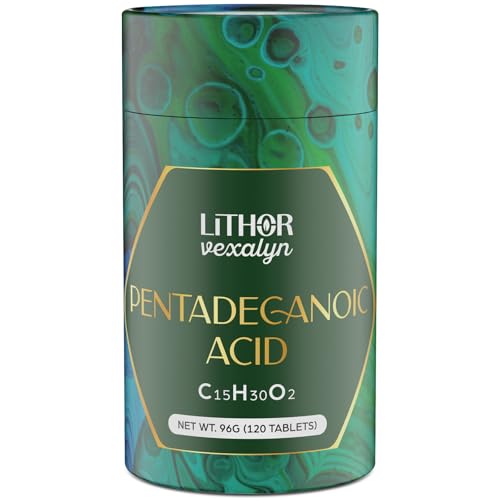
Pentadecanoic acid (C15:0) is a 15-carbon saturated fatty acid found naturally in dairy fat, ruminant animal fat, and certain fish. Unlike the even-chain saturated fatty acids that dominate most Western diets—such as palmitic acid (C16:0)—it is an odd-chain fatty acid. Odd-chain saturated fatty acids are metabolized through different pathways and have been associated with distinct biological effects, though the research base is still developing.
Following the dolphin dietary studies, Epitracker researchers developed the hypothesis that C15:0 specifically was responsible for a meaningful share of the observed benefits. They proposed that C15:0 integrates into cell membranes, acts as a partial agonist of PPAR-alpha and PPAR-delta receptors (which regulate fatty acid oxidation and cellular metabolism), and may reduce ferroptosis—an iron-dependent form of cell death—and cellular senescence. These proposed mechanisms are biologically plausible and grounded in known receptor biology, but the designation of C15:0 as a newly ‘essential’ fatty acid is a hypothesis advanced by Epitracker researchers that has not been formally adopted by regulatory bodies or mainstream nutrition science.

Extending the Research: Dolphins, Aging Brains, and Cognitive Health
A 2025 study extended the dolphin research into neurological territory. Researchers identified aging-associated amyloid-beta plaques and neuroinflammation in bottlenose dolphins—features that share characteristics with Alzheimer’s-related pathology in humans—and proposed novel cognitive health-supporting roles for C15:0 [3]. This adds a neurological dimension to what had previously been a primarily metabolic line of inquiry.
The finding of amyloid-beta plaques in aging dolphins is scientifically interesting because it suggests the species may serve as a naturally occurring model for studying certain aspects of brain aging, and because it opens the question of whether dietary fatty acids like C15:0 could have relevance beyond metabolic health. However, this paper is recent, its proposed mechanisms for C15:0 in cognitive health are at an early stage, and human clinical data on C15:0 and cognitive outcomes remains limited [3]. No regulatory body has approved C15:0 for the treatment or prevention of any neurological condition.

From Dolphins to Humans: What the Translation Does and Does Not Mean
The leap from a dolphin dietary study to a human supplement involves significant assumptions. Dolphins are not humans—their metabolic baselines, lifespans, and nutritional requirements differ in important ways. The dolphin studies identified associations between diet, odd-chain fatty acid levels, and health markers; they do not by themselves establish that isolated C15:0 supplementation produces equivalent effects in humans at any particular dose.
Human studies on C15:0 have since been conducted, primarily by Epitracker researchers, but most are relatively small and short-term. C15:0 supplements are generally reported as well-tolerated at studied doses of 100–300 mg per day, with no serious adverse events noted in published research. For most healthy adults, C15:0 from food sources—full-fat dairy, butter, cheese, and ruminant fats—remains the best-characterized way to obtain this fatty acid. Individuals managing cardiovascular conditions or other health issues should consult a qualified healthcare provider before significantly altering their dietary fat intake or adding a new supplement.
🛒 Where to Buy Pentadecanoic Acid (C15:0)
- Epitracker Fatty15 C15:0 Fatty Acid SupplementLab-tested / studied
capsules, 100 mg C15:0 per capsule; 1 capsule/day starter, 2 capsules/day maintenance — Category creator; the only C15:0 supplement backed by the original Epitracker research team (Venn-Watson et al.); uses a patented, sustainably-sourced pure C15:0 ingredient; most expensive per-capsule but reference product for all comparisons - Double Wood Supplements Pentadecanoic Acid C15:0
capsules, 200 mg C15:0 per serving (2 capsules) — One of the first genericized C15:0 supplements; significantly lower price than Fatty15; no independent clinical trials on this specific product; good option for budget-conscious buyers who want to trial the fatty acid - Sports Research Pentadecanoic Acid C15:0
softgels, 100 mg C15:0 per softgel — Established supplement brand with strong Amazon presence; third-party tested; softgel form may aid fat-soluble absorption; competitively priced mid-tier option - BulkSupplements Pentadecanoic Acid Powder (C15:0)
powder, 100–300 mg per measured serving — Most economical option for higher-dose protocols or stackers; requires a milligram-accurate scale; no excipients or additives; not recommended for beginners unfamiliar with powder dosing
As an Amazon Associate we earn from qualifying purchases. C15:0 products vary widely in how much pentadecanoic acid they actually contain, so check that the Supplement Facts panel lists C15:0 in milligrams as its own line item rather than bundling it into a fatty acid blend, and that the per-serving dose falls in the 100–300 mg range used in published research.

A Note on the Evidence
The evidence base for C15:0 is growing but remains early-stage; most human studies are small, relatively short-term, and have been conducted or funded by researchers with commercial interests in the compound. The FDA has not evaluated C15:0 for the treatment or prevention of any disease. This article is for informational purposes only and is not a substitute for personalized medical advice—consult a qualified healthcare provider before making significant changes to your diet or supplement routine.
Frequently Asked Questions
Why were dolphins used to study C15:0?
Bottlenose dolphins in managed care develop age-related metabolic changes that resemble patterns seen in aging humans, and their diets can be precisely controlled by researchers. When a modified fish diet alleviated chronic anemia and shifted metabolic biomarkers in aging dolphins, odd-chain saturated fatty acids including C15:0 were identified as potentially contributing to those changes [1]. This prompted researchers to investigate C15:0 more directly.
What health changes were observed in the dolphin diet studies?
A 2020 study found that a modified fish diet shifted the serum metabolome of bottlenose dolphins and was associated with alleviation of chronic anemia, with odd-chain fatty acids highlighted as potentially relevant [1]. A 2016 study found the modified diet led to increases in serum adiponectin and changes in sphingolipid levels [2]. Both are associations identified in a small managed population, not controlled human trials.
What is the dolphin-brain aging connection researchers have studied?
A 2025 study identified aging-associated amyloid-beta plaques and neuroinflammation in bottlenose dolphins and proposed that C15:0 may have cognitive health-supporting roles [3]. This is a recent and early-stage line of research. No conclusions about C15:0 and Alzheimer’s disease in humans can be drawn from it at this time, and the findings require replication and further human study.

Is C15:0 officially recognized as an essential fatty acid?
No. The hypothesis that C15:0 is a newly essential fatty acid has been advanced by Epitracker researchers based on their dolphin studies and early human data. This designation has not been formally adopted by the FDA, major nutritional regulatory bodies, or mainstream nutrition science as of current evidence.
Where is C15:0 naturally found in food?
C15:0 is found primarily in full-fat dairy products—whole milk, butter, cheese, and cream—as well as in the fat of ruminant animals such as beef and lamb. Certain fish species also contain measurable amounts, which is how it appeared in the modified dolphin diet. As dietary guidelines have encouraged lower-fat dairy in many Western countries, average C15:0 intake has declined, a trend Epitracker researchers link to health outcomes, though this connection remains hypothetical.
Are C15:0 supplements safe to use?
Published research on C15:0 supplements at doses of 100–300 mg per day has not reported serious adverse events. However, the supplement market is not regulated to the same standard as pharmaceuticals, long-term safety data in large diverse populations is limited, and individual circumstances vary. Pregnant or breastfeeding individuals and those with existing health conditions should consult a healthcare provider before use.
References
- Venn-Watson S et al. Modified fish diet shifted serum metabolome and alleviated chronic anemia in bottlenose dolphins (Tursiops truncatus): Potential role of odd-chain saturated fatty acids. PloS one (2020). PMID 32259832
- Sobolesky PM et al. Feeding a Modified Fish Diet to Bottlenose Dolphins Leads to an Increase in Serum Adiponectin and Sphingolipids. Frontiers in endocrinology (2016). PMID 27148164
- Venn-Watson S et al. Aging-Associated Amyloid-β Plaques and Neuroinflammation in Bottlenose Dolphins (Tursiops truncatus) and Novel Cognitive Health-Supporting Roles of Pentadecanoic Acid (C15:0). International journal of molecular sciences (2025). PMID 40332352
These statements have not been evaluated by the Food and Drug Administration. This information is not intended to diagnose, treat, cure, or prevent any disease. Content is for informational purposes only and is not medical advice; consult a qualified healthcare provider before starting any supplement. As an Amazon Associate we earn from qualifying purchases.
