Pentadecanoic acid, the saturated odd-chain fatty acid known as C15:0, has attracted growing interest among researchers studying metabolic health. Found naturally in full-fat dairy products, certain fish, and ruminant fats, it is now being investigated as a potential dietary factor with meaningful effects on lipid metabolism. Unlike the even-chain saturated fatty acids that have long dominated nutrition conversations, C15:0 appears to behave differently at the cellular level, and some researchers have proposed that these differences may extend to how the body manages cholesterol and triglycerides.
It is important to be upfront about the current state of evidence: direct clinical trials measuring C15:0 supplementation and lipid panel changes in humans are limited, and most of what we know comes from epidemiological associations, mechanistic cell studies, and animal research. This article explains the proposed mechanisms, reviews what the available science suggests, and is transparent about where the evidence is still too thin to draw firm conclusions. Nothing here constitutes medical advice, and the FDA has not evaluated C15:0 for any role in treating or preventing cardiovascular or lipid-related conditions.
Key Takeaways
- C15:0 is an odd-chain saturated fatty acid found in dairy and ruminant fats that appears distinctively in comprehensive lipid profiles and shifts in metabolic disease contexts [1].
- Proposed mechanisms for lipid effects include partial PPAR-alpha/delta agonism, which could theoretically support triglyceride clearance and HDL function, but these remain mechanistic hypotheses.
- Epidemiological associations between C15:0 blood levels and favorable lipid markers are interesting but cannot establish causation and are confounded by overall dietary patterns.
- No large randomized controlled trial has yet confirmed that C15:0 supplementation meaningfully changes HDL, LDL, or triglyceride levels in humans.
- The classification of C15:0 as ‘essential’ and its lipid-modifying effects are hypotheses advanced by Epitracker researchers that have not yet been adopted by mainstream regulatory or nutrition bodies.
C15:0 as a Lipid Biomarker: Where It Shows Up in Lipidome Research
Researchers studying comprehensive lipid profiles — a field called lipidomics — have found that C15:0 circulates in human blood at measurable concentrations and shifts meaningfully in the context of metabolic disease. When scientists map the full range of lipid species present in human plasma, odd-chain fatty acids including C15:0 reliably appear as distinct markers. Research analyzing lipidome alterations in disease contexts has identified C15:0 among the fatty acids that deviate from healthy reference ranges, suggesting it reflects underlying metabolic states rather than being metabolically inert [1].
This biomarker quality is part of why Epitracker researchers have argued that C15:0 status is worth monitoring. Higher circulating levels have been associated epidemiologically with full-fat dairy consumption, and in population studies, those dairy-derived C15:0 elevations have sometimes coincided with more favorable lipid profiles. That association is not proof of causation, but it has helped motivate more targeted mechanistic research into how C15:0 might directly influence cholesterol metabolism.
Proposed Mechanisms: How C15:0 Might Influence Cholesterol and Triglycerides
The most discussed mechanism by which C15:0 could affect lipid metabolism involves its activity as a partial agonist of peroxisome proliferator-activated receptors, specifically PPAR-alpha and PPAR-delta. PPAR-alpha is a nuclear receptor with well-established roles in fatty acid oxidation and triglyceride clearance; drugs that activate PPAR-alpha (fibrates) are used clinically to lower elevated triglycerides. If C15:0 activates PPAR-alpha even partially, it could theoretically encourage the liver and muscle tissue to oxidize more fatty acids and reduce triglyceride synthesis.

PPAR-delta activation, meanwhile, has been linked in preclinical models to improvements in HDL metabolism and reverse cholesterol transport — the process by which HDL particles ferry cholesterol away from arterial walls back to the liver. Researchers at Epitracker have proposed that C15:0’s dual PPAR agonism distinguishes it from even-chain saturated fats, which do not share this receptor activity, and may explain why population-level associations between dairy C15:0 exposure and cardiovascular markers sometimes diverge from predictions based on saturated fat intake alone.
A secondary proposed mechanism involves the physical integration of C15:0 into cell membranes. Odd-chain fatty acids alter membrane fluidity and lipid raft organization differently than even-chain counterparts. If C15:0 incorporation changes how membrane-bound receptors involved in lipid uptake and signaling — such as LDL receptors — are organized and expressed, that could influence circulating LDL-cholesterol levels. This remains a hypothesis based on cell-biology reasoning rather than established clinical evidence.

HDL Cholesterol: What the Proposed Evidence Suggests
High-density lipoprotein, or HDL, is commonly described as ‘good’ cholesterol because higher levels are generally associated with lower cardiovascular risk. Epitracker researchers, in published commentary and early investigations, have highlighted PPAR-delta-mediated pathways as a potential route through which C15:0 could support HDL function, not only HDL quantity but the capacity of HDL particles to perform reverse cholesterol transport efficiently.
It is worth distinguishing between raising HDL-cholesterol numbers on a blood panel and improving HDL function. Pharmaceutical trials have shown that some drugs dramatically raise HDL numbers without reducing cardiovascular events, revealing that the particle’s functional quality matters as much as its quantity. Any claim that C15:0 improves HDL should therefore be evaluated in terms of both concentration and particle function — a distinction that current human evidence on C15:0 is not yet granular enough to resolve definitively.
LDL Cholesterol: A More Complicated Picture
The relationship between dietary saturated fat and LDL-cholesterol is well established in nutrition science: most even-chain saturated fatty acids (lauric, myristic, palmitic) raise LDL-cholesterol to varying degrees. C15:0 is saturated, which has led to automatic assumptions that it would behave similarly. However, odd-chain saturated fatty acids do not follow the same metabolic pathways. The body cannot synthesize C15:0 de novo to any significant extent, meaning dietary and circulating C15:0 reflects intake rather than internal production, and its effect on hepatic LDL receptor expression and LDL particle production may differ from even-chain fats.
Some epidemiological analyses of dairy consumption have found that higher C15:0 blood levels do not associate with elevated LDL or that the association is weaker than for even-chain saturated fats. This is a correlation-based observation confounded by many dietary factors, not a controlled demonstration that C15:0 supplementation leaves LDL unchanged. Anyone with elevated LDL or a history of cardiovascular disease should not interpret these associations as permission to ignore LDL monitoring if considering C15:0 supplementation.

Triglycerides: The PPAR-Alpha Connection
Elevated triglycerides are an independent cardiovascular risk factor and a marker of poor metabolic health, often rising alongside insulin resistance and excess caloric intake from refined carbohydrates. PPAR-alpha activation is the established pharmacological mechanism used to lower triglycerides, and if C15:0 functions as a partial PPAR-alpha agonist as Epitracker researchers propose, it represents a plausible route to modest triglyceride reduction.
The key word is ‘partial.’ Prescription fibrates are full PPAR-alpha agonists calibrated to achieve specific dose-dependent triglyceride reductions measured in controlled trials. C15:0 at studied supplementation doses (100–300 mg/day) would be expected to produce a much gentler effect if any, and no large-scale randomized controlled trial has yet quantified what, if any, triglyceride reduction C15:0 achieves in humans with hypertriglyceridemia. Anyone with clinically elevated triglycerides should work with a physician rather than rely on C15:0 supplementation as a substitute for evidence-based treatment.
Honest Assessment: What the Evidence Currently Supports and Where the Gaps Are
The mechanistic case for C15:0 influencing lipid metabolism is biologically coherent: PPAR agonism is a validated pathway, odd-chain fatty acid lipidome signatures are measurable and meaningful [1], and C15:0’s structural distinctiveness from even-chain saturated fats provides a plausible reason its effects might diverge. These are legitimate scientific observations, not pseudoscience.
What is missing is the confirmatory human evidence: well-powered, pre-registered randomized controlled trials that assign participants to C15:0 supplementation, measure fasting lipid panels before and after, and compare results against placebo while controlling for diet. The epidemiological associations with dairy are suggestive but confounded by the many other components of full-fat dairy. The in vitro and animal evidence is promising but does not reliably translate. Referring to C15:0 as conferring proven cardiovascular lipid benefits would overstate what the current literature supports.
Consumers interested in C15:0 should approach it as an area of active, early-stage research rather than settled science. The hypothesis that it functions as an essential fatty acid with lipid-modifying properties is advanced primarily by Epitracker researchers and has not been adopted by major dietary guidelines bodies or mainstream cardiovascular nutrition organizations. That does not make it wrong, but it does mean independent replication and larger trials are still needed.
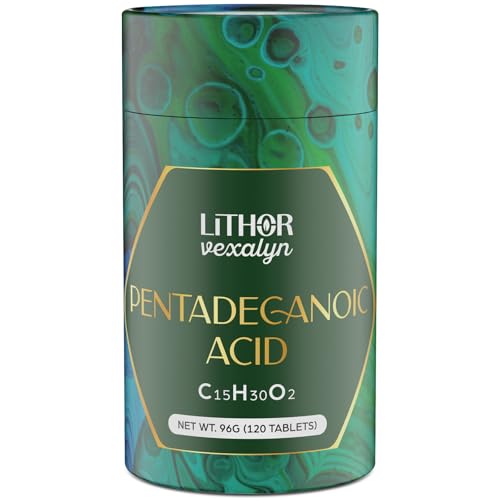
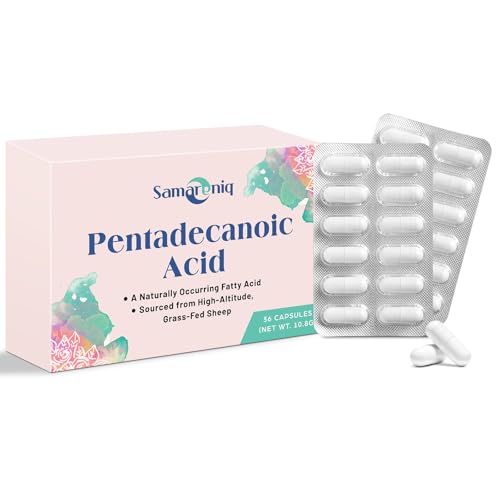
🛒 Where to Buy Pentadecanoic Acid (C15:0)

- Epitracker Fatty15 C15:0 Fatty Acid SupplementLab-tested / studied
capsules, 100 mg C15:0 per capsule; 1 capsule/day starter, 2 capsules/day maintenance — Category creator; the only C15:0 supplement backed by the original Epitracker research team (Venn-Watson et al.); uses a patented, sustainably-sourced pure C15:0 ingredient; most expensive per-capsule but reference product for all comparisons - Double Wood Supplements Pentadecanoic Acid C15:0
capsules, 200 mg C15:0 per serving (2 capsules) — One of the first genericized C15:0 supplements; significantly lower price than Fatty15; no independent clinical trials on this specific product; good option for budget-conscious buyers who want to trial the fatty acid - Sports Research Pentadecanoic Acid C15:0
softgels, 100 mg C15:0 per softgel — Established supplement brand with strong Amazon presence; third-party tested; softgel form may aid fat-soluble absorption; competitively priced mid-tier option - BulkSupplements Pentadecanoic Acid Powder (C15:0)
powder, 100–300 mg per measured serving — Most economical option for higher-dose protocols or stackers; requires a milligram-accurate scale; no excipients or additives; not recommended for beginners unfamiliar with powder dosing
As an Amazon Associate we earn from qualifying purchases. C15:0 products vary widely in how much pentadecanoic acid they actually contain, so check that the Supplement Facts panel lists C15:0 in milligrams as its own line item rather than bundling it into a fatty acid blend, and that the per-serving dose falls in the 100–300 mg range used in published research.
A Note on the Evidence
The evidence linking C15:0 supplementation to specific changes in HDL, LDL, or triglycerides in humans is preliminary and largely mechanistic; no large randomized controlled trial has confirmed these effects. Individuals with diagnosed dyslipidemia, cardiovascular disease, or those taking lipid-modifying medications should consult a physician before using C15:0 supplements and should not substitute them for prescribed treatments.

Frequently Asked Questions
Does C15:0 raise LDL cholesterol like other saturated fats?
Even-chain saturated fatty acids like palmitic acid are well-documented to raise LDL, but C15:0 follows different metabolic pathways and cannot be synthesized de novo by the body the way even-chain fats can. Epidemiological data have not consistently shown the same LDL-raising association for C15:0, though controlled supplementation trials confirming this difference in humans are limited. Anyone with elevated LDL should monitor levels with a physician if adding any new supplement.
What is the proposed connection between C15:0 and HDL?
Epitracker researchers propose that C15:0 activates PPAR-delta, a receptor involved in HDL metabolism and reverse cholesterol transport. If this mechanism holds in humans at supplementation doses, it could support HDL function. However, this is a proposed mechanism based on cell and early animal data, not a confirmed clinical outcome.
Can C15:0 help lower triglycerides?
The proposed mechanism — partial PPAR-alpha agonism — is the same pathway targeted by fibrate medications used to lower triglycerides. C15:0 may activate this pathway more gently, but no clinical trial has established an effective dose or confirmed meaningful triglyceride reduction in humans. People with elevated triglycerides should use evidence-based interventions under medical supervision.
Why does C15:0 appear in lipidome research?
Lipidomics studies that map the full spectrum of lipid species in human blood regularly detect odd-chain fatty acids including C15:0. Research has found that C15:0 levels shift alongside other lipids in disease states, suggesting it is a metabolically relevant biomarker rather than an inert bystander [1]. This is part of why researchers consider its circulating concentration worth measuring.
Is C15:0 supplementation safe for people on cholesterol-lowering medications?
Published research at doses of 100–300 mg/day has not reported serious adverse events, and C15:0 is generally well-tolerated at these levels. However, anyone taking statins, fibrates, or other lipid-modifying medications should consult their physician before adding C15:0, as the proposed PPAR agonism could theoretically interact with drugs targeting similar pathways.
Has the FDA evaluated C15:0 for cholesterol or cardiovascular claims?
No. The FDA has not evaluated C15:0 for the treatment or prevention of any cardiovascular or lipid-related condition. Its proposed status as an ‘essential’ fatty acid is a scientific hypothesis put forward by Epitracker researchers and has not been formally recognized by the FDA, mainstream dietary guidelines, or major cardiovascular nutrition organizations.
References
- Zardini Buzatto A et al. Lipidome Alterations Induced by Cystic Fibrosis, CFTR Mutation, and Lung Function. Journal of proteome research (2021). PMID 33089695
These statements have not been evaluated by the Food and Drug Administration. This information is not intended to diagnose, treat, cure, or prevent any disease. Content is for informational purposes only and is not medical advice; consult a qualified healthcare provider before starting any supplement. As an Amazon Associate we earn from qualifying purchases.
