Fatty15 for Skin and Hair: Does C15 Actually Help?
Search interest in “Fatty15 for hair” and “Fatty15 for skin” is real, but the evidence here is thinner than for Fatty15’s core areas (cell membranes, metabolic and liver health). C15 is a cell-membrane fatty acid, so there’s a plausible mechanism for skin and hair benefits, but there’s no strong human trial showing Fatty15 grows hair or transforms skin. Here’s an honest look.
The Plausible Mechanism
Skin and hair-follicle cells, like all cells, rely on healthy membranes. C15 can be built into membrane lipids, so it is reasonable to hypothesize a role in skin and follicle health, but the lab evidence is mixed: it was non-cytotoxic in human cell screens run by the supplement-linked group, yet in fission yeast it was toxic, distorting membranes and blocking cell division [1][2]. Plausible mechanism, however, is not the same as proven benefit.
Research note: People newly diagnosed with basal cell carcinoma (skin cancer) had higher red blood cell pentadecanoic acid (15:0, P = 0.04) than controls, which runs against the idea that more C15:0 is always better. Small hospital study with weak significance [6].
What the Evidence Actually Supports
- General cell-level research [2][3]: the cell and animal work is real but mostly from groups tied to the supplement maker, and it does not show that skin or hair cells benefit [2][3].
- No dedicated hair-growth or skin trials: there’s no robust human study showing Fatty15 causes hair growth or specific skin improvements.
- Anecdotal reports only: some users mention skin or hair improvements, but these are subjective and could reflect many factors.
Should You Take Fatty15 for Skin or Hair?
If your only goal is hair growth or skin appearance, Fatty15 isn’t the evidence-backed first choice, targeted approaches (and addressing nutrition, stress, and any underlying issues) have stronger support. If you’re already interested in C15 for its metabolic and cell-health research, any skin or hair benefit would be a possible bonus, not the main reason to take it.
Getting C15 Affordably
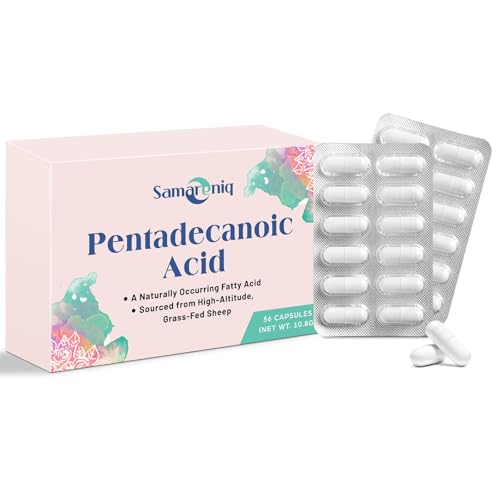
If you want to try C15 for overall cell health, a generic pentadecanoic acid supplement provides the same molecule for less than the branded product. See our Fatty15 review for the full picture.
What Cell Experiments Say, and Why They Stop Short of Skin
The closest thing to a mechanistic case for C15 and skin comes from cell work. A 2022 PLOS One paper (Venn-Watson and Butterworth) tested pure pentadecanoic acid across 12 primary human cell systems and 148 biomarkers. The abstract reports that C15 was non-cytotoxic at every concentration tested and had anti-inflammatory and antiproliferative activity involving 36 biomarkers in 10 of the 12 systems. A 2025 review in the World Journal of Biological Chemistry notes that these systems include cell types such as endothelial cells, fibroblasts, macrophages and T-cells. Fibroblasts are one of the cell types that build the connective tissue of skin, so it is fair to call this relevant background.
It is not evidence that a capsule changes how skin or hair looks. These were cultured cells exposed to measured concentrations of pure C15, the authors are affiliated with the companies that commercialize the ingredient, and the abstracts do not describe a skin or hair endpoint such as wrinkle depth, hydration, shedding or follicle density. The same review states that prospective clinical outcomes for C15 are still lacking. A pattern of anti-inflammatory activity in a dish is a reason to run a trial, not a result from one.
What Human Data on C15 and Skin Actually Exist
When researching this page, a PubMed search combining pentadecanoic acid with skin, keratinocyte, fibroblast and sebocyte terms returned about twenty records. Scanning the titles, nearly all concerned unrelated topics: plant extracts, bacterial biofilm materials, a fungal growth medium that happens to contain pentadecanoic acid as a lipid ingredient, and mouse metabolomics. None was a trial of C15 supplementation for skin or hair in people. A search for hair returned no relevant study either. That does not prove nobody has looked, but it matches what the existing sections of this article say: the evidence base is empty, not mixed.
One observational paper is worth knowing about because it cuts the other way. A 2018 case-control study in Clinical Nutrition ESPEN measured saturated fatty acids in red blood cells of patients newly diagnosed with basal cell carcinoma, a common skin cancer, and compared them with healthy controls. Cases had a higher red blood cell level of pentadecanoic acid (P = 0.04) along with differences in several other fatty acids. This is a single hospital-based comparison, it cannot show cause or direction, and the abstract does not suggest C15 contributes to skin cancer. What it does illustrate is that a higher blood level of C15 is not automatically a marker of healthier skin, and that blood levels reflect many influences. A 2016 review in Advances in Nutrition (Pfeuffer and Jaudszus) explains that C15 and C17 are accepted biomarkers of dairy fat intake but can also be made in the body, for example from gut-derived propionic acid, so a number on a lab report mixes diet, gut biology and metabolism.
What the Brand Itself Says and Shows
As of October 2026, the Fatty15 product page displays a 4.8 out of 5 average from 8,519 reviews, with 95 percent of reviewers saying they would recommend the products. The review widget lets shoppers filter by keywords including Energy, Sleep, Mood, Appetite, Cognitive Function and Physical Appearance. That last filter is probably why the topic keeps coming up in searches, and the page also lists “better looking skin” among its popular searches. It tells you shoppers are interested, which is different from telling you what the capsule does to skin.
The company’s FAQ page, read for this article, describes near-term benefits customers report such as less snacking between meals, better sleep, a calmer mood and more energy, and says long-term benefits start to appear between one and three months of daily use. Skin and hair are not on that list. Star ratings and testimonials are voluntary self-reports with no placebo group, so they cannot separate an effect of the capsule from expectation, season, diet changes or other products people started at the same time. Treat them as a prompt for questions, not as results.
How a Real Skin or Hair Study Would Have to Look
The first published randomized trial of a C15 supplement on its own in people, a 2024 study in the Journal of Nutrition (Robinson et al.) supported by Seraphina Therapeutics, randomized [4][5] 30 young adults with overweight or obesity to 200 mg of C15 or placebo daily for 12 weeks. Its primary goal was to see whether blood C15 rose, and it also tracked safety and a few lab values. It did not photograph skin, count hairs or ask about shedding. Even a well-designed future trial would need several things this one lacked:
- A skin or hair endpoint chosen in advance, such as standardized photographs, hair counts under magnification, or validated questionnaires, rather than a search through many outcomes afterward.
- Enough participants and time. Hair cycles run over months, so a few weeks would not be informative.
- A placebo arm so that seasonal changes and expectation are measured, since both can change how people feel about their skin and hair.
- Blood C15 levels, so researchers can ask whether any effect tracks the amount actually absorbed.
Practical Takeaways
If you want to improve skin or hair, the first step is working out why it is changing, because shedding, dryness and breakouts have many causes that a clinician can sort through, including nutrition, thyroid and iron status, medications, hormones, stress and scalp conditions. If you are curious about C15 for its metabolic and cell research, take it for those reasons and treat any change in skin or hair as a possible but unproven extra. If you do try it and want to know whether anything changed, take dated photographs in the same light at the start and again after three months, and note anything else you changed at the same time. That gives you something more reliable than memory, though it is still a single-person observation rather than evidence for others.

Frequently Asked Questions
Does Fatty15 help with hair growth?
There’s no strong human trial showing Fatty15 grows hair. There’s a plausible cell-membrane mechanism and some anecdotal reports, but hair growth isn’t an evidence-backed reason to take it.
Is Fatty15 good for skin?
C15 is built into cell membranes in lab studies, which gives a theoretical reason to test it on skin cells, but there are no dedicated skin trials [1]. Any skin benefit is speculative, not proven.

Can C15 help with hair loss?
No evidence supports C15 as a hair-loss treatment. If hair loss is a concern, evidence-based options and a clinician’s input are the better route.
Should I take Fatty15 for beauty benefits?
Not as a primary reason, its research is strongest for metabolic and cell health, not skin or hair. Consider it for those areas, with any beauty benefit as an unproven bonus.
Has any study tested C15 supplements on skin or hair in people?
Not that turned up in a PubMed search of pentadecanoic acid with skin and hair terms. The only randomized trial of a C15 supplement on its own, a 12-week study of 30 young adults supported by the supplement maker, [4][5] measured blood C15, safety and a few lab values, not skin or hair outcomes.

Do higher blood C15 levels mean healthier skin?
Not necessarily. A small case-control study of patients with basal cell carcinoma found higher red blood cell pentadecanoic acid in the patients than in healthy controls. It shows association only, but it is a reminder that blood levels do not map neatly onto skin health.
How long would I have to take C15 to judge any change in hair or skin?
There is no data to answer this. Fatty15 says long-term benefits start between one and three months of daily use, and hair growth cycles are slow, so three months with dated photographs is a reasonable personal test, though not proof.
References
- Venn-Watson S et al. Efficacy of dietary odd-chain saturated fatty acid pentadecanoic acid parallels broad associated health benefits in humans: could it be essential? Scientific reports (2020). PMID 32424181
- Venn-Watson S, Schork NJ. Pentadecanoic Acid (C15:0), an Essential Fatty Acid, Shares Clinically Relevant Cell-Based Activities with Leading Longevity-Enhancing Compounds. Nutrients (2023). PMID 37960259
- Venn-Watson SK et al. Broader and safer clinically-relevant activities of pentadecanoic acid compared to omega-3: Evaluation of an emerging essential fatty acid across twelve primary human cell-based disease systems. PloS one (2022). PMID 35617322
- Mercola J Molecular and cellular mechanisms of pentadecanoic acid. World journal of biological chemistry (2025). PMID 41378251
- Rahrovani F et al. Erythrocyte membrane saturated fatty acids profile in newly diagnosed Basal Cell Carcinoma patients. Clinical nutrition ESPEN (2018). PMID 29460784
- Pfeuffer M et al. Pentadecanoic and Heptadecanoic Acids: Multifaceted Odd-Chain Fatty Acids. Advances in nutrition (Bethesda, Md.) (2016). PMID 27422507
- Robinson MK et al. Pentadecanoic Acid Supplementation in Young Adults with Overweight and Obesity: A Randomized Controlled Trial. The Journal of nutrition (2024). PMID 39069269
Related: Does Fatty15 Work? · Fatty15 Review · Fatty15 Alternatives
References
- Hoshikawa Y et al. Formation of giant ER sheets by pentadecanoic acid causes lipotoxicity in fission yeast. Proceedings of the National Academy of Sciences of the United States of America (2025). PMID 40424131
- Venn-Watson SK et al. Broader and safer clinically-relevant activities of pentadecanoic acid compared to omega-3: Evaluation of an emerging essential fatty acid across twelve primary human cell-based disease systems. PloS one (2022). PMID 35617322
- Venn-Watson S et al. Pentadecanoic Acid (C15:0), an Essential Fatty Acid, Shares Clinically Relevant Cell-Based Activities with Leading Longevity-Enhancing Compounds. Nutrients (2023). PMID 37960259
- Robinson MK et al. Pentadecanoic Acid Supplementation in Young Adults with Overweight and Obesity: A Randomized Controlled Trial. The Journal of nutrition (2024). PMID 39069269
- Chooi YC et al. Effect of an Asian-adapted Mediterranean diet and pentadecanoic acid on fatty liver disease: the TANGO randomized controlled trial. The American journal of clinical nutrition (2024). PMID 38035997
- Rahrovani F et al. Erythrocyte membrane saturated fatty acids profile in newly diagnosed Basal Cell Carcinoma patients. Clinical nutrition ESPEN (2018). PMID 29460784
These statements have not been evaluated by the Food and Drug Administration. This information is not intended to diagnose, treat, cure, or prevent any disease. Content is for informational purposes only and is not medical advice; consult a qualified healthcare provider before starting any supplement. As an Amazon Associate we earn from qualifying purchases.