Two fatty acid supplements have attracted growing attention for their potential roles in cellular and metabolic health: omega-3 fish oil, a well-studied supplement with decades of clinical research behind it, and C15:0 (pentadecanoic acid), a saturated odd-chain fatty acid that has only recently become commercially available as a standalone supplement. While both involve dietary fats, they are structurally distinct and work through different proposed pathways in the body.
This article compares C15:0 and omega-3s directly — their dietary sources, proposed mechanisms, the strength of the evidence supporting each, and the situations in which one or the other might be a more appropriate choice. Neither supplement is a cure or treatment for any disease, and the evidence supporting them differs significantly in volume and maturity.
Key Takeaways
- Omega-3 fish oil (EPA and DHA) has a decades-long independent evidence base for cardiovascular, inflammatory, and cognitive applications; C15:0 supplementation research is early-stage and primarily from a single research group.
- C15:0 and omega-3s work through different proposed mechanisms — C15:0 via cell membrane integration, PPAR-alpha/delta activation, and potential effects on ferroptosis and cellular senescence; omega-3s via prostaglandin and resolvin pathways and membrane phospholipid composition.
- Observational data links higher circulating C15:0 to reduced coronary heart disease risk [1], but this is epidemiological evidence and does not confirm that supplementation reduces risk.
- The proposal that C15:0 is a newly essential fatty acid is a hypothesis from Epitracker researchers and has not been formally adopted by the FDA or mainstream nutrition science.
- Both supplements are generally well-tolerated at studied doses, but neither should replace medical care for diagnosed conditions.
What Is C15:0 and Where Does It Come From?
C15:0 (pentadecanoic acid) is a 15-carbon saturated odd-chain fatty acid found naturally in whole-fat dairy products — butter, aged cheese, whole milk — and in ruminant animal fats. For most of nutritional history, odd-chain saturated fatty acids were viewed as minor byproducts of gut bacterial metabolism with no recognized independent function. That assumption has been revisited by researchers at Epitracker, who have proposed that C15:0 may serve meaningful structural and signaling roles in the body.
Because modern dietary patterns often minimize full-fat dairy, circulating levels of C15:0 have declined in many populations. This observation formed part of the rationale for developing C15:0 as a standalone supplement. It is worth noting that the classification of C15:0 as a ‘newly essential’ fatty acid is a hypothesis advanced by Epitracker researchers and has not been formally adopted by the FDA, EFSA, or mainstream nutritional science bodies.
What Are Omega-3 Fatty Acids and How Are They Obtained?
Omega-3 fatty acids are polyunsaturated fats. The two most extensively studied forms in fish oil are EPA (eicosapentaenoic acid) and DHA (docosahexaenoic acid), both found in fatty fish such as salmon, mackerel, and sardines, as well as in krill and algae-derived oils. A third omega-3, ALA (alpha-linolenic acid), is found in flaxseed and walnuts but converts to EPA and DHA only in limited amounts in the body.
Omega-3s have been a subject of mainstream nutrition research for decades. They are recognized by major health organizations as important dietary components, and EPA and DHA specifically have been studied extensively in the context of cardiovascular health, inflammation, brain function, and eye health. This established evidence base makes omega-3s a very different category from C15:0 when it comes to regulatory recognition and scientific consensus.

Proposed Mechanisms: How Each Fatty Acid Acts in the Body
The proposed mechanisms for C15:0, as described by Epitracker researchers, operate through several pathways. First, C15:0 is thought to integrate into cell membranes, potentially improving their stability and reducing fragility — an effect studied in red blood cells. Second, C15:0 has been proposed to act as a partial agonist of PPAR-alpha and PPAR-delta receptors, which are involved in regulating fatty acid metabolism and inflammatory signaling. Third, early research has examined whether C15:0 might reduce ferroptosis (an iron-mediated form of cell death) and cellular senescence (the accumulation of aged, non-dividing cells that continue to secrete inflammatory signals). These mechanisms are proposed and have been studied primarily in preclinical and small clinical settings; they have not been confirmed by large independent trials.
Omega-3 mechanisms are better characterized across a wider body of research. EPA and DHA are incorporated into cell membrane phospholipids, altering membrane fluidity and cell signaling. EPA serves as a precursor to resolvins and protectins — lipid mediators involved in resolving inflammatory processes rather than simply blocking them. DHA is highly concentrated in brain tissue and the retina, where it is thought to support structural integrity and neural signaling. These mechanisms underpin the use of omega-3s in cardiovascular, neurological, and inflammatory contexts, though the magnitude of clinical benefit varies across populations and conditions.
Cardiovascular Health: What the Evidence Suggests
One of the most cited pieces of epidemiological evidence for C15:0 comes from large prospective cohort research: plasma phospholipid concentrations of pentadecanoic acid were inversely associated with incident coronary heart disease in both men and women followed over time [1]. This type of observational finding is meaningful but does not establish that supplementing with C15:0 reduces cardiovascular risk. The association may reflect overall dairy fat intake, diet quality, or other unmeasured lifestyle factors.
Omega-3s have a considerably larger evidence base in cardiovascular research. EPA and DHA supplementation has been studied in large randomized controlled trials, with results that are more mixed than early enthusiasm suggested — benefits have been observed in some high-risk subgroups but not consistently across all populations or endpoints. High-dose pharmaceutical EPA preparations have shown cardiovascular benefit in specific clinical settings, which is distinct from typical over-the-counter fish oil doses.
Neither C15:0 nor omega-3 supplements should be used as a substitute for prescribed cardiovascular medications or as a replacement for evidence-based lifestyle interventions such as diet and exercise.
Evidence Base: Early-Stage Research vs. an Established Literature
The volume and independence of the evidence base is the most important practical difference between these two supplements. Omega-3 fish oil has been studied for decades across thousands of peer-reviewed trials in diverse populations, covering cardiovascular, inflammatory, metabolic, and cognitive endpoints. Methodological quality varies across this literature, but the breadth and independence of the research is substantial.

C15:0 supplementation research is in its early stages. Most published clinical data originates from the same research group — Epitracker — and includes small pilot trials and mechanistic studies. The hypothesis that C15:0 is conditionally essential for human health has not yet been confirmed through independent large-scale replication or endorsed by any regulatory or mainstream nutrition science body. This does not mean C15:0 is ineffective, but it does mean the evidence warrants caution and humility in interpretation.
Practical Considerations: Who Might Choose Which Supplement?
Omega-3 fish oil is a reasonable choice for individuals seeking a supplement with a broad, well-replicated evidence base, particularly for cardiovascular and inflammatory support. Quality matters: fish oil can oxidize, and products should be tested for heavy metals and rancidity. Algae-derived DHA and EPA are an equivalent plant-based option.
C15:0 may appeal to those interested in the emerging science around cell membrane health, metabolic function, and cellular aging — particularly people who consume little or no full-fat dairy and wonder whether their intake of this fatty acid is low. C15:0 supplements have been studied at 100–300 mg per day without serious adverse events reported in published research. The FDA has not evaluated C15:0 for disease treatment or prevention.
Some individuals elect to take both supplements, given that their proposed mechanisms are distinct and no known interaction exists. However, combining supplements is always worth discussing with a qualified healthcare provider, particularly for people managing chronic conditions or taking medications.
🛒 Where to Buy Pentadecanoic Acid (C15:0)

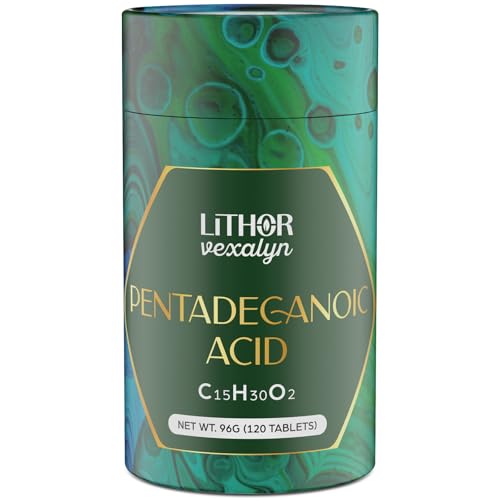
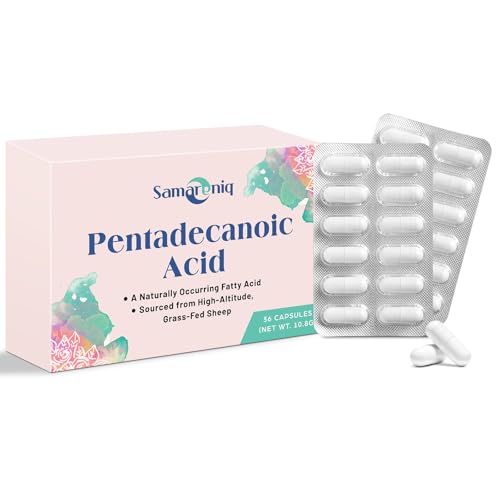
- Epitracker Fatty15 C15:0 Fatty Acid SupplementLab-tested / studied
capsules, 100 mg C15:0 per capsule; 1 capsule/day starter, 2 capsules/day maintenance — Category creator; the only C15:0 supplement backed by the original Epitracker research team (Venn-Watson et al.); uses a patented, sustainably-sourced pure C15:0 ingredient; most expensive per-capsule but reference product for all comparisons - Double Wood Supplements Pentadecanoic Acid C15:0
capsules, 200 mg C15:0 per serving (2 capsules) — One of the first genericized C15:0 supplements; significantly lower price than Fatty15; no independent clinical trials on this specific product; good option for budget-conscious buyers who want to trial the fatty acid - Sports Research Pentadecanoic Acid C15:0
softgels, 100 mg C15:0 per softgel — Established supplement brand with strong Amazon presence; third-party tested; softgel form may aid fat-soluble absorption; competitively priced mid-tier option - BulkSupplements Pentadecanoic Acid Powder (C15:0)
powder, 100–300 mg per measured serving — Most economical option for higher-dose protocols or stackers; requires a milligram-accurate scale; no excipients or additives; not recommended for beginners unfamiliar with powder dosing
As an Amazon Associate we earn from qualifying purchases. C15:0 products vary widely in how much pentadecanoic acid they actually contain, so check that the Supplement Facts panel lists C15:0 in milligrams as its own line item rather than bundling it into a fatty acid blend, and that the per-serving dose falls in the 100–300 mg range used in published research.
A Note on the Evidence
The evidence supporting C15:0 supplementation is early-stage, primarily from one research group, and has not yet been independently confirmed at scale; omega-3 evidence is more extensive but results from large trials have been mixed, particularly at typical supplement doses. Neither supplement is a substitute for medical treatment, and individuals with existing health conditions or those taking medications should speak with a qualified healthcare provider before starting either.
Frequently Asked Questions
Is C15:0 better than omega-3 for heart health?
The evidence is not comparable in volume or independence. Omega-3s have been evaluated in large randomized trials for cardiovascular endpoints with mixed but substantive results. C15:0 has observational support — plasma pentadecanoic acid was inversely associated with coronary heart disease risk in prospective research [1] — but clinical supplementation trials are limited and early-stage. Neither is a proven treatment for heart disease.
Can I take C15:0 and omega-3 fish oil together?
The two act through different proposed mechanisms and are not known to interact adversely. Published research on C15:0 at 100–300 mg per day has not reported serious adverse events. Combining supplements is always worth reviewing with a healthcare provider, especially if you take prescription medications or have an existing health condition.

Where can I get C15:0 from food rather than supplements?
C15:0 is found naturally in whole-fat dairy products such as butter, whole milk, heavy cream, and aged cheese, as well as in the fat of ruminant animals. People who avoid full-fat dairy tend to have lower circulating levels of this fatty acid, which is part of the rationale for supplementation.

Do omega-3s actually reduce inflammation?
EPA and DHA are incorporated into cell membrane phospholipids and serve as precursors to specialized lipid mediators — including resolvins and protectins — that are involved in resolving inflammatory processes. This is one of the best-characterized proposed mechanisms for fish oil. The clinical magnitude of any anti-inflammatory effect varies considerably across individuals, doses, and conditions.
Is C15:0 officially classified as an essential fatty acid?
Not by any regulatory body or mainstream nutritional science organization. The term ‘essential’ in nutrition refers to a nutrient the body cannot adequately synthesize and must obtain from the diet. The proposal that C15:0 meets this definition is advanced by Epitracker researchers and is under active investigation, but it remains a scientific hypothesis rather than an established classification.
Are there any safety concerns with C15:0 supplements?
Published research at studied doses of 100–300 mg per day has not reported serious adverse events. However, the evidence base is small and not yet independently replicated at scale. The FDA has not evaluated C15:0 supplements for safety or efficacy as a treatment or preventive measure. Anyone with cardiovascular disease, metabolic conditions, or who is taking medications should consult a physician before adding any new supplement.
References
- Khaw KT et al. Plasma phospholipid fatty acid concentration and incident coronary heart disease in men and women: the EPIC-Norfolk prospective study. PLoS medicine (2012). PMID 22802735
These statements have not been evaluated by the Food and Drug Administration. This information is not intended to diagnose, treat, cure, or prevent any disease. Content is for informational purposes only and is not medical advice; consult a qualified healthcare provider before starting any supplement. As an Amazon Associate we earn from qualifying purchases.
