Pentadecanoic acid, or C15:0, is a saturated odd-chain fatty acid found primarily in full-fat dairy products and ruminant fats. For decades, nutrition guidance grouped all saturated fats together and broadly discouraged their consumption. Emerging research, however, is revealing that chain length and carbon-number parity matter: odd-chain fatty acids like C15:0 occupy a distinct metabolic niche, and a growing body of epidemiological and mechanistic evidence has begun to examine their relationship with blood sugar regulation, insulin sensitivity, and type 2 diabetes risk.
This article reviews what current research actually shows about C15:0 and metabolic health—including where findings are promising, where they are limited, and what caveats are essential before drawing conclusions. The FDA has not evaluated C15:0 for the treatment or prevention of any disease. The hypothesis that it may qualify as an ‘essential’ fatty acid, advanced by Epitracker researchers, has not been formally adopted by regulatory bodies or mainstream nutrition science. Nothing here constitutes medical advice.
Key Takeaways
- Multiple large epidemiological studies find higher circulating C15:0 is associated with lower type 2 diabetes incidence, though causation has not been established [1][2].
- In vitro research shows C15:0 promotes both basal and insulin-stimulated glucose uptake in skeletal muscle cells, offering a plausible mechanistic basis, but cell culture results do not confirm effects in living humans [3].
- Not all odd-chain fatty acids share the same metabolic profile; C17:0 showed no key mediating role in preventing hepatic steatosis or insulin resistance in mouse research [4], cautioning against broad extrapolation.
- The hypothesis that C15:0 is an ‘essential’ fatty acid with broad metabolic benefits is proposed by Epitracker researchers and has not been formally adopted by mainstream nutrition authorities or regulatory bodies [5].
- Human randomized controlled trials on C15:0 supplementation and metabolic outcomes remain limited; consult a healthcare provider before supplementing, especially if you have diabetes or take glucose-lowering medications.
C15:0 as a Biomarker for Dairy Fat Intake
Before examining potential metabolic effects, it helps to understand why researchers study C15:0 in the first place. Because humans have a limited ability to synthesize odd-chain fatty acids endogenously, circulating C15:0 levels serve as an objective, dose-responsive biomarker of dairy fat consumption—particularly from whole milk, cheese, and butter. This makes it considerably more reliable in large cohort studies than self-reported dietary recall, which is notoriously imprecise.
A pooled analysis of 16 prospective cohort studies involving hundreds of thousands of participants found that higher circulating levels of C15:0, alongside the related odd-chain fatty acid C17:0, were associated with a lower incidence of type 2 diabetes [1]. Pooled analyses carry more statistical power than individual studies, though they remain observational and cannot establish causation on their own.
Epidemiological Evidence: Inverse Association with Type 2 Diabetes
Several independent prospective studies have reported an inverse relationship between serum C15:0 and type 2 diabetes incidence. One analysis found that higher serum C15:0 was inversely associated not only with incident type 2 diabetes but also with several of its metabolic precursors, including markers of insulin resistance and dyslipidemia [2]. Importantly, this association appeared to persist after adjustment for overall dairy intake, suggesting C15:0 itself—not simply total dairy consumption—may be the signal of interest.
Research in Chinese adults examining individual plasma saturated fatty acids found that the associations between specific saturated fats and type 2 diabetes differed substantially by chain length and molecular structure [6]. This reinforces the idea that treating all saturated fatty acids as a homogeneous class in research or dietary policy may obscure meaningfully different biological relationships.

These associations are observational. Higher C15:0 levels could reflect a healthier overall dietary pattern, higher socioeconomic status, or residual confounders not fully captured in adjustment models. An inverse association in epidemiology does not confirm that C15:0 itself drives lower diabetes risk.
Cell-Level Mechanisms: Glucose Uptake and Insulin Signaling
Epidemiological associations gain scientific credibility when supported by plausible biological mechanisms. A 2021 in vitro study examined C15:0’s direct effects on C2C12 myotubes—a standard skeletal muscle cell model—and found that pentadecanoic acid promoted both basal and insulin-stimulated glucose uptake [3]. Skeletal muscle accounts for the majority of insulin-mediated glucose disposal in the human body, so any effect there is metabolically meaningful in principle.
Researchers have proposed that C15:0 may exert metabolic effects partly through partial agonism at PPAR-alpha and PPAR-delta receptors, nuclear receptors involved in fatty acid oxidation, glucose homeostasis, and inflammatory regulation. A 2024 mini-review on C15:0 acknowledged these proposed receptor interactions while noting that direct human evidence remains limited [5].
It is essential to be clear about what in vitro evidence can and cannot show. Demonstrating that C15:0 promotes glucose uptake in isolated muscle cells in a laboratory dish is not equivalent to demonstrating this occurs in a living person at dietary or supplemental doses. Cell culture experiments generate testable hypotheses; they do not constitute clinical proof of efficacy.
Not All Odd-Chain Fatty Acids Behave Identically
A reasonable question is whether findings on C15:0 extend to structurally similar odd-chain fatty acids. C17:0 (heptadecanoic acid) co-occurs in dairy fat and has also been studied as a metabolic biomarker. However, research in mice found that C17:0 was not a key mediator in preventing diet-induced hepatic steatosis or insulin resistance, even when dietary conditions improved these outcomes [4].
This null result is a useful caution. Even within the class of odd-chain fatty acids, each compound has its own metabolic profile and receptor interactions. Findings specific to C15:0—such as the glucose uptake data in muscle cells [3]—should not be assumed to apply to C17:0 or other structurally related fatty acids without independent testing. The reverse is equally true.
C15:0 and Metabolic Syndrome: Connecting the Dots Carefully
Metabolic syndrome is a cluster of conditions—elevated fasting blood glucose, excess visceral adiposity, elevated triglycerides, low HDL cholesterol, and elevated blood pressure—that together substantially increase the risk of type 2 diabetes and cardiovascular disease. The inverse associations observed between C15:0 and type 2 diabetes incidence [1][2] are relevant to metabolic syndrome because insulin resistance is a shared underlying mechanism across these conditions.
Epitracker researchers have advanced the hypothesis that C15:0 may support metabolic health through integration into cell membranes, improving membrane integrity and fluidity, and through partial PPAR receptor agonism. A 2024 review examining this hypothesis noted the proposed mechanisms while also acknowledging that the designation of C15:0 as a newly ‘essential’ fatty acid has not been formally adopted by major nutrition or regulatory bodies [5].

Whether C15:0 supplementation—as distinct from naturally occurring C15:0 from dairy foods—produces meaningful metabolic benefits in humans is an open question. Commercially available C15:0 supplements are studied at doses of approximately 100–300 mg per day, at which no serious adverse events have been reported in the published literature. Long-term safety and efficacy data from randomized controlled trials are limited.
Limitations and the Current State of Evidence
The evidence base for C15:0 and metabolic health consists primarily of epidemiological associations and in vitro mechanistic studies. These are genuinely valuable as hypothesis-generating research, but they sit below the evidentiary standard needed to support clinical recommendations. Randomized controlled trials in humans measuring outcomes such as HbA1c, fasting insulin, HOMA-IR, or body weight over extended follow-up are largely absent from the published literature.

There is also a practical confounding issue in the observational data: people with higher circulating C15:0 typically consume more full-fat dairy, a food matrix containing hundreds of bioactive compounds beyond C15:0 alone. Isolating C15:0’s independent contribution is methodologically difficult. Supplementation trials circumvent this confounding, but existing studies are small and short in duration [5].
Readers managing blood sugar, insulin resistance, or obesity should work with a qualified healthcare provider and should not interpret the existing C15:0 data as grounds to forgo or delay established, evidence-based interventions including dietary modification, physical activity, and where indicated, pharmacotherapy.
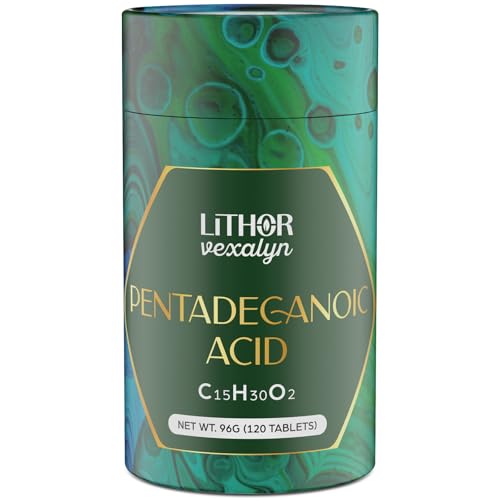
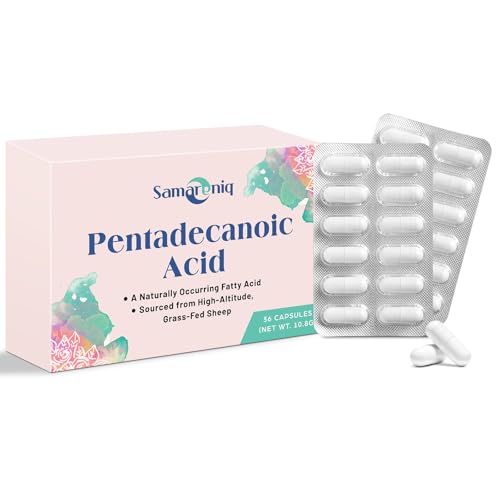
🛒 Where to Buy Pentadecanoic Acid (C15:0)
- Epitracker Fatty15 C15:0 Fatty Acid SupplementLab-tested / studied
capsules, 100 mg C15:0 per capsule; 1 capsule/day starter, 2 capsules/day maintenance — Category creator; the only C15:0 supplement backed by the original Epitracker research team (Venn-Watson et al.); uses a patented, sustainably-sourced pure C15:0 ingredient; most expensive per-capsule but reference product for all comparisons - Double Wood Supplements Pentadecanoic Acid C15:0
capsules, 200 mg C15:0 per serving (2 capsules) — One of the first genericized C15:0 supplements; significantly lower price than Fatty15; no independent clinical trials on this specific product; good option for budget-conscious buyers who want to trial the fatty acid - Sports Research Pentadecanoic Acid C15:0
softgels, 100 mg C15:0 per softgel — Established supplement brand with strong Amazon presence; third-party tested; softgel form may aid fat-soluble absorption; competitively priced mid-tier option - BulkSupplements Pentadecanoic Acid Powder (C15:0)
powder, 100–300 mg per measured serving — Most economical option for higher-dose protocols or stackers; requires a milligram-accurate scale; no excipients or additives; not recommended for beginners unfamiliar with powder dosing
As an Amazon Associate we earn from qualifying purchases. C15:0 products vary widely in how much pentadecanoic acid they actually contain, so check that the Supplement Facts panel lists C15:0 in milligrams as its own line item rather than bundling it into a fatty acid blend, and that the per-serving dose falls in the 100–300 mg range used in published research.

A Note on the Evidence
Current evidence for C15:0 and metabolic health rests primarily on observational epidemiology and cell culture studies; large, long-term randomized controlled trials in humans on supplementation outcomes are lacking, and the FDA has not approved or evaluated C15:0 for any metabolic condition. Individuals with diabetes, insulin resistance, obesity, or related conditions should consult a qualified healthcare provider before modifying their diet or starting any supplement regimen.
Frequently Asked Questions
What is pentadecanoic acid and where does it come from?
Pentadecanoic acid (C15:0) is a 15-carbon saturated odd-chain fatty acid found primarily in full-fat dairy products and ruminant meats. Because humans synthesize very little of it endogenously, blood levels closely reflect dietary intake, making it a reliable biomarker in nutrition research [1].
Does C15:0 lower blood sugar?
No published clinical trial has demonstrated that C15:0 supplementation lowers blood glucose in humans. An in vitro study found it promoted glucose uptake in muscle cells [3], and epidemiological data show an inverse association with type 2 diabetes incidence [2], but neither finding constitutes clinical evidence that C15:0 controls blood sugar in people.

Is C15:0 better for metabolic health than other saturated fats?
Observational data suggest odd-chain saturated fatty acids like C15:0 are associated with different metabolic outcomes than even-chain counterparts [6], but a direct head-to-head comparison of specific saturated fatty acids in controlled human trials is lacking. Concluding superiority from current evidence would be premature.
Can C15:0 help with insulin resistance?
A 2021 cell study found C15:0 promoted insulin-stimulated glucose uptake in skeletal muscle cells, suggesting a mechanism potentially relevant to insulin sensitivity [3]. Translating this to clinical insulin resistance in humans requires randomized controlled trials, which have not yet been published at the scale needed to draw firm conclusions.
Is C15:0 safe to supplement?
At the doses examined in published research (approximately 100–300 mg per day), no serious adverse events have been reported. However, the FDA has not evaluated C15:0 supplements for safety or efficacy in treating any condition, and long-term safety data are limited [5]. Individuals with diabetes, metabolic disorders, or those taking prescription medications should consult a physician before adding any new supplement.
Does research on C17:0 apply to C15:0?
Not directly. Although both are odd-chain fatty acids that co-occur in dairy fat, a mouse study found C17:0 was not a key mediator in preventing diet-induced liver fat accumulation or insulin resistance [4]. This underscores that each odd-chain fatty acid must be evaluated on its own evidence base rather than assuming shared metabolic effects across the class.
References
- Imamura F et al. Fatty acid biomarkers of dairy fat consumption and incidence of type 2 diabetes: A pooled analysis of prospective cohort studies. PLoS medicine (2018). PMID 30303968
- Santaren ID et al. Serum pentadecanoic acid (15:0), a short-term marker of dairy food intake, is inversely associated with incident type 2 diabetes and its underlying disorders. The American journal of clinical nutrition (2014). PMID 25411288
- Fu WC et al. Pentadecanoic acid promotes basal and insulin-stimulated glucose uptake in C2C12 myotubes. Food & nutrition research (2021). PMID 33613155
- Bishop CA et al. Heptadecanoic Acid Is Not a Key Mediator in the Prevention of Diet-Induced Hepatic Steatosis and Insulin Resistance in Mice. Nutrients (2023). PMID 37432205
- Ciesielski V et al. New insights on pentadecanoic acid with special focus on its controversial essentiality: A mini-review. Biochimie (2024). PMID 39395658
- Luo C et al. The associations between individual plasma SFAs, serine palmitoyl-transferase long-chain base subunit 3 gene rs680379 polymorphism, and type 2 diabetes among Chinese adults. The American journal of clinical nutrition (2021). PMID 33964854
These statements have not been evaluated by the Food and Drug Administration. This information is not intended to diagnose, treat, cure, or prevent any disease. Content is for informational purposes only and is not medical advice; consult a qualified healthcare provider before starting any supplement. As an Amazon Associate we earn from qualifying purchases.
