Fatty15 Cost: Is It Worth the Price (and Is There a Cheaper Way)?
One of the most common reactions to Fatty15 is sticker shock. It sits at the premium end of single-ingredient supplements, and it’s sold mainly on subscription. So is the cost justified, and are there cheaper options? Here’s a clear-eyed look at what you’re paying for and how to think about value.
Fatty15 discount code: SFKKDBQQ takes 20% off at fatty15.com (minimum $20 order). Open Fatty15 with the 20% discount. We earn a commission if you buy through this link, at no extra cost to you.
What You’re Actually Paying For
- A patented, purity-tested ingredient (FA15): a specific, synthesized and vegan-friendly form of C15 with third-party testing.
- The brand’s research investment: Seraphina Therapeutics funds studies on C15, and that R&D is priced in.
- Convenience and packaging: a polished subscription experience and once-daily format.
None of that is “wrong”, it’s a premium product positioned as a premium product. The question is whether those extras matter to you.
Research note: After 4 weeks on a daily dairy-servings diet, plasma C15:0 was only slightly higher than on a control diet (0.26% vs 0.22% of total fatty acids) [3].
The Value Question
The active molecule, C15 (pentadecanoic acid), is the same whether it comes from Fatty15 or a generic supplement. If your goal is simply to raise your C15 intake, you are paying a brand premium for the specific FA15 form and testing. If those assurances matter to you, the cost can be justified; if not, other brands sell C15 and may cost less, though sources and formulations differ.
Cheaper Ways to Get C15
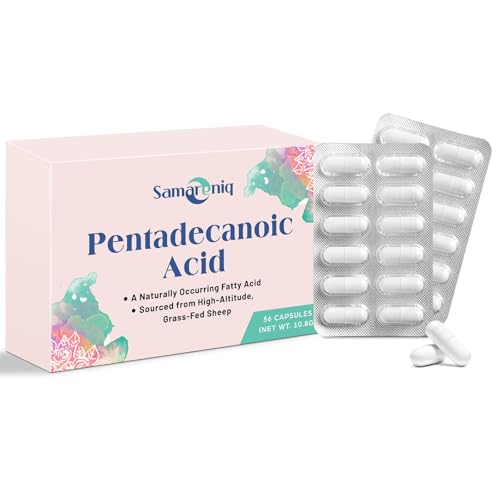
Other brands sell pentadecanoic acid (C15) supplements, and some may cost less per dose, but no competitor prices were checked for this article and sources differ, so they are not necessarily like-for-like. The trade-off is variable third-party testing between brands, so check labels. See our full Fatty15 alternatives guide for specific options.
Is Fatty15 Worth the Money?
It’s worth it if you value the patented form, third-party testing, and supporting the brand’s research, and the premium fits your budget. It’s not worth it if you simply want the C15 molecule and would rather look at lower-priced options, accepting that they may differ in source and formulation. Our full Fatty15 review walks through this decision in detail.
Fatty15 Kits and How They Compare
The kits below are the ones listed on Fatty15’s own product pages in October 2026. Prices change often, so check the current price at checkout before you decide.
- Trial Kit, 30 capsules: the smallest kit. The page says that after the trial kit you are auto-enrolled in 90-day refills at the subscription price.
- Starter Kit, 90 capsules, subscription: labeled as a 20 percent saving on the one-time kit, with refills every 90 days at the same price.
- Starter Kit, 90 capsules, one-time purchase: full price, with no subscription.
- Annual Supply Kit, 360 capsules: labeled as a saving on buying four one-time starter kits.
The subscription price is about 20 percent below the one-time price, which is consistent with the label. The annual kit’s stated saving also checks out against the price of four one-time starter kits.
Which Kit Costs Least Per Day
Each capsule holds 100 mg of the ingredient, and the brand recommends starting with one capsule a day, so a 90-capsule kit lasts about three months. Per day, the kits rank like this:
- Annual kit: the lowest cost per day.
- Subscription starter kit: close behind the annual kit.
- One-time starter kit: the most per day of the 90-capsule options.
- Trial kit: priced per capsule like the one-time kit, not like the subscription refill.
The brand’s FAQ says some customers take two capsules a day. If you do, the cost per day doubles. One more comparison is worth making: four subscription refills cost only slightly more than the annual kit for 360 days of supply. That is a small gap, and as the next section shows, the annual kit carries a less forgiving return policy.
Subscription, Guarantee and Cancellation Terms
According to the Fatty15 FAQ, the brand offers a 30-day money-back guarantee on first-time orders of the Trial Kit, the 90-day Starter Kit and the gummies. It states that it does not offer returns on the 6-month supply, the annual kit or merchandise. It also says you can cancel a subscription at any time from your account page, and that a single 90-day purchase is available if you do not want a subscription.
The practical reading, which is my inference rather than a brand statement, is that the Trial Kit or the Starter Kit is the lower-risk way to begin. If you commit to the annual kit first, you may have no refund route if it does not suit you.
What the Brand’s Own Pages Show About Ratings
Fatty15’s product pages carry aggregate ratings in their page data. As of October 2026, the Trial Kit page shows 4.9 from 6,894 ratings, and the Starter Kit and Annual Kit pages show 4.8 from 8,519. The brand also states that it has more than 130,000 active subscribers. These are all figures published by the seller, on its own store, so treat them as the brand’s reporting rather than an independent audit. Amazon and Trustpilot would have been better cross-checks, but neither page could be loaded for this research (Amazon served a bot check and Trustpilot refused the request), so no third-party rating is quoted here.
Does the Research Justify the Dose You Are Paying For?
Price per capsule only means something next to the amount that has actually been studied. The one randomized trial of supplemental pentadecanoic acid in the sources reviewed here, a 2024 Journal of Nutrition study (Robinson et al.), gave 200 mg a day or placebo for 12 weeks to 30 young adults with overweight or obesity, 20 of them on the supplement. Circulating levels rose by 1.88 micrograms per mL more than with placebo, half of the treated group ended above 5 micrograms per mL, and no significant adverse events occurred. The authors described the other findings as warranting further study.
That 200 mg dose equals two Fatty15 capsules a day, so twice the cost of the suggested starting dose. The brand’s suggested starting dose is half of that, and the abstract does not report a 100 mg arm, so it cannot tell you whether one capsule produces the same blood levels. Also note that the lead author of the 2020 Scientific Reports paper that introduced the “essential fatty acid” proposal (Venn-Watson et al.) discloses being a co-founder of the company that commercializes the ingredient. That does not make the science wrong, but it is context for anyone weighing a premium price.
Getting More C15 From Food or Fiber
If cost is the sticking point, it helps to know where else the molecule comes from. A 2016 review in Advances in Nutrition (Pfeuffer and Jaudszus) notes that pentadecanoic acid makes up only a small share of the saturated fat in milk fat and ruminant meat, and that the body can also make it from propionic acid produced by gut bacteria. A 2017 randomized crossover study in the American Journal of Clinical Nutrition (Weitkunat et al.) tested that idea in 16 healthy adults over 7 days. Inulin fibre raised blood pentadecanoic acid by about 17 percent over the week [1].
This is not a recipe for replacing a supplement. It was a one-week experiment in a small group, the inulin dose used is large for most people [1], and a rise in a blood marker is not the same as a health benefit. What it does show is that dairy fat is not the only route to higher levels, which is a fair point to raise with a clinician or dietitian before spending several hundred dollars a year.
The fibre result has not held up everywhere: in two small human studies, fiber supplements or a high-fiber diet did not raise circulating odd-chain fatty acids. Treat fibre as an open question, not a workaround [2].
Questions Worth Asking Before You Subscribe
- Which kit am I buying, and what is its return policy if it does not suit me?
- Am I planning one capsule a day or two, and have I priced the second capsule into the budget?
- What outcome am I hoping for, and has that outcome been tested in a human trial, or only in cell and animal studies?
- Do I take prescription medication or have a medical condition that makes it sensible to talk to a clinician first?


Frequently Asked Questions
Why is Fatty15 so expensive?
You’re paying for a patented, third-party-tested form of C15 plus the brand’s research investment and subscription convenience. Other brands also sell pentadecanoic acid, though sources and formulations differ.
Is Fatty15 worth the money?
It depends on your priorities. If the patented form and testing matter to you, the premium is defensible. If you just want C15, other brands may cost less, though sources and formulations differ.
Is there a cheaper version of Fatty15?
Possibly. Other brands sell pentadecanoic acid (C15) supplements, some at a lower cost per dose, but no competitor prices were checked for this article and sources and formulations differ.
Can I cancel the Fatty15 subscription?
Fatty15 is sold mainly on subscription, which can typically be managed or cancelled through your account. If you prefer a one-time purchase, Fatty15 also lists a one-time starter kit.
How much does Fatty15 cost per month?
Fatty15’s prices change, so check its site for the current figure. Per month, the annual kit is the cheapest way to buy it, the subscription refill is close behind, and the one-time starter kit costs the most. Taking two capsules a day doubles the monthly cost.
Does Fatty15 have a money-back guarantee?
The brand’s FAQ describes a 30-day money-back guarantee on first-time orders of the Trial Kit, Starter Kit and gummies, and says it does not accept returns on the 6-month or annual kits. Check the current terms at checkout.
Is the annual kit cheaper than subscribing?
Slightly. The annual kit covers 360 capsules for a little less than four 90-day subscription refills. The annual kit is also listed as non-returnable.
References
- Venn-Watson S et al. Efficacy of dietary odd-chain saturated fatty acid pentadecanoic acid parallels broad associated health benefits in humans: could it be essential? Scientific reports (2020). PMID 32424181
- Robinson MK et al. Pentadecanoic Acid Supplementation in Young Adults with Overweight and Obesity: A Randomized Controlled Trial. The Journal of nutrition (2024). PMID 39069269
- Pfeuffer M et al. Pentadecanoic and Heptadecanoic Acids: Multifaceted Odd-Chain Fatty Acids. Advances in nutrition (Bethesda, Md.) (2016). PMID 27422507
- Weitkunat K et al. Odd-chain fatty acids as a biomarker for dietary fiber intake: a novel pathway for endogenous production from propionate. The American journal of clinical nutrition (2017). PMID 28424190
Related: Fatty15 Alternatives · Fatty15 Review · Fatty15 User Reviews
References
- Weitkunat K et al. Odd-chain fatty acids as a biomarker for dietary fiber intake: a novel pathway for endogenous production from propionate. The American journal of clinical nutrition (2017). PMID 28424190
- Wu Y et al. Odd Chain Fatty Acids Are Not Robust Biomarkers for Dietary Intake of Fiber. Molecular nutrition & food research (2021). PMID 34605164
- Mohammad M. H. Abdullah et al. Recommended dairy product intake modulates circulating fatty acid profile in healthy adults: a multi-centre cross-over study. British Journal Of Nutrition (2015). PMID 25609231
These statements have not been evaluated by the Food and Drug Administration. This information is not intended to diagnose, treat, cure, or prevent any disease. Content is for informational purposes only and is not medical advice; consult a qualified healthcare provider before starting any supplement. As an Amazon Associate we earn from qualifying purchases.