Pentadecanoic acid (C15:0), the odd-chain saturated fatty acid found naturally in full-fat dairy and ruminant fats, is drawing attention as a potential cellular health marker. Researchers at Epitracker have proposed that low circulating C15:0 may be linked to a range of metabolic disruptions, and some people who follow their work are now looking for ways to monitor their own levels. Unlike cholesterol or vitamin D, however, C15:0 blood testing is not yet part of routine clinical care, and interpreting results requires understanding both the science behind the measurement and its current limits.
This article explains how C15:0 is quantified in blood, what analytical methods laboratories use, what ranges have appeared in published research, and what factors can shift your levels up or down. It is intended as educational background, not a substitute for guidance from a qualified healthcare provider. The FDA has not evaluated C15:0 for any disease treatment or prevention, and its proposed status as an ‘essential’ fatty acid has not been formally adopted by regulatory bodies or mainstream nutrition science.
Key Takeaways
- C15:0 (pentadecanoic acid) can be measured in plasma or red blood cells as a biomarker of ruminant fat intake; it is not yet part of standard clinical panels.
- Accurate quantification requires GC-MS or GC × GC with carefully optimized FAME derivatization; confirm which sample type and units your laboratory uses before comparing results.
- Published research has detected and quantified C15:0 in human plasma and found associations with dietary dairy fat consumption and cardiovascular markers, but no regulatory body has established formal clinical reference intervals.
- Diet is the primary driver of circulating C15:0; full-fat dairy and ruminant fats raise levels, while plant-based or low-fat diets lower them.
- Serial testing under standardized fasting conditions with the same laboratory and sample type is more informative than a single snapshot measurement.
Why Measure C15:0 in Blood?
C15:0 circulates in blood both as a free fatty acid and incorporated into phospholipids and triglycerides within red blood cell membranes and plasma lipoproteins. Because humans synthesize very little C15:0 endogenously, its plasma concentration serves primarily as a biomarker of dietary intake of ruminant fats, particularly full-fat dairy. A prospective, matched case-control study found that plasma C15:0 was measurable and statistically associated with patterns of dairy fat consumption and cardiovascular outcomes in middle-aged men and women [1]. This makes blood C15:0 a useful proxy for long-term dietary behavior, similar in principle to how the red blood cell omega-3 index reflects habitual fish intake.
Beyond its use as a dietary biomarker, Epitracker researchers have proposed—though not yet confirmed by independent regulatory review—that C15:0 may have direct cellular roles: integrating into cell membranes to influence fluidity and receptor signaling, acting as a partial agonist at PPAR-alpha and PPAR-delta receptors, and potentially modulating pathways involved in ferroptosis and cellular senescence. If these mechanisms are eventually validated at scale, circulating C15:0 could evolve into a functional marker rather than simply a dietary one. At present, measuring your blood level is primarily informative about habitual fat intake and, secondarily, about a range of cellular hypotheses still under investigation.
How Laboratories Measure C15:0
Quantifying odd-chain fatty acids like C15:0 accurately is analytically demanding. The gold-standard approach involves gas chromatography–mass spectrometry (GC-MS) or two-dimensional GC × GC applied to fatty acid methyl ester (FAME) derivatives. The derivatization step—converting fatty acids to their methyl esters—must be carefully optimized to avoid incomplete conversion or artifacts, especially for odd-chain species whose peaks can overlap with even-chain signals on standard columns. Research specifically addressing the optimization of FAME protocols for odd- and even-chain fatty acid quantification underscores how much methodological precision these measurements require [2]. Earlier work using multidimensional GC-MS demonstrated the ability to separate and identify odd-chain fatty acids in complex matrices [3].

Two-dimensional GC × GC improves chromatographic resolution substantially and has been validated for detailed fatty acid profiling in biological tissues, enabling more accurate separation of isomers and minor species [4]. For plasma and red blood cell samples in human research, most published studies have used single-dimension GC with flame ionization detection or GC-MS after FAME derivatization. Results are typically reported either as a percentage of total fatty acids (mol%) or as an absolute concentration in micromoles per liter (µmol/L). These two units are not interchangeable when comparing across studies, so confirm which your laboratory is using before comparing your result to published reference ranges.

Where to Get a C15:0 Blood Test
As of the time of writing, C15:0 is not included in standard lipid panels or comprehensive metabolic panels ordered in routine clinical practice. Access to quantitative C15:0 measurement comes from three main sources: research-affiliated laboratory panels, specialty or functional medicine laboratories that offer expanded fatty acid profiles (typically labeled a ‘fatty acid panel’ or ‘red blood cell fatty acid test’), and direct-to-consumer services that report a broader array of fatty acids including odd-chain species.
When choosing a test, ask specifically whether the panel reports C15:0 (pentadecanoic acid) separately from other fatty acids, which sample type is used (plasma vs. red blood cell phospholipids vs. whole blood), what the reported unit is, and what reference ranges or comparison cohorts the laboratory draws on. Red blood cell–based measurements reflect roughly 90–120 days of average exposure—analogous to HbA1c for glucose—and are generally considered to capture longer-term status more reliably than a single plasma draw, which can fluctuate within hours of a dairy-containing meal.
Some functional medicine practitioners can order expanded fatty acid panels through reference laboratories. If your primary care physician is unfamiliar with C15:0 testing, framing the request as a ‘comprehensive or expanded fatty acid panel’ is more likely to result in an actionable order than asking for ‘a C15:0 test’ specifically.
Reference Ranges: What the Research Shows
Because no regulatory body has established clinical reference intervals for C15:0, any ‘normal’ range must be interpreted cautiously against the population studied. In the prospective case-control study examining plasma fatty acid biomarkers of dairy fat intake, C15:0 was detectable in all participants, confirming its ubiquity in the circulation of adults with any ruminant fat intake [1]. Separately, a study measuring 37 plasma fatty acids in patients following coronary stent implantation found that odd-chain fatty acids were quantifiable and that their concentrations varied across individuals in patterns that correlated with inflammatory markers [5].

Epitracker’s published work has proposed a provisional deficiency threshold below approximately 0.2 mol% of total plasma fatty acids, with levels around 0.2–0.4 mol% described as adequate. These are hypothesis-generating estimates derived from their cohort data, not clinically validated cut-offs endorsed by any regulatory or professional body. Your individual result is most meaningful when viewed against your specific laboratory’s reference cohort and trended over time, rather than compared to a single cut-point from a different study population with different demographics and dietary patterns.
Factors That Affect Your C15:0 Level
Dietary intake is the dominant driver of circulating C15:0. Full-fat dairy—butter, whole milk, aged cheese, full-fat yogurt—and fat from ruminant animals such as beef and lamb are the primary dietary sources. Increasing daily intake of these foods predictably raises plasma C15:0 over weeks to months. Conversely, a low-fat or plant-based diet, which eliminates most ruminant fats, is associated with lower circulating levels.
Minor endogenous synthesis of C15:0 occurs through odd-chain elongation from propionate in the gut, but this contributes relatively little compared to dietary intake in most adults. Gut microbiome composition may influence the propionate pathway; odd-chain fatty acids including C15:0 have been studied as markers of rumen microbial activity in ruminant nutrition research, reflecting the microbial origin of a fraction of these fatty acids [6]. Whether analogous gut-microbial contributions are meaningful in humans remains an open question.

Other variables that can affect a single blood draw include recent meal timing (plasma C15:0 rises transiently after a dairy-containing meal), fasting duration, total caloric intake, body weight and fat mass, and any metabolic conditions affecting lipid handling. Standardizing your test conditions—fasting 10–12 hours, consistent timing relative to any supplementation—improves the comparability of serial measurements over time.
Interpreting Trends Over Time
A single measurement captures your status at one point in time and is most useful as a baseline. If you are making dietary changes or trialing a C15:0 supplement (studied at doses of 100–300 mg/day with no serious adverse events reported in published research), retesting after 8–12 weeks allows enough time for red blood cell–based measures to stabilize and for plasma steady-state to be re-established. Serial testing with the same laboratory and same sample type—both plasma or both RBC—is the most interpretable approach; switching labs or sample types between draws introduces methodological variables that can make trends difficult to read.
When interpreting a change, consider whether it is directionally consistent with your dietary change, whether the magnitude exceeds the assay’s expected variability, and whether other relevant health markers shifted in the same window. C15:0 alone does not diagnose any condition. Tracking it alongside other metabolic markers—fasting insulin, triglycerides, inflammatory markers—gives a more complete picture of whether an intervention is producing the biological effects you are hoping for.


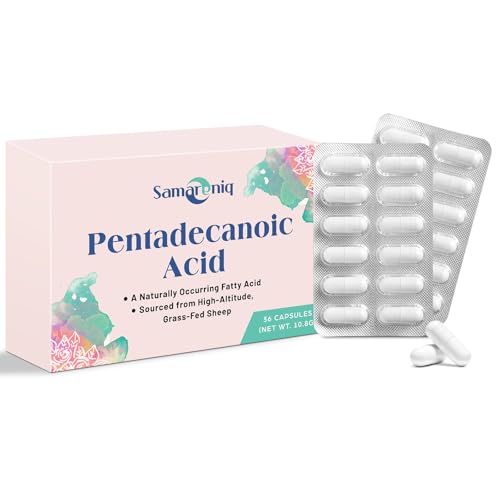
🛒 Where to Buy Pentadecanoic Acid (C15:0)
- Epitracker Fatty15 C15:0 Fatty Acid SupplementLab-tested / studied
capsules, 100 mg C15:0 per capsule; 1 capsule/day starter, 2 capsules/day maintenance — Category creator; the only C15:0 supplement backed by the original Epitracker research team (Venn-Watson et al.); uses a patented, sustainably-sourced pure C15:0 ingredient; most expensive per-capsule but reference product for all comparisons - Double Wood Supplements Pentadecanoic Acid C15:0
capsules, 200 mg C15:0 per serving (2 capsules) — One of the first genericized C15:0 supplements; significantly lower price than Fatty15; no independent clinical trials on this specific product; good option for budget-conscious buyers who want to trial the fatty acid - Sports Research Pentadecanoic Acid C15:0
softgels, 100 mg C15:0 per softgel — Established supplement brand with strong Amazon presence; third-party tested; softgel form may aid fat-soluble absorption; competitively priced mid-tier option - BulkSupplements Pentadecanoic Acid Powder (C15:0)
powder, 100–300 mg per measured serving — Most economical option for higher-dose protocols or stackers; requires a milligram-accurate scale; no excipients or additives; not recommended for beginners unfamiliar with powder dosing
As an Amazon Associate we earn from qualifying purchases. C15:0 products vary widely in how much pentadecanoic acid they actually contain, so check that the Supplement Facts panel lists C15:0 in milligrams as its own line item rather than bundling it into a fatty acid blend, and that the per-serving dose falls in the 100–300 mg range used in published research.
A Note on the Evidence
C15:0 blood testing is not a diagnostic tool for any disease, and the proposed ‘optimal’ ranges are research estimates rather than clinically validated thresholds endorsed by regulatory bodies; the FDA has not evaluated C15:0 supplementation for treating or preventing any condition. Individuals with established metabolic or cardiovascular conditions, those taking lipid-modifying medications, or anyone considering significant dietary changes should discuss their plans with a qualified healthcare provider before acting on their results.
Frequently Asked Questions
Can my GP order a C15:0 blood test?
Most general practitioners do not routinely include C15:0 in standard orders because it is not part of conventional lipid or metabolic panels. Asking for an ‘expanded’ or ‘comprehensive fatty acid panel’ and confirming that C15:0 is reported separately is the most practical approach. A study that measured 37 plasma fatty acids in cardiovascular patients demonstrates that research-grade panels can capture odd-chain species like C15:0 at clinically relevant concentrations [5].
Is plasma or red blood cell testing better for C15:0?
Red blood cell phospholipid–based testing reflects average intake over roughly 90–120 days, making it less sensitive to a single recent meal than a plasma draw. Plasma C15:0 is more commonly used in large observational research, including the prospective study linking it to dairy fat intake and cardiovascular outcomes [1]. For tracking the effect of a dietary change over months, RBC-based testing may provide a smoother, more stable signal; for a quick accessible baseline, plasma is more widely available.
What is a 'normal' C15:0 level?
No official clinical reference interval exists. C15:0 is detectable in essentially all adults who consume any ruminant fat [1]. Epitracker’s research group has proposed a provisional deficiency threshold below approximately 0.2 mol% of total plasma fatty acids, with 0.2–0.4 mol% described as adequate. These are research estimates, not regulatory standards, and should not be used as diagnostic cut-offs in isolation.
Why is measuring C15:0 technically challenging?
Odd-chain fatty acids are present at much lower concentrations than major even-chain species, and their chromatographic peaks can overlap with even-chain signals on standard columns. Optimizing fatty acid methyl ester derivatization protocols is critical to avoid incomplete conversion and co-elution artifacts [2]. Multidimensional GC-MS and two-dimensional GC × GC methods improve the separation of minor odd-chain species considerably [3][4], but these techniques require specialized equipment not available in every clinical laboratory.

Can I raise my C15:0 level through diet alone?
Yes. Because endogenous synthesis of C15:0 is minimal in humans, diet is the primary lever. Increasing intake of full-fat dairy products—whole milk, butter, aged cheese—or consuming grass-fed ruminant fat raises circulating C15:0 over weeks to months. Whether dietary increases alone achieve levels hypothesized by Epitracker researchers to be biologically active will depend on your baseline intake, total caloric context, and individual metabolic factors.

Should I fast before a C15:0 blood draw?
Fasting for 10–12 hours is generally recommended to minimize post-prandial fluctuations. Plasma C15:0 rises transiently after consuming dairy-containing meals, so a fed sample may overestimate your steady-state level. Consistently standardizing fasting duration and timing relative to any C15:0 supplementation across serial tests improves the interpretability of trends over time.
References
- Warensjö E et al. Biomarkers of milk fat and the risk of myocardial infarction in men and women: a prospective, matched case-control study. The American journal of clinical nutrition (2010). PMID 20484449
- Bonzanini V et al. Optimization of a fatty acid methyl ester protocol for quantification of odd- and even-chain fatty acids in yeast. AMB Express (2026). PMID 41661423
- Jin J et al. [Novel method for the identification of illegal cooking oil (2) : determination of special odd-chain fatty acids by multidimensional gas chromatography-mass spectrometry]. Se pu = Chinese journal of chromatography (2012). PMID 23451510
- Pellattiero E et al. Determination by GC×GC of fatty acid and conjugated linoleic acid (CLA) isomer profiles in six selected tissues of lambs fed on pasture or on indoor diets with and without rumen-protected CLA. Journal of agricultural and food chemistry (2015). PMID 25525905
- Handl J et al. Inflammatory markers in dependence on the plasma concentration of 37 fatty acids after the coronary stent implantation. Journal of pharmaceutical and biomedical analysis (2018). PMID 29107850
- Campos LM et al. Odd-chain fatty acids as an alternative method to predict ruminal microbial nitrogen flow of feedlot Nellore steers fed grain-based diets supplemented with different nitrogen sources. Journal of animal science (2022). PMID 35311895
These statements have not been evaluated by the Food and Drug Administration. This information is not intended to diagnose, treat, cure, or prevent any disease. Content is for informational purposes only and is not medical advice; consult a qualified healthcare provider before starting any supplement. As an Amazon Associate we earn from qualifying purchases.
