If you’ve searched for C15:0 supplements, you’ve probably landed on Fatty15’s own site, then also stumbled onto Amazon listings for brands like Lithorvexalyn or Samareniq selling what looks like the same ingredient for less. That’s not a coincidence, and it’s a fair question to ask: is the Fatty15 premium buying you something real, or just marketing?
This article breaks down what “generic C15:0” actually means, why so many similarly-named brands exist on Amazon, and what to check on any label, Fatty15 or otherwise, before you decide where to spend. None of this is medical advice, and none of it should be read as a verdict on whether C15:0 itself works for you.
Key Takeaways
- C15:0 is an unpatented molecule, so any manufacturer can sell it, generic doesn’t automatically mean low quality
- Lithorvexalyn and Samareniq are real Amazon brands with published pricing and specs but no independent websites, a pattern consistent with private-label dropshipping
- Dietary supplements broadly carry documented contamination and quality-control risk, so unverified sourcing claims shouldn’t be treated as proof of purity
- The Fatty15 premium mainly buys traceability and research backing, not a chemically different ingredient
- Check for an independent brand website, third-party testing, and a dose in the 100-300mg/day studied range before buying any brand
What "Generic C15:0" Actually Means
Pentadecanoic acid (C15:0) is a single, well-defined molecule. Unlike a proprietary blend or a patented compound, any supplement manufacturer can source or synthesize C15:0 and put it in a capsule. That’s the core reason a crowded market exists: there’s no patent wall stopping a contract manufacturer from selling the same raw ingredient under a dozen different labels.
This means “generic” isn’t a quality judgment by itself, it’s a description of the business model. A generic C15:0 product can be pure and accurately dosed, or it can be neither. The label and the company behind it are what tell you which one you’re looking at, not the price alone.
The White-Label Pattern: Lithorvexalyn and Samareniq as Examples
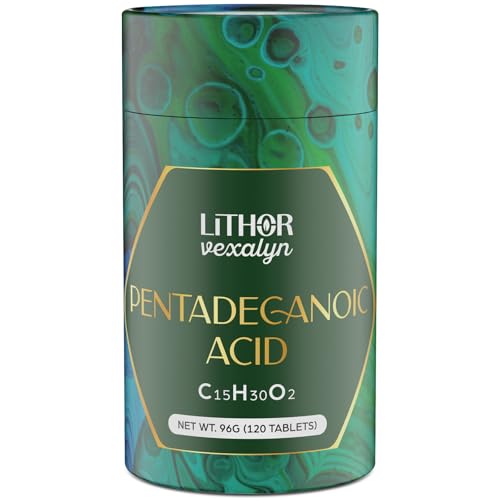
Two brands that show up often in C15:0 searches are Lithorvexalyn and Samareniq. Lithorvexalyn sells a 120-tablet bottle at $28.49 (listed as 29% off a $39.99 price), 800mg of C15:0 per tablet, sourced from what it calls “high-altitude sheep milk,” with a liposomal formulation claim. It has a 4.6-star rating from 57 ratings on Amazon and no independent website of its own.
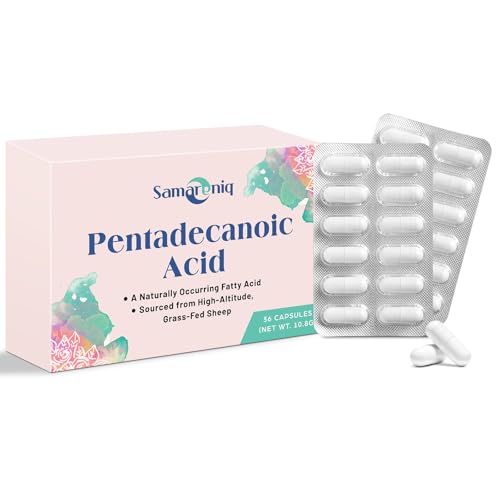
Samareniq sells 300mg capsules with similar “high-altitude grass-fed sheep milk” sourcing language, is marked Amazon’s Choice with over 1,000 purchases in the past month, and runs around $28.49. It’s also sold through a handful of smaller vitamin storefronts (NineLife, Organic Dreaming, Elovita UK, AustralianVit), but again has no standalone brand website.
Beyond these two, names like Nokvba, Engtozl, DNOUHN, and NKLG use nearly identical marketing language, packaging, and sourcing claims. Listings for these brands tend to change or disappear over a period of months. That pattern, a new brand name appearing with the same claims once an older listing accumulates negative reviews or gets delisted, is consistent with private-label dropshipping, where a seller relaunches the same underlying contract-manufactured product under a fresh name rather than building a lasting brand.
Is That Automatically a Red Flag?
Not necessarily. Plenty of legitimate supplements are contract-manufactured and privately labeled, that’s true across the whole supplement industry, not just C15:0. The concern isn’t that a product is white-label; it’s that when a brand has no independent identity, no company website, no way to check for a recall history, and a track record of relaunching under new names, there’s no accountable party you can trace claims back to over time.
That matters because dietary supplements broadly carry documented quality-control risk. Adverse events tied to supplements are a real, published concern [1], and independent testing of various supplement categories has repeatedly found heavy metal contamination that wasn’t disclosed on the label [2][3][4]. This isn’t evidence about C15:0 products specifically, none of these studies tested Fatty15, Lithorvexalyn, or Samareniq, but it establishes that unverified sourcing claims (like “high-altitude sheep milk”) are not the same as third-party-verified purity.
What to Check on a Label, Regardless of Brand Name
A few checks apply whether you’re looking at Fatty15 or an Amazon listing you’ve never heard of. First, does the company have an independent website beyond the Amazon listing itself, one where you could find a recall notice or contact a real support line if something went wrong? Fatty15 does; Lithorvexalyn, Samareniq, and the similarly-named brands do not.
Second, is there any third-party lab testing (a Certificate of Analysis, USP or NSF verification) referenced anywhere, not just claimed in marketing copy? Sourcing language like “high-altitude sheep milk” or “liposomal” sounds specific but isn’t independently verifiable from an Amazon listing alone. Contamination testing across other supplement categories has found that these kinds of unverified claims don’t reliably predict what’s actually in the bottle [5][6].
Third, check whether the per-unit dose (800mg for Lithorvexalyn, 300mg for Samareniq) is something you can actually compare against, since published research on C15:0 has generally used doses in the 100-300mg/day range. A much higher per-tablet dose isn’t automatically better, it’s just a different number that hasn’t necessarily been studied at that level.
Is the Fatty15 Premium Justified?
The honest answer is that it depends on what you’re paying for. Fatty15 is backed by the Epitracker research team, the same group behind the original dolphin-to-human C15:0 research, has its own clinical research program, and operates as a standalone company with a website and traceable identity. That accountability and research lineage is real and is not something the Amazon-only white-label brands currently offer.
What it doesn’t automatically mean is that the C15:0 molecule itself works better once it’s in your body, C15:0 is C15:0 regardless of which company sells it, assuming purity and dose are equivalent. So the premium is best understood as paying for traceability, research backing, and a company you can hold accountable, not for a chemically different or more potent ingredient. Whether that’s worth the price difference is a judgment call based on how much you value being able to verify who stands behind the product.
A Practical Buying Checklist
Before buying any C15:0 supplement: look for an independent brand website separate from the Amazon listing; look for third-party lab testing or a Certificate of Analysis, not just sourcing adjectives; compare the per-dose amount to the 100-300mg/day range used in published research rather than assuming higher is better; check how long the specific listing has existed and whether the seller has other, differently-named products with the same claims; and remember that a high star rating or “Amazon’s Choice” badge reflects Amazon’s own algorithm and recent purchase volume, not independent safety verification.
🛒 Where to Buy Pentadecanoic Acid (C15:0)
- Epitracker Fatty15 C15:0 Fatty Acid SupplementLab-tested / studied
capsules, 100 mg C15:0 per capsule; 1 capsule/day starter, 2 capsules/day maintenance — Category creator; the only C15:0 supplement backed by the original Epitracker research team (Venn-Watson et al.); uses a patented, sustainably-sourced pure C15:0 ingredient; most expensive per-capsule but reference product for all comparisons - Double Wood Supplements Pentadecanoic Acid C15:0
capsules, 200 mg C15:0 per serving (2 capsules) — One of the first genericized C15:0 supplements; significantly lower price than Fatty15; no independent clinical trials on this specific product; good option for budget-conscious buyers who want to trial the fatty acid - Sports Research Pentadecanoic Acid C15:0
softgels, 100 mg C15:0 per softgel — Established supplement brand with strong Amazon presence; third-party tested; softgel form may aid fat-soluble absorption; competitively priced mid-tier option - BulkSupplements Pentadecanoic Acid Powder (C15:0)
powder, 100–300 mg per measured serving — Most economical option for higher-dose protocols or stackers; requires a milligram-accurate scale; no excipients or additives; not recommended for beginners unfamiliar with powder dosing
As an Amazon Associate we earn from qualifying purchases. C15:0 products vary widely in how much pentadecanoic acid they actually contain, so check that the Supplement Facts panel lists C15:0 in milligrams as its own line item rather than bundling it into a fatty acid blend, and that the per-serving dose falls in the 100–300 mg range used in published research.
A Note on the Evidence
This article is informational, not medical advice, and does not evaluate whether C15:0 supplementation is right for you. Talk to a healthcare provider before starting any new supplement, especially if you take medications or have an existing health condition.
Frequently Asked Questions
Is Lithorvexalyn legit?
It’s a real, purchasable Amazon listing (120 tablets, 800mg C15:0, $28.49, 4.6 stars from 57 ratings) rather than a scam in the sense of taking your money and sending nothing. But it has no independent brand website or traceable company behind it, which limits your ability to verify sourcing claims or find it again if the listing changes names. That’s a caution about accountability, not a claim that the product itself is unsafe.
Is Samareniq legit?
Same situation: it’s an active, popular Amazon listing (300mg capsules, Amazon’s Choice, roughly $28.49) also resold through a few small third-party vitamin sites, but with no standalone company website of its own. Independent testing of other supplement categories has found that labels don’t always match contents [2][4], so without third-party testing disclosed, there’s no way to independently confirm Samareniq’s purity or dose claims.
Why do these brand names keep changing?
Amazon listings for near-identical products under names like Nokvba, Engtozl, DNOUHN, and NKLG tend to shift or disappear over a period of months. That’s consistent with a private-label seller relaunching the same contract-manufactured product under a new name once a listing accumulates negative reviews or gets delisted, rather than investing in a durable brand.
Does a higher price mean a purer product?
Not necessarily, and not reliably. Price differences across supplement brands often reflect marketing, brand-building, and research investment more than raw ingredient purity. The only way to confirm purity is independent lab testing, not the price tag.
Are white-label C15:0 supplements dangerous?
Not inherently. Many legitimate supplements are contract-manufactured and privately labeled. The real risk factor documented in the literature is inconsistent quality control across the supplement industry broadly [1][3], which is harder to rule out when there’s no independent company you can check a recall or safety history against.
Is C15:0 FDA-approved for any condition?
No. The FDA has not evaluated C15:0 for the treatment or prevention of any disease, and its proposed status as a newly “essential” fatty acid is a hypothesis advanced by Epitracker researchers that hasn’t been formally adopted by regulatory bodies or mainstream nutrition science.
References
- White CM et al. Dietary Supplements Pose Real Dangers to Patients. The Annals of pharmacotherapy (2020). PMID 31973570
- Genuis SJ et al. Toxic element contamination of natural health products and pharmaceutical preparations. PloS one (2012). PMID 23185404
- Jasińska-Balwierz A et al. Heavy Metal Contamination in Adaptogenic Herbal Dietary Supplements: Experimental, Assessment and Regulatory Safety Perspectives. Biology (2025). PMID 41300272
- Horváth IL et al. Analysis of heavy metal content in protein powders available on the Hungarian market: a reassuring snapshot, but not a reassuring quality guarantee. Journal of nutritional science (2025). PMID 40703701
- Wakshlag JJ et al. Cannabinoid, Terpene, and Heavy Metal Analysis of 29 Over-the-Counter Commercial Veterinary Hemp Supplements. Veterinary medicine (Auckland, N.Z.) (2020). PMID 32346530
- Zhang L et al. Benefit-risk assessment of dietary selenium and its associated metals intake in China (2017-2019): Is current selenium-rich agro-food safe enough?. Journal of hazardous materials (2020). PMID 33027878
These statements have not been evaluated by the Food and Drug Administration. This information is not intended to diagnose, treat, cure, or prevent any disease. Content is for informational purposes only and is not medical advice; consult a qualified healthcare provider before starting any supplement. As an Amazon Associate we earn from qualifying purchases.
