Most of the C15:0 conversation centers on pentadecanoic acid itself — the odd-chain fatty acid found in dairy fat and some fish. But a 2022 study in Scientific Reports put the spotlight on something further downstream: pentadecanoylcarnitine (PDC), a metabolite the body produces from C15:0, which the researchers describe as a newly discovered endocannabinoid.
That’s a striking claim. Endocannabinoids are the body’s own internally produced compounds that activate the same receptors targeted by cannabis (CB1 and CB2). Only one, anandamide, had previously been established as a ‘full-acting’ agonist at both receptors. If pentadecanoylcarnitine is genuinely a second one, that’s a meaningful finding. Here’s what the study actually measured, and a few things worth knowing about who ran it.
What the Study Measured
The 2022 paper, authored by Stephanie Venn-Watson, Nicholas Reiner, and Eric Jensen, tested pentadecanoylcarnitine’s activity across a broad cell-based screening panel: 148 clinically relevant biomarkers spanning twelve primary human cell systems that model different disease states (cardiovascular, immune, neoplastic, pulmonary, and skin, among others), plus 78 targeted receptor-binding and functional assays to identify specific mechanisms of action [1]. This is a standard industry approach for early-stage compound screening — it’s designed to generate a broad map of biological activity, not to prove a clinical effect in humans.
In the targeted receptor assays, pentadecanoylcarnitine activated the cannabinoid CB1 receptor (EC50 3.7 micromolar, 111% of maximum activity relative to a reference agonist) and the CB2 receptor (EC50 3.2 micromolar, 106% of maximum activity). Those numbers — reaching or exceeding 100% of a known full agonist’s maximum effect at both receptors — are what earned it the ‘full-acting’ label, distinguishing it from partial agonists that only partly activate a receptor even at high doses.
Beyond Cannabinoid Receptors
The screening also picked up activity outside the endocannabinoid system: pentadecanoylcarnitine acted as an agonist at two serotonin receptor subtypes, 5-HT1A and 5-HT1B, receptors involved in mood and sleep regulation and a common target of existing psychiatric medications. In the broader biomarker panel, the compound showed dose-dependent anti-inflammatory activity, including reduced levels of IL-1alpha, ITAC, MCP-1, and IP-10 (a family of inflammatory signaling proteins) across the cardiovascular, immune, neoplastic, pulmonary, and skin cell systems tested.
Taken together, the authors describe pentadecanoylcarnitine as having ‘pleiotropic’ activity — meaning it appears to act on multiple, unrelated biological pathways rather than a single narrow target. That breadth is part of what makes the finding notable, and also part of why it needs to be read carefully: a compound that shows activity across dozens of assays in cultured cells is not the same as a compound with a demonstrated clinical benefit in a living person.
What This Study Can’t Tell You
This was a cell-based screening study, not a clinical trial. No humans took pentadecanoylcarnitine and reported outcomes. The receptor-activation and biomarker data describe what the compound does to isolated cells and receptor systems in a lab, which is a legitimate and standard first step in pharmacology, but it doesn’t establish a dose, a safety profile in humans, or a real-world effect on mood, pain, sleep, or inflammation. None of the site’s existing coverage of human C15:0 supplementation trials tested for, or measured, pentadecanoylcarnitine levels or endocannabinoid-receptor activity directly.
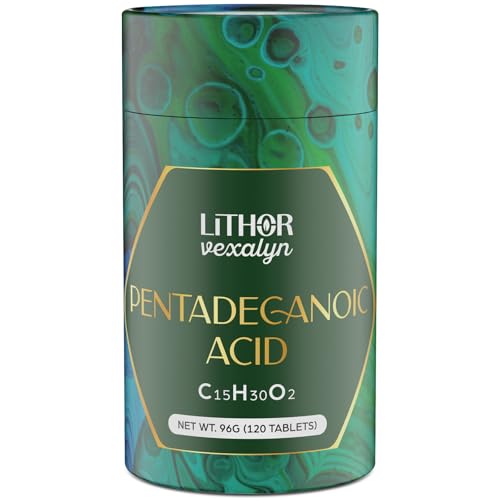
It’s also worth being precise about terminology: pentadecanoylcarnitine is a metabolite the body can produce after C15:0 intake, not something present in meaningful amounts in food or in standard C15:0 supplements themselves. Taking a C15:0 supplement doesn’t mean you’re dosing pentadecanoylcarnitine directly — it means you’re providing the precursor and relying on the body’s own metabolism to convert some fraction of it downstream, a conversion rate this study did not quantify.
Who Ran the Study — and Why That’s Worth Knowing
The lead author, Stephanie Venn-Watson, is a veterinary epidemiologist whose earlier dolphin research helped originate interest in C15:0 as a potential essential fatty acid [2]. She is also the co-founder of Seraphina Therapeutics, the company that makes fatty15, a commercial C15:0 supplement, and she holds or co-holds a substantial number of the patents covering C15:0’s use for various health indications, including patents connected to pentadecanoylcarnitine specifically.
That doesn’t make the underlying assay data wrong. Cell-based receptor-binding data is relatively hard to fabricate and the methodology described is conventional pharmacology screening. But it does mean the researcher generating and interpreting the ‘newly discovered endocannabinoid’ framing has a direct financial stake in C15:0 being perceived as a uniquely important compound. Readers evaluating how much weight to put on a pleiotropic-activity claim like this one should factor that in, the same way they would for any single-lab finding tied to a product the lab’s founder sells.
The Honest Bottom Line
Pentadecanoylcarnitine’s lab-measured activity at cannabinoid and serotonin receptors is a genuinely interesting, mechanistically specific finding — it’s a real signal, not marketing fluff, and it gives researchers a concrete hypothesis to test in animals and eventually humans. But it’s early-stage cell-screening data from a single research group with a commercial interest in the outcome, not a clinical trial, and it says nothing about whether a person taking a C15:0 supplement will notice any cannabinoid- or serotonin-related effect. Treat the ‘endocannabinoid’ framing as an interesting mechanistic lead worth watching for human trial follow-up, not as a demonstrated effect of taking C15:0.
References
- Pentadecanoylcarnitine is a newly discovered endocannabinoid with pleiotropic activities relevant to supporting physical and mental health. Scientific Reports, 2022
- Efficacy of dietary odd-chain saturated fatty acid pentadecanoic acid parallels broad associated health benefits in humans: could it be essential?. Scientific Reports, 2020
These statements have not been evaluated by the Food and Drug Administration. This information is not intended to diagnose, treat, cure, or prevent any disease. Content is for informational purposes only and is not medical advice; consult a qualified healthcare provider before starting any supplement. As an Amazon Associate we earn from qualifying purchases.
