For several years, observational research has linked higher plasma levels of pentadecanoic acid (C15:0) to better cardiovascular markers, including blood pressure. A study published in Frontiers in Nutrition in February 2026 is the most rigorous test of that link to date — and it delivers a more complicated answer than the marketing around C15:0 supplements usually suggests.
The research team, led by Brian T. Steffen and colleagues at the University of Minnesota, used data from two well-established, long-running cohort studies (CARDIA and ARIC) and added something most prior C15:0 research hasn’t: Mendelian randomization, a genetic method designed specifically to test whether an association is actually causal, rather than a byproduct of confounding.
What the Study Actually Did
The researchers analyzed plasma C15:0 levels in roughly 3,200 Black and white men and women from the Coronary Artery Risk Development in Young Adults (CARDIA) study, then tested whether the associations held up in an independent replication cohort of 3,889 white participants from the Atherosclerosis Risk in Communities (ARIC) study. That’s over 7,000 participants combined, tracked with Cox regression models over a median follow-up of roughly 10 years for incident hypertension and cardiovascular disease, with statistical adjustment for the usual confounders (age, sex, BMI, smoking, diet quality, and related covariates).
Beyond the observational analysis, the team ran two-sample Mendelian randomization (MR): a method that uses genetic variants associated with a trait (here, plasma C15:0 levels) as a proxy for lifetime exposure, sidestepping the reverse-causation and confounding problems that plague standard observational nutrition studies. If C15:0 genuinely lowers blood pressure through a biological mechanism, MR should detect that causal signal even without a randomized trial.
The Observational Findings Were Real — and Modest
In the CARDIA cohort, higher plasma C15:0 (per standard deviation increase) was independently associated with modestly lower systolic blood pressure (beta = -1.47 mmHg, 95% CI -1.99 to -0.96), lower diastolic blood pressure (beta = -1.13 mmHg, 95% CI -1.51 to -0.74), lower pulse pressure, lower resting heart rate, and a 14% lower 10-year risk of developing hypertension (hazard ratio 0.86, 95% CI 0.78-0.95) [1]. These associations replicated in the independent ARIC cohort, which is a meaningfully stronger result than a single-cohort finding — replication across two separate populations rules out a lot of the noise that sinks weaker nutrition studies.
Notably, plasma C15:0 was not associated with echocardiography-derived measures of cardiac structure or function, and was not associated with incident cardiovascular disease itself. The signal was specific to blood pressure and hypertension risk, not a broad cardiovascular benefit across every measure the researchers checked.
The Genetic Evidence Didn’t Back It Up
This is where the study departs from most prior C15:0 research. The two-sample Mendelian randomization analyses found no evidence for a causal effect of C15:0 on systolic blood pressure, diastolic blood pressure, resting heart rate, or hypertension risk. In plain terms: the genetic method built specifically to distinguish ‘these two things move together’ from ‘one of these things causes the other’ came back negative, even though the plain observational associations were real and had replicated.
The authors’ own framing, stated directly in the paper, is that the observational associations between plasma C15:0 and cardiovascular risk markers were modest but were not supported by cardiac function or MR findings. That’s a study team explicitly declining to claim causality for their own positive-looking observational result — a level of self-restraint that’s worth noting given how often positive C15:0 associations get amplified into supplement marketing claims.
Why This Matters for How You Read C15:0 Research
This isn’t the first time C15:0 research has drawn a distinction between association and causation. The foundational 2020 paper proposing C15:0 as a possible essential fatty acid was itself built on observational and mechanistic evidence, not causal proof [2]. What’s different about the CARDIA/ARIC study is that it’s the first sizable analysis to directly test causality with a genetic method and come back negative for a specific, commonly cited outcome (blood pressure) — rather than simply noting that more research is needed.
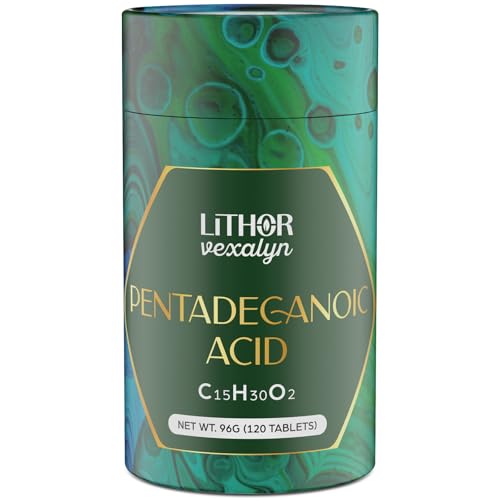
It’s also a useful reminder of what a positive randomized controlled trial can and can’t tell you. The one completed RCT of pentadecanoic acid supplementation, in young adults with overweight or obesity, demonstrated that supplementation safely raises circulating C15:0 over 12 weeks; it wasn’t designed or powered to settle the blood-pressure causality question the CARDIA/ARIC study specifically targeted [3]. Different study designs answer different questions, and conflating ‘C15:0 levels went up in a trial’ with ‘C15:0 lowers blood pressure’ overstates what either study actually showed.
The Honest Bottom Line
People with higher plasma C15:0 do tend to have somewhat lower blood pressure and lower hypertension risk, and that association has now replicated across two large, independent cohorts — it’s a real, non-trivial finding. But the best available genetic evidence, designed specifically to test whether that relationship is causal, did not support it. The most likely explanation is that C15:0 levels are a marker correlated with some other factor (diet quality, metabolic health, or an unmeasured confounder) that’s doing the actual work on blood pressure, rather than C15:0 itself lowering it through a direct mechanism.
That doesn’t mean C15:0 research is worthless or that every prior finding about the compound is wrong — it means blood pressure specifically should be treated as an open question rather than a settled benefit, at least until a trial designed and powered to test blood pressure as a primary outcome is run. Anyone considering a C15:0 supplement specifically for blood pressure management should weigh this study alongside, not instead of, standard evidence-based approaches to blood pressure control.
References
- Plasma pentadecanoic acid is modestly related to cardiovascular health in CARDIA and ARIC cohorts: observational associations without evidence of causality. Frontiers in Nutrition, 2026
- Efficacy of dietary odd-chain saturated fatty acid pentadecanoic acid parallels broad associated health benefits in humans: could it be essential?. Scientific Reports, 2020
- Pentadecanoic Acid Supplementation in Young Adults with Overweight and Obesity: A Randomized Controlled Trial. The Journal of Nutrition, 2024
These statements have not been evaluated by the Food and Drug Administration. This information is not intended to diagnose, treat, cure, or prevent any disease. Content is for informational purposes only and is not medical advice; consult a qualified healthcare provider before starting any supplement. As an Amazon Associate we earn from qualifying purchases.
