Interest in C15:0 has grown quickly, but the amount of human clinical trial data available is still much smaller than for long-established supplements like fish oil or vitamin D. Understanding exactly what has and has not been studied in people is important before deciding whether it belongs in your routine.
Disclosure: This article contains affiliate links. If you purchase through them, we may earn a commission at no extra cost to you. This does not influence our editorial content.
Where the Research Started
Much of the early evidence around pentadecanoic acid comes from observational studies that measured blood levels of C15:0 in large population groups and looked for correlations with health outcomes. Observational research can point to interesting associations, but it cannot prove that C15:0 itself caused any particular result, since people who eat more full-fat dairy may differ from others in many ways.
Moving From Observation to Intervention
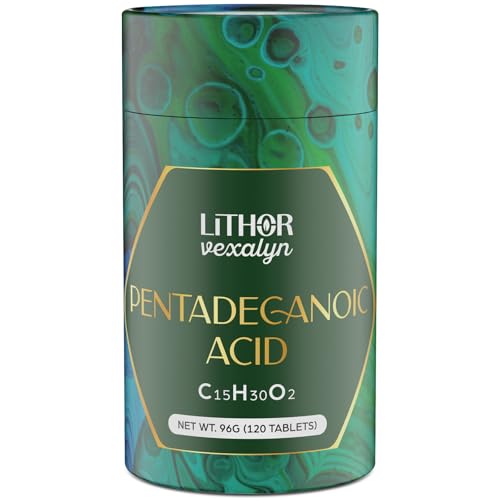
More recently, two randomized intervention trials have directly supplemented participants with pentadecanoic acid and measured what changed, both published in 2024 and described in full below. These trials are an important step up from observational data because they can more directly test cause and effect, though sample sizes so far have generally been modest.
Readers should be cautious of marketing claims that cite a single trial as definitive proof. A handful of studies, even well-designed ones, is not the same as the decades of accumulated data behind more established supplements.
| Study Type | What It Can Tell Us | Limitation |
|---|---|---|
| Observational | Associations between blood C15:0 and outcomes | Cannot prove causation |
| Small intervention trial | Direct effect of supplementation on markers | Small sample sizes, short duration |
| Animal and cell studies | Mechanistic plausibility | Does not guarantee human results |
The Two Trials That Have Actually Been Run
Two randomized controlled trials of C15:0 supplementation have been published, both in 2024, and both by research groups with no connection to the company that sells Fatty15.
The TANGO trial (American Journal of Clinical Nutrition, 2024) randomly assigned 88 women with fatty liver disease to one of three groups for 12 weeks: a Mediterranean-style diet with C15:0, the same diet without it, or their habitual diet. Liver fat measured by MRI fell about 33% in the C15:0 group and about 30% in the diet-only group, against about 10% in the control group, so the liver benefit tracked the diet rather than the supplement. What C15:0 did add was a further reduction in LDL cholesterol and an increase in a beneficial gut bacterium[1].
A University of California San Diego trial (The Journal of Nutrition, 2024) gave 200 mg/day of C15:0 or a placebo to 30 young adults with overweight or obesity for 12 weeks. Its primary question was simply whether supplementing raises blood C15:0, and it does: levels rose 1.88 µg/mL more than placebo. No significant adverse events occurred. Roughly half the treated group passed a blood level of 5 µg/mL, and those participants saw larger drops in the liver enzymes ALT and AST than treated participants who did not reach that level[2]. That last comparison is between subgroups of the treated arm, not against placebo, which is a weaker kind of evidence than a headline figure makes it sound.
Both trials ran 12 weeks in a few dozen people. Neither measured a hard outcome like a heart attack, a diagnosis, or lifespan, and neither has been replicated.
What Outcomes Have Been Measured
Human research on C15:0 has generally focused on markers related to metabolic and cellular health rather than hard outcomes like heart attacks or mortality, which take much larger and longer trials to study properly. This means current evidence speaks to short-term biological changes, not proven long-term disease prevention.
Why This Matters for Consumers
It is completely reasonable to be excited about a nutrient that is drawing serious scientific attention. It is equally reasonable to hold expectations in check until the evidence base grows. Supplement companies sometimes get ahead of the science in their marketing copy, so it helps to distinguish between what a study actually measured and how a product description summarizes it.
If you want to evaluate a specific product’s claims, look for whether they link to or reference peer-reviewed research versus simply stating a benefit as fact.
Frequently Asked Questions
How many human trials exist on C15:0 supplementation?
Two randomized trials of supplementation have been published, both in 2024[1][2]. A much larger body of observational work measures blood C15:0 without supplementing anyone.
Are the existing trials large or small?
Small. They enrolled 88 and 30 participants and ran 12 weeks each, which is typical for an emerging area of nutrition research and far too short to say anything about long-term health.
Has C15:0 been shown to prevent disease?
No trial to date has been designed or powered to prove disease prevention. Current research focuses on biological markers over shorter time frames.
Should I wait for more research before trying it?
That is a personal risk tolerance decision. Some people prefer to wait for a larger evidence base, others are comfortable trying a well-sourced supplement while research continues.
Where can I find the actual published studies?
Both randomized trials are listed with links in the references at the end of this article. Searching PubMed for pentadecanoic acid or C15:0 will surface the wider peer-reviewed literature directly from the source.
These statements have not been evaluated by the FDA. This product is not intended to diagnose, treat, cure, or prevent any disease.
References
- Chooi YC, Zhang QA, Magkos F, et al. Effect of an Asian-adapted Mediterranean diet and pentadecanoic acid on fatty liver disease: the TANGO randomized controlled trial. American Journal of Clinical Nutrition. 2024;119(3):788-799. PMID 38035997
- Robinson MK, Lee E, Ugalde-Nicalo PA, et al. Pentadecanoic Acid Supplementation in Young Adults with Overweight and Obesity: A Randomized Controlled Trial. The Journal of Nutrition. 2024;154(9):2763-2771. PMID 39069269
These statements have not been evaluated by the Food and Drug Administration. This information is not intended to diagnose, treat, cure, or prevent any disease. Content is for informational purposes only and is not medical advice; consult a qualified healthcare provider before starting any supplement. As an Amazon Associate we earn from qualifying purchases.
